

Chicago Vs Seattle Hot Dogs: How The Glizzy Styles Differ
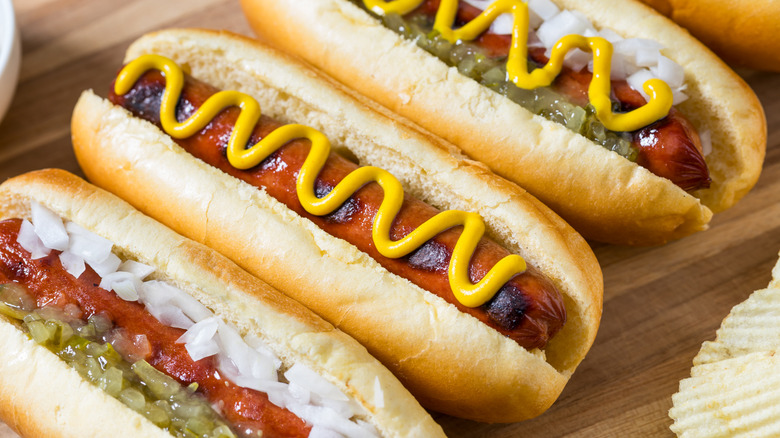
There's no denying it: The hot dog is a certified all-American classic. The shining star of the Fourth of July cookout, the simple combination of a wiener served in a pillowy white bun is a thing of beauty. While the tried-and-tested recipe is already perfect, that hasn't stopped others from putting their own spin on it. There are plenty of delicious regional hot dog styles, but you don't have to look far to find some of the most iconic takes. Enter the Chicago and Seattle hot dogs. These recipes both take glizzies to the next level, but differ completely in their choice of bun, preparation, and toppings.
If you tell a Chicagoan their hot dog tastes like a Seattle dog — or vice versa — you're simply asking for trouble. The recipes might differ, but pride runs deep. They're more than just your average late-night bite, and each city has its own story behind its respective variation: Chicago can literally trace its dog's lineage all the way back to the Great Depression. In truth, aside from a foundation of a hearty sausage and the omission of ketchup — though though Chicago enforces that rule far more strictly than Seattle — there's hardly anything similar about the two.
But the sausage and bun are merely a blank canvas for toppings. Both styles reject the minimalism of your average hot dog, and neither holds back on delicious add-ons. The Chicago dog, famously "dragged through the garden," earned this nickname because it's piled high with an assortment of fresh vegetables, while the Seattle dog goes for creamy indulgence by slathering the bun with cream cheese and grilled onions. One brings crunch, the other brings creaminess, putting each in a league of its own.
The Chicago hot dog doesn't skimp on the toppings
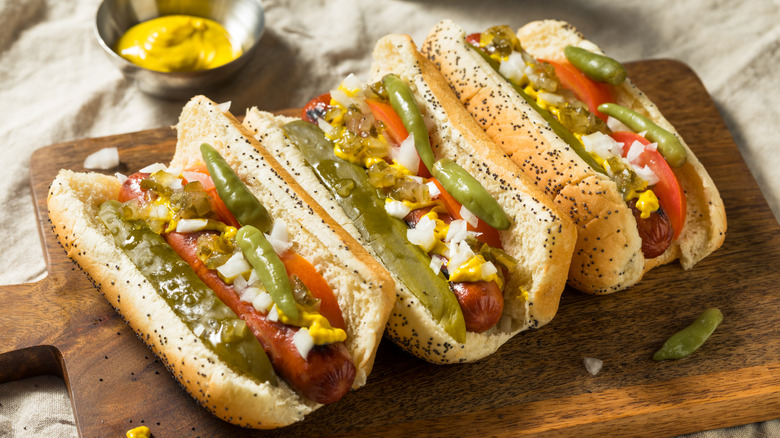
Whether it's deep-dish pizza or the Italian beef sandwich, few cities do food better than the Windy City. The Chicago-style hot dog is no exception, and the late, great Anthony Bourdain once boldly claimed it as his definitive favorite. That's some pretty high praise, but looking at its array of toppings, we can't really say we're that surprised.
It all starts with a warm, poppy-seed bun and an all-beef — almost always Vienna Beef brand — frank. Then come the seven non-negotiable toppings: yellow mustard, chopped white onions, relish, a dill pickle spear, tomato slices, pickled sport peppers, and a dash of celery salt. These toppings are a reflection of the city's rich working-class heritage: A Polish baker brought over the poppy-seed bun, Jewish Austro-Hungarian immigrants started selling beef franks, and Italian and Greek produce merchants were responsible for the addition of fresh tomatoes and onions.
You might be wondering where the ketchup is, but this is no accidental omission. Rumor has it that Chicago hot dog vendors will outright refuse requests for ketchup, and even have signs mocking those who add it — although exceptions may be made for children. The city's general distaste for ketchup is woven into the history of the dog itself. During the Great Depression, cart owners loaded their franks with cheap produce and sold them for a nickel apiece (around $1 today). At the time, ketchup was often used to mask the taste of low-quality meat, so refusing to add it became a point of pride for vendors. Just as the "Depression sandwich" hot dog stuck around long after hard times passed, so did the city's mistrust of ketchup.
Seattle-style hot dogs are all about the cream cheese
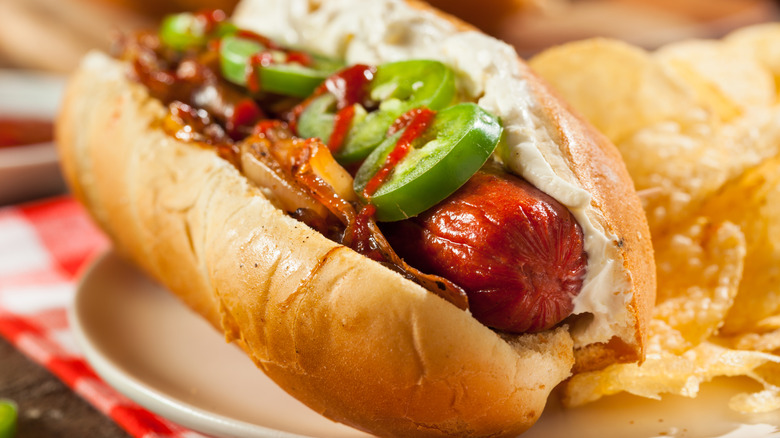
Compared to Chicago, Seattleites are far less strict about what goes on top of their hot dogs. But for it to be a true Seattle dog, there's one essential ingredient: cream cheese. You might think that the condiment on anything other than a bagel is blasphemy, but the Seattle dog is something of a fusion dish.
The story starts in 1988 in Seattle's Pioneer Square, when Hadley Longe, a bagel cart owner, began selling hot dogs, too. Originally served on elongated bialy sticks, they were slathered with cream cheese before the hot dog went in. They were an immediate hit, especially among the late-night crowd during the city's grunge scene in the '90s. Longe rebranded his cart as "Hadley's Bagel Dogs," and copycat stalls quickly followed. The bialy sticks were eventually swapped for your standard glizzy bun, and the Seattle dog was cemented as a local icon.
Aside from cream cheese, which is widely accepted to be non-negotiable, grilled onions are among the most popular additions to Seattle dogs, and it's not uncommon to see other staples like jalapeños or sauerkraut making an appearance. Classic condiments like mustard show up, too, but Seattle isn't known for playing by the rules, and many locals swear by barbecue sauce and sriracha as their go-to finishers. But be warned: Ketchup is still not considered the most natural pairing with cream cheese, though Seattle vendors aren't as passionately opposed to it as their Chicago counterparts.