

Instantly Improve Boring Gravies With This Store-Bought Sauce
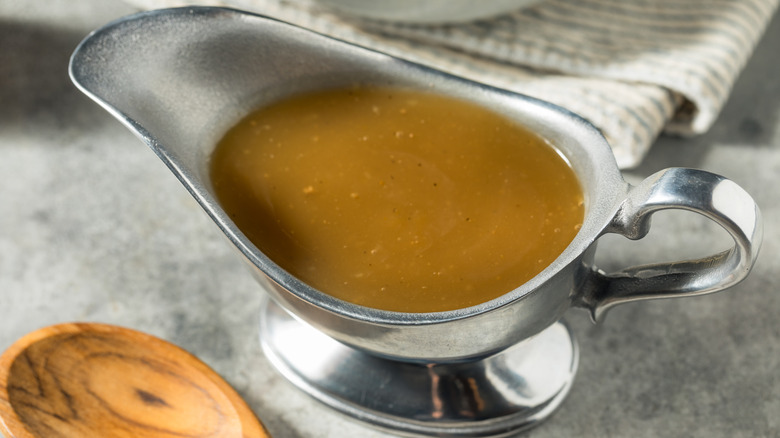
For a nice hit of salty, savory flavor, nothing beats the magic of brown gravy poured over fresh-cooked beef, pork tenderloin, or fluffy mashed potatoes. You can make it from scratch with roast beef, prime rib, and rendered steak drippings, or even just cook down some bouillon or beef stock for a wonderfully velvety, unctuous add-on. If you want to keep it extra simple, you can improve store-bought gravy with a bit of booze. But when you've thrown everything you've got at it and realize it still needs an extra kick of seasoning, think about adding a few dashes of Worcestershire sauce to expand the flavor.
Worcestershire sauce was created by Lea & Perrins in Worcester, England. Whether you buy the name brand or a generic alternative, most bottles share the same core ingredients: vinegar, sugar, molasses, salt, garlic powder, tamarind, and anchovies — a fermented blend of sweet and salty that creates the sauce's distinctive taste.
Worcestershire easily lends itself to beef gravy, but it can also add an unexpected tang to chicken or turkey gravy. Simply whisk it in with whatever other spices you're using once you've formed the base. All you need is about a half tablespoon of the brown liquid for a modest pop of zesty, umami undertones that settle just right on the palate without overcomplicating the flavor.
Tps for seasoning gravy with Worcestershire sauce
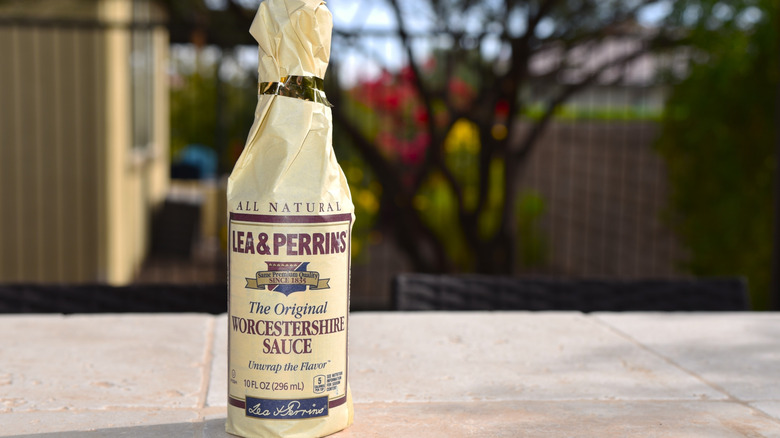
There are mistakes everyone makes when cooking gravy, and over-salting is one of them. If you plan to use Worcestershire sauce, you might want to go lighter on the salt than you normally would, then grab the bottle as the flavors come together. Use a splash or two, rather than a hard pour, sample it, then add more if needed. The mixture of anchovies and tamarind is both bright and earthy, giving high and low notes, and the acidity from the vinegar can help cut through the rich base. When making gravy, garlic powder and/or onion powder and black pepper are generally a must, but you can also start with some sauteed onions and mushrooms for more fresh, homemade nuance, and add some lemon juice for more acidity.
Thanks to its high vinegar and salt content, you don't actually need to refrigerate Worcestershire sauce. It will hold its flavor for at least a year after opening if you follow the "best by" date on the packaging and store it in a cool, dark pantry. That said, it will last much longer and be perfectly safe to consume for well over a year, although it might not be as potent. It's a pretty versatile condiment to have on hand — the perfect fishy upgrade for your burgers or a simple seasoning for hard-boiled eggs. But when you want just a hint of pungent, anchovy-fueled flavor, it's all gravy.