

Does Food Actually Taste Better When Someone Else Cooks It For You?
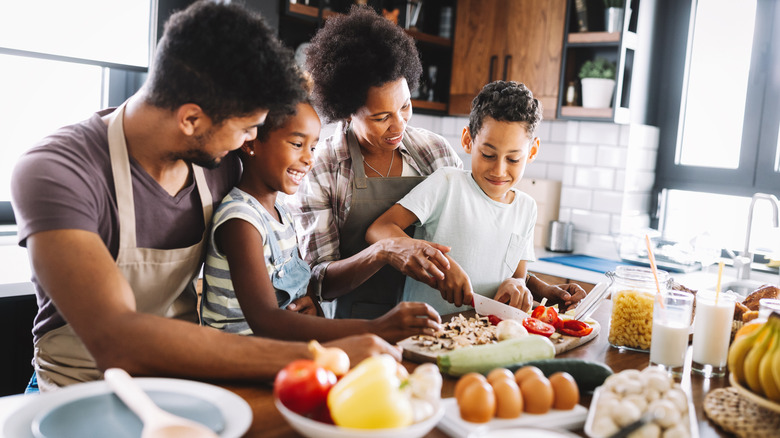
We've all experienced it: Eat a specific food — sometimes a dish with the exact same ingredients, even something as simple as a BLT sandwich or premade meal — and it just tastes unexplainably better when it's prepared by someone else. The reverse can also hit home: After trying to recreate a recipe given to us by a friend or relative, it just doesn't land quite the same way when made at home. This phenomenon may seem like one of those odd quirks, or it can even reaffirm a negative self-belief in one's own cooking skills, but it seems we've stumbled upon a possible scientific explanation: Namely, that preparing your own meal gives your brain too much time to experience it before taking the first bite.
Psychologist Daniel Kahneman labeled this a type of "preconsumption" in 2011 (per New York Times). During the preparation process — where we assemble foods, chop them up, cook them, or simply slap them onto a plain slice of bread — our sensory receptors are already activated, anticipating how the meal will taste. Such prolonged exposure can ultimately make a recipe less novel, and consequently less thrilling to our taste buds, by the time we've dug into it. All of this can be explained by neurogastronomy: Flavor is constructed in large part by our brains, rather than by the ingredients at hand.
The theory is linked to a 2010 study by Carnegie Mellon University in which participants repeatedly imagined consuming foods like M&M's or cheese. Those who mentally consumed the same food multiple times ultimately ate less of it. This, however, studied imagined eating, and while this might explain why some of us tend to prefer eating food made by others, it's not definitive proof, with other studies complicating the picture.
Context, effort, and ingredients shape how food tastes
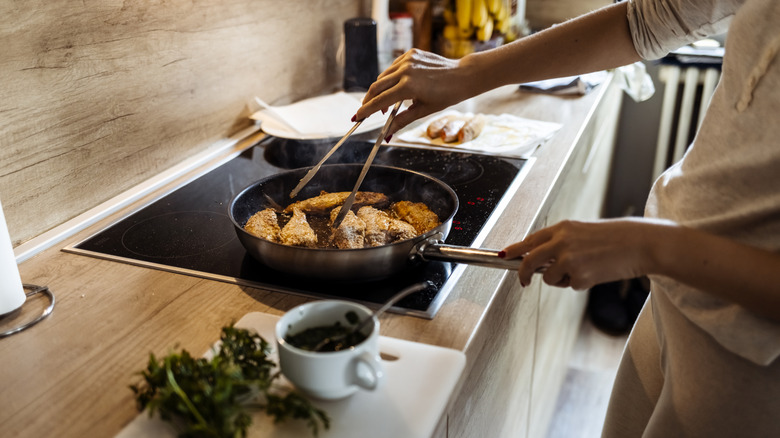
One of the key reasons why food might taste better when prepared by someone else could be decidedly less neurological and mysterious: When it comes to restaurants in particular, cooks are more likely to add more butter, oil, sauce, or seasoning, meaning what might seem like the same dish is actually rather different. It's one of the reasons restaurant mashed potatoes are often superior, or why a simple one-pan steak sauce can taste so impossibly velvety and rich.
Things get muddier when researchers start to examine actual food preparation, and in a 2014 study, the converse seemed to be true: Participants rated the milkshakes they made more highly than those given to them by others. The study described this as the "I cooked it myself" effect: Applying some elbow grease to preparing something can make it seem better. Another 2016 study found that participants were more inclined to enjoy an option commonly labeled as "healthy" — like salads or smoothies — when they prepared it themselves, although this was not the case for food labeled as "unhealthy."
It looks like the jury is still out on whether we're predisposed to prefer self-made food or food prepared by others. Ultimately, it largely seems that an individual's reception of food is shaped by an intricate interplay of expectations, environmental context, perceived effort, and the social labels regarding healthiness or nutritional value attached to specific foods. Indeed, even our surroundings matter, as demonstrated by how sound and color affect taste, so it might be a simple case of us subconsciously preferring food in the environments we enjoy most — whether that's at home or not.