

Fried Vs Broasted Chicken: How The Crispy Styles Differ
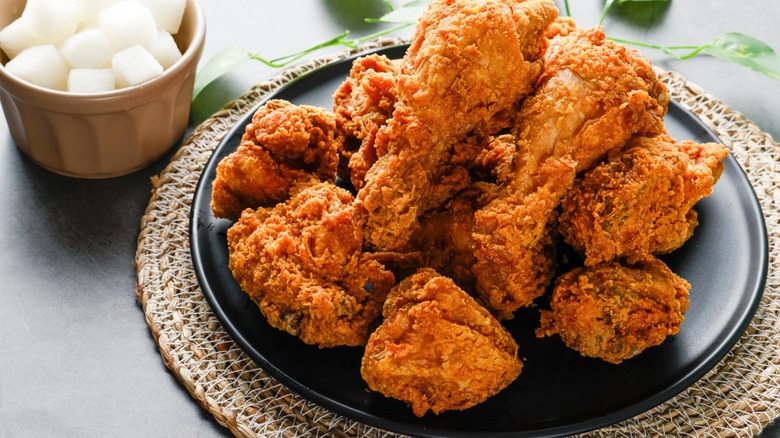
You may have enjoyed a piece of fried chicken without quite realizing you may not have actually eaten fried chicken, but something else entirely. This isn't some conspiracy theory about fake chicken, but has more to do with how the bird was cooked because, even if you think it was fried, there might be a little more to the story. The word "broasted" may not be so common outside of certain regions of the U.S., but go to places like India, Pakistan, or Saudi Arabia, and it's used as a mark of distinction that has garnered many loyal fans. But what is the difference between broasted and fried chicken, and why has the former become so popular?
Broasted chicken is actually a system created by the Broaster Company in Wisconsin and is distinguished by its pressure fryer, which combines a pressure cooker and a deep fryer. Pressure frying isn't unique to Broaster, though, and the technique is also used by popular fried chicken chains, like KFC and Chick-fil-A. This method cooks chicken in about half the time of traditional open frying and quickly sears the bird, producing a crunchy exterior while keeping the interior moist and juicy. While pressure frying is usually only done in commercial settings, regular fried chicken can be made at home using any cooking vessel that can hold enough fat. But there is a little more to the Broaster brand that sets it apart from regular fried chicken and other pressure-fried poultry.
Fried chicken offers home cooks great culinary flexibility
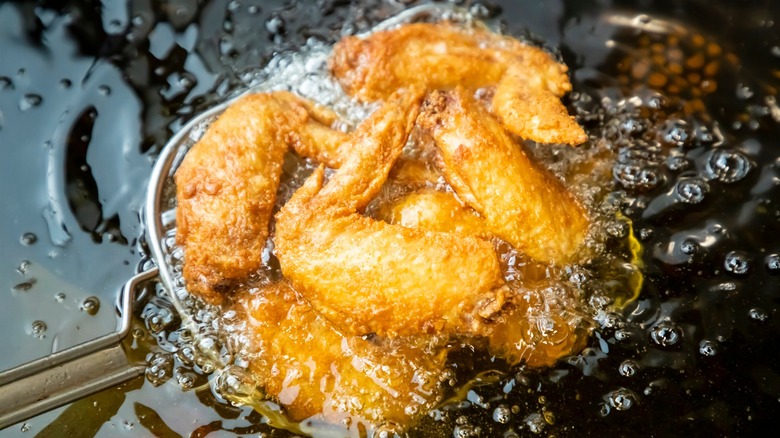
Cooking food submerged in hot oil is said to have originated with the ancient Egyptians around 5,000 B.C. and spread to other cultures. In the United States, especially in the South, the technique for deep frying is thought to have been brought over by Scottish settlers, along with enslaved Africans, who are credited with developing fried chicken as it became known in this country. Cast-iron cookware became more widely available in the 1800s and made this cooking technique a little easier, as the thick metal retained heat well over an open flame, and it's still a popular tool for making many Southern fried foods.
Alton Brown's all-time favorite dish doesn't always involve a deep vat of hot oil, though. Many home cooks, including those who use cast-iron skillets, may use just enough fat to partially submerge the chicken and then flip it to ensure both sides cook evenly. Because it takes a lot of oil to fill a pot deep enough to fully surround the frying poultry, and cooking fats can be expensive and take a while to heat up, deep-fat frying is more commonly used in commercial settings or when home cooks are feeding a crowd.
The rest of the process is really up to the cook, but it typically involves a brine or marinade and some sort of starchy coating before the clucker sizzles away in the hot cooking fat. While specific temperatures and times may vary, frying oil generally needs to be heated to between 350 and 375 degrees Fahrenheit. In short, fried chicken gives the cook some freedom in how they season, coat, and cook their bird. Broasting, on the other hand, has some pretty strict rules.
Broasted chicken is a proprietary brand, not generic frying
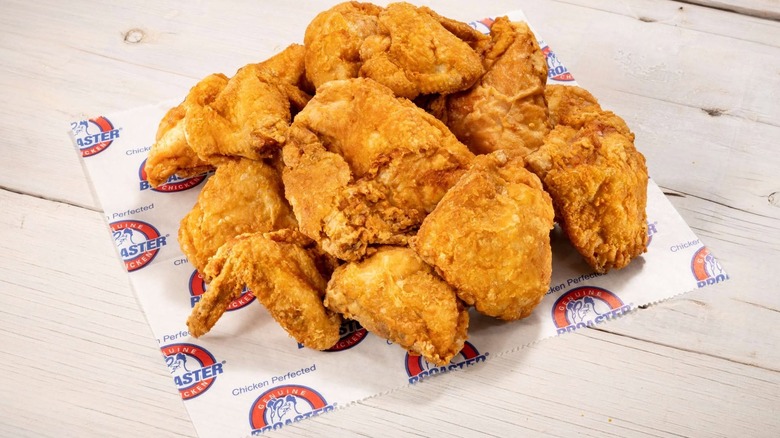
Broasted chicken refers to chicken that has specifically been cooked in a Broaster-brand pressure fryer and uses the brand's marinades and coatings. The Broaster Company was founded by L.A.M. Phelan in 1954, just one year after he combined a pressure cooker and deep fryer to invent the first Broaster. The company's name and all related terms are trademarked, and nobody can legally claim that their chicken is broasted unless they employ the entire system. But the Wisconsin-based company isn't the only pressure-fryer available, and Henny Penny is a competing brand whose rules are a little more relaxed, allowing many popular fried chicken chains to employ the technique while also adding their own unique touches.
Pressure frying, regardless of where you get your equipment, is mostly reserved for commercial spaces because the technique requires specialized equipment with many safety features. Even though Broaster's founder may have been inspired to combine a deep-fat fryer and a pressure cooker, it's not advisable to try hacking together a pressure fryer at home, as there can be catastrophic accidents that cause serious injury. Official pressure cooker brand sites also warn against the practice.
In short, broasted chicken refers to a name-brand product, much like Big Macs and Whoppers, except that the Wisconsin invention doesn't have dedicated retail locations. Pressure-fried chicken is a much more general term, but some people still use the word "broasted" to refer to all chicken cooked in this manner, much like how some people use "Coke" to describe all soft drinks.