

The Average Lifespan Of Your Potato Plants
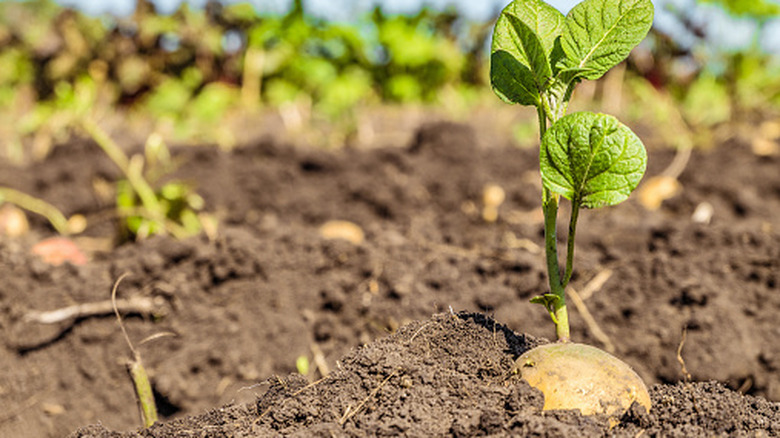
Potatoes are one of the most versatile veggies out there, so it's always worth keeping a few in the pantry. If you'd rather skip the extra grocery run, growing your own at home is a smart long-term move that saves you money and rewards you with fresher, tastier spuds without having to sniff out the bad from the good at the store. One of the best perks of potato plants is that they're perennial, so once you've got them established, they'll keep on coming year after year without you having to start from scratch each season.
The lifespan of potato plants really comes down to whether you harvest them or let them be. Potatoes reproduce through their tubers, which means that if you leave them undisturbed in the ground, they can keep growing back. The catch is that the tuber is also the very thing you eat. When you dig up potatoes, you're pulling up the swollen, starchy underground stems (fun fact: potatoes aren't technically a true root vegetable) that the plant relies on to regrow. So naturally, once those tubers are gone, so is next year's harvest.
That's why smart growers play the long game. If you want a steady supply of potatoes without replanting from scratch every single year, leave a portion of your tubers undisturbed in the soil while you plant fresh ones elsewhere. The buried tubers will sprout on their own when the season turns, giving you a built-in second harvest with almost no extra effort. It's a simple trick, but it makes potato growing feel a lot more sustainable and a lot less like starting over every spring. However, it's worth noting that after multiple growing seasons, growers have noticed a decline in the potatoes' size and yield. If you do a big harvest every season, you might get up to half a decade with a single plant.
How to grow and care for your potato plants
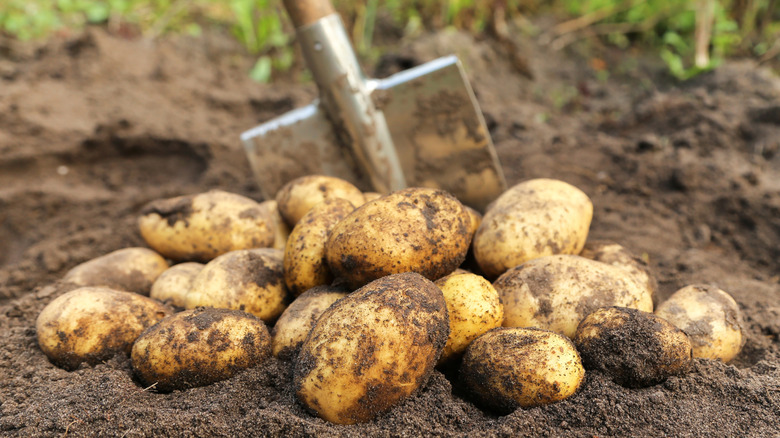
You don't need a green thumb to grow potato plants at home since spuds are famously one of the easiest to get established. If you're looking for a good use for your kitchen scraps, starting a home compost is a great idea. Banana peels in particular are worth saving; they're high in potassium, which makes them an excellent addition for increasing tuber yield and size.
In most of the United States, potatoes go into the ground in spring once the soil warms up to around 55 degrees Fahrenheit. There are many different types of potatoes, which can be divided into three categories: early, mid-season, and late-season. As the name suggests, early potatoes are the first to reach maturity, making them a popular pick for home growers who don't want to wait around. Famous examples of early potatoes include Yukon Golds and Red Norlands, both of which are ready for harvest in as little as 75 to 90 days.
Once you've planted your seeds — or more commonly — seed tubers, one step that's essential is hilling. Once the green foliage reaches about 10 inches tall, mound soil and compost up around the stems, leaving just the top few leaves peeking out. Repeat this process every couple of weeks until you've built a mound about 12 inches tall. This keeps the developing tubers protected from sunlight (which can turn them green and mildly toxic) as well as giving your plants the room they need to keep producing high yields all season long. Potato plants also require a steady supply of water to fuel their leafy growth and help swell up those underground tubers. To keep them happy, about one to two inches of water per week is the golden amount.