

Here's How Long Parmesan Cheese Lasts
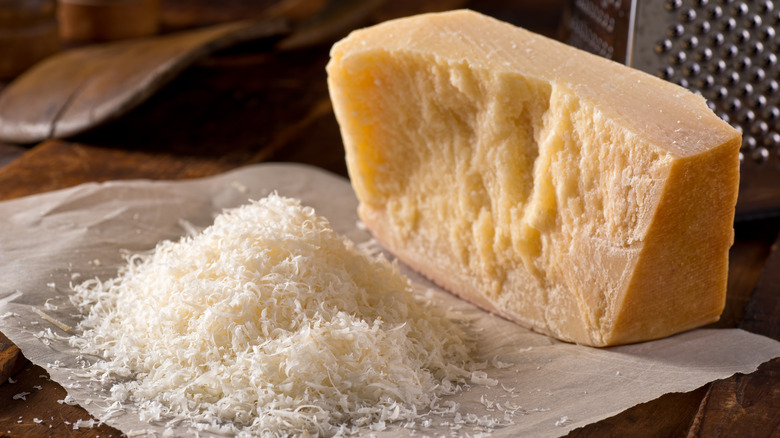
When a recipe calls for parmesan, you could go the green shaker route; it's a perfectly serviceable option (and the bottles are reusable in over a dozen ways). However, if you really want your dish to sing, the only choice is to use freshly grated parm, and once you try it, there is no going back. The shaker stuff simply cannot compete with the nutty, savory, and deeply umami flavors that come from real parmesan, so we don't blame you if you want to start keeping a block in your fridge at all times. Wondering how long you have until this hard cheese may start to go bad? If you've got an unopened wedge in your fridge, it'll last up to nine months; an opened parm is good for up to two months.
As you might have noticed, parmesan lasts a lot longer than softer cheeses, thanks to its make-up being rather inhospitable to the typical bacteria that plague foods. However, it's always a good idea to pay close attention to your wedges; before the time is up on the calendar, your cheese may start to give off signals that it's nearing the end of its shelf-life. Changes in color (certainly a darkening of appearance) and an unpleasant odor are bad signs, as well as the block developing a slime.
It's worth noting that parmesan is one food where the appearance of mold doesn't mean you have to toss the whole thing. Give it about an inch of leeway with a sharp knife, and if you need to, use Martha Stewart's tip for reviving hard parm.
Storing parmesan to last a while
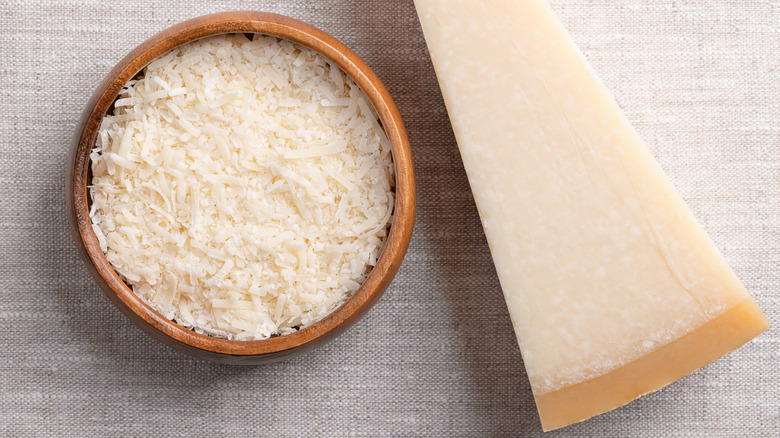
If you took the time to find the best piece of Parmigiano-Reggiano at the store, which is parmesan's close sibling, you'll probably want to extend the life of your block for as long as you can through proper storage practices. For starters, once opened, tossing it into a plastic bag could speed up the spoilage process, because you're trapping moisture inside. Instead, wrap the cheese in a breathable material, like cheesecloth, wax paper, or parchment paper. These conditions will keep just enough moisture in that it won't dry out and get hard as a rock, while also keeping condensation from forming. It's also important to keep the parm away from other potentially odiferous items because it's capable of absorbing the smell.
If you really want your opened parmesan cheese block to last, freezing it is also an option. This is a situation where you can store the parm in a plastic freezer bag (there's no moisture in the freezer), and it should last up to 18 months stored this way. However, if you wanted to do yourself a little solid and spare yourself from having to wait until the block is thawed to grate it, you might pre-grate it into portions, so you can sprinkle it directly onto whatever you're using it for. Just be aware that it'll only keep for up to a week when freshly grated — up to eight months if you freeze it.