

10 Things Chick-Fil-A Customers Always Complain About
We may receive a commission on purchases made from links.
Bubbly "my pleasures" accompany chicken sandwiches from arrival to departure, and they remain just one of many aspects attracting customers to Chick-fil-A. Those same cheerful niceties ring hollow for others, accounting for one of a slew of complaints about the chain. Much more than outliers, there are certain facets of the service, menu, and business through which run a common thread of discord. Ranging from mild irritations to the outright protest-inciting, you may have even had some of these experiences yourself.
Lesser nuisances don't seem to deter customers from coming back for more, albeit at a later date when it concerns hours of operation. They also tend to limit what meals are ordered, how well they're enjoyed, and whether or not a Chick-fil-A fan will dine-in or just drive-thru, (a decision that presents its own array of gripes and grievances). Of course, there are also the headline-making nationwide complaints that, no matter the avenue taken, are bound to leave someone dissatisfied. You'll soon find the culturally dividing matters don't always align with the lasting perceptions.
1. Being closed on Sundays
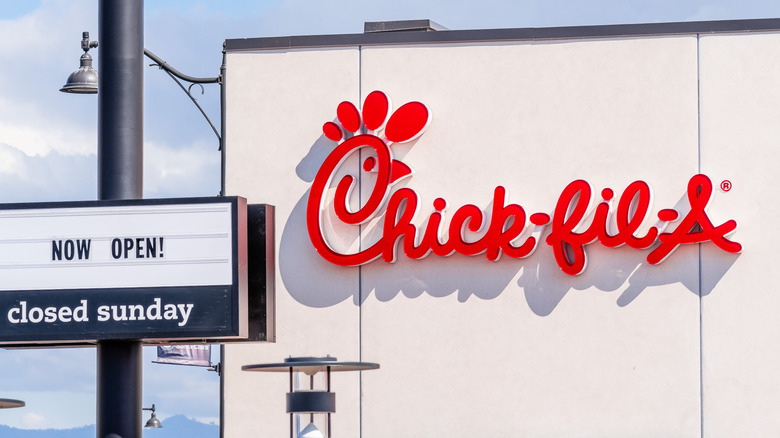
While it's more than likely that you're prone to get a craving for some Chick-fil-A on any day of the week, there's one specific day when there's not much you can do about it. As a result, many feel that Sunday, when the business has remained closed since its earliest days, is the day a hankering for a breaded chicken sandwich hits. The tradition dates back to founder S. Truett Cathy's Chick-fil-A forerunner, Dwarf House, having experienced the seven-day workweek at an always open restaurant himself.
Running contrary to commercialism, Cathy held fast to Sunday closures to allow employees a set day for rest and worship. As it happens, this policy extends into some of the most bustling locales where Chick-fil-A has setup shop. Whether at a mall food court, an airport, or Mercedes-Benz Stadium — home to the Atlanta Falcons — Sundays remain off-limits.
An effort to quantify what that means for the chain's bottomline by USA Today found that, were the restaurants to open their doors for the other half of the weekend, they could bring in at least $1.2 billion annually for the business. Of course, there's no telling what the impact would be without trying it, as customers familiar with Chick-fil-A FOMO on Sundays are willing to plan ahead. Numerous fans report ordering an extra sandwich on Saturday to satisfy any urge that might crop up while employees are enjoying time off.
2. Are the sandwiches shrinking?
Economic concerns remain ever present and customers perpetually want to know that they're getting the most bang for their buck. Unfortunately, at the same time inflation has seen receipt totals ticking upward, attempts to combat that trend typically involve some form of reduction, like "shrinkflation." Attempts at answering the question, "Have fast food burgers really gotten smaller?" turns up considerable speculation, but not much in the way of verifiable proof. The same can be said of Chick-fil-A sandwiches.
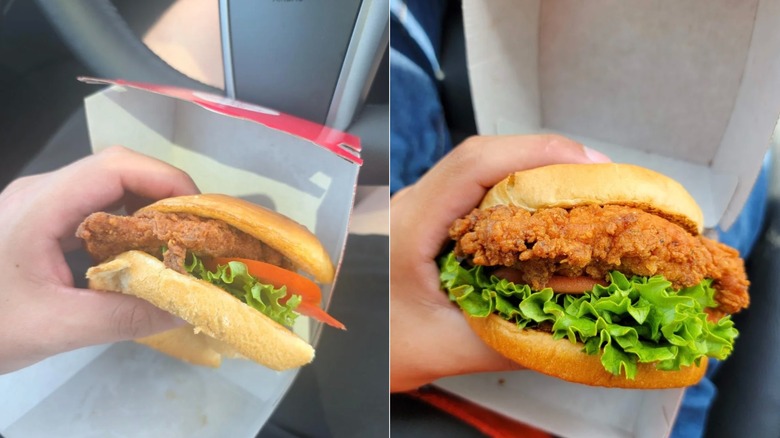
In one attempt at evidence, a Reddit post presented two photos depicting sandwiches said to have been purchased separated by a five-year gap. While the one is reminiscent of an advertisement, with ingredients barely contained by the bun, the other is hardly as robust. Though lacking in documented comparisons, many others have similarly expressed disappointing impressions, believing they no longer get near as much chicken as before.
There may be no cure for the perception, and individual locations may vary, but employees haven't been shy about speaking up on behalf of the company. It is their suspicion that whether through inexperience, accident, or some other correctable mistake, undersized portions aren't getting separated out as they should. Rather than notifying the supplier to get credited for the substandard portions, the belief is these fillets are making it into customer hands, proliferating the notion of shrinkflation.
3. Mounting costs are undeniable
On top of questionable complaints about the size of the sandwiches, there is warranted concern about escalating prices. From farm to table, inflation impacts every stage of production such as the feed to raise the poultry and the fuel to deliver supplies to your local restaurant. While some price increases are to be expected, there are quantifiable differences between typical inflation that calls to mind "back in my day" reveries and periods of dramatic hikes.
Specifically, Finance Buzz compared data from the Bureau of Labor Statistics with its own analysis of fast food price hikes between 2014 and 2024. It found that, on average, national restaurant chains increased prices by 60% while the rate of inflation was about 30% over the same period. Regarding Chick-fil-A, a sizable increase took place between 2023 and 2025 when prices climbed 21%.
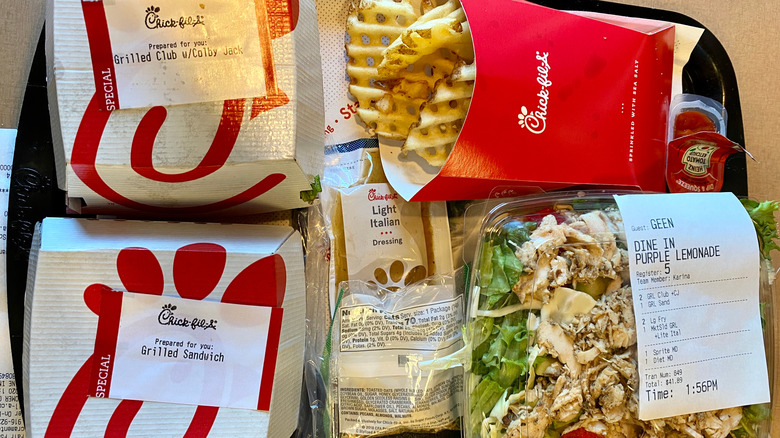
Translating that to the level of a personal bank account, some menu items nearly doubled in price between 2014 and 2024. Where once a Chicken Sandwich Combo Meal came out to $5.85, a decade later it cost $8.55. Likewise, a Grilled Nuggets Killed Meal climbed from $3.99 to $6.45 while the Southwest Salad jumped from $5.69 to $9.69. Of course, these prices don't even factor in the added costs of mobile ordering and delivery services which have seen their own increases to compensate for fluctuating fuel prices and inflation.
4. Servers can be stingy with sauce
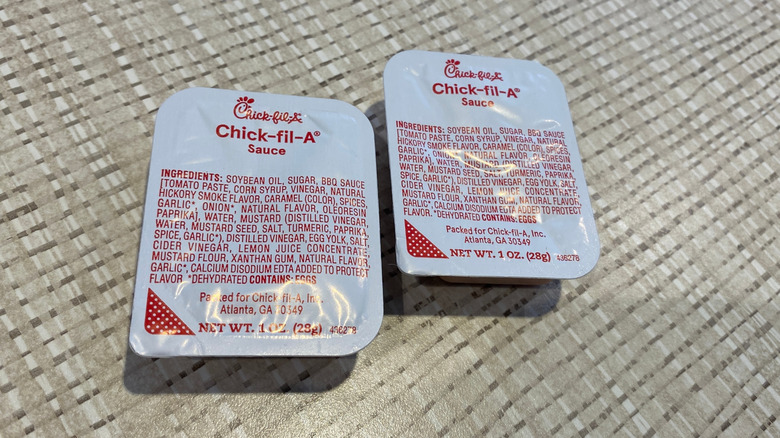
It used to be the case that a fast food order left you wondering what to do with all the extra condiments that came along for the ride. Now, it seems the days of filling bowls, vases, junk drawers, or virtually anyplace in the home are a thing of the past. At least, that's what many routinely complain about after a visit to Chick-fil-A.
Whether ordering at the counter or in the drive-thru, it's common to be asked what sauce you'd like to accompany your meal. Typically left unaddressed is quantity. The result at some restaurants is that customers wind up feeling cheated when even with a large order of nuggets and waffle fries comes with only a couple packets of ketchup or Chick-fil-A sauce (one of several fast food sauces you find on grocery store shelves). A common sentiment is more food should default to more than a standard helping of sauce without an extra charge.
Setting anecdotes aside, widespread complaints are met with widespread defense of Chick-fil-A and its employees. To many, this is simply a breakdown in communication. If you aren't specific about how many of the Polynesian or Sweet & Spicy Sriracha sauces you want, how is the server supposed to match your expectation of what "extra" means with a customary "my pleasure."
5. Forced sincerity seems robotic
Speaking of "my pleasure," the alternative expression to a "no problem," "happy to help," or a simple "thank you," is something you're bound to hear multiple times during any visit to Chick-fil-A. Though stated with the best of intentions, the seemingly-official unofficial custom comes across as saccharine to some and soulless to others.
In some instances, it is the customers themselves that are put off by the phrase, perhaps due to a cynicism about fast food workers taking pride in their work. Others complain about the employees having to repeat "my pleasure" dozens to hundreds of times per shift and wonder at the kind of pressure management might be applying. You may have even seen satirical videos suggesting failure to stick to the script will result in besuited men with dark sunglasses pulling up for some corrective action.
Despite it being a common complaint for those favoring more autonomy in the workplace, many employees speak in favor of the phrase that owes its staying power to Chick-fil-A's chairman. According to former marketing chief Steve Robinson in his 2019 book "Covert Cows and Chick-fil-A: How Faith, Cows, and Chicken Built an Iconic Brand," Dan Cathy, son of founder S. Truetty Cathy, is behind the practice. After he began using the saying himself around 2003, Cathy said, "It dawned on me that this could be a service signature for us, almost like two pickles on a sandwich."
6. Drive-thrus can lead to drama

To many, the drive-thru at Chick-fil-A is considered the pinnacle of expedited customer service; arguably putting the "fast" in fast food. To some, however, the efficiency of multi-lane engineering guided by tablet-wielding employees hardly smacks of a "my pleasure" experience. In fact, navigating the drive-thru can feel more like coming across a panhandler in a traffic jam than a seamless trip for chicken sandwiches.
At certain locations, especially during peak hours, cars spill out beyond the confines of the parking lot creating issues in the vicinity of the restaurant. By the time the menu board is in sight, but not quite reached, the indecisive and the introverted alike often find themselves confronted for an order placement. What comes across as a convenience for regulars presents as borderline hostile to others. In a 2021 interview with the Atlanta Business Chronicle, Chairman Dan Cathy acknowledged an estimated 30% of customers choose to drive away instead of driving through.
Negotiating the busy parking lot may only be resolved by dining at irregular times. The same can't be said for the drive-thru as Redditors offered recommendations for those with ears to hear. Simply put, on top of perusing the menu before heading to Chick-fil-A, customers can place a mobile order for pickup in certain locations, avoiding much of the congestion while cutting down interactions, as well.
7. Menu limitations leave fans wanting
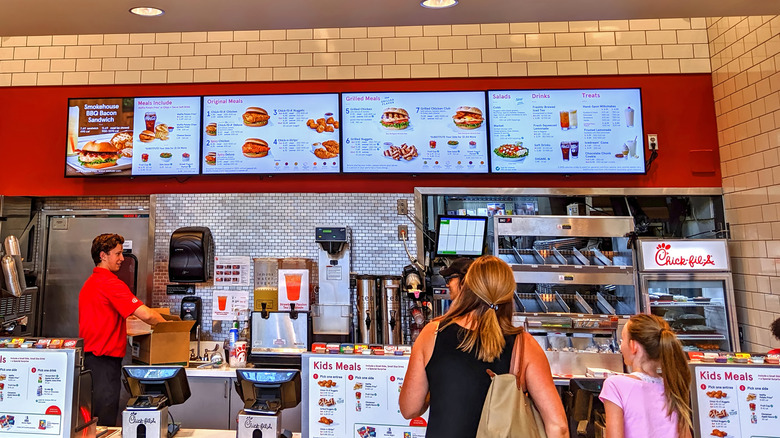
As with most fast food chains, Chick-fil-A is no stranger to releasing limited edition options or — to the lasting chagrin of fans — discontinuing certain favorites for good. Given the relative similarity between items across the menu and the few toppings the restaurant includes, this amounts to scant ways that you can customize your sandwich. In fact, the chain's own website proposes a mere six options while quoting customers who told the founder, "We like it. Don't change it again."
Where it concerns toppings, Chick-fil-A promotes extra pickles, three different kinds of cheese, adding bacon, mayonnaise, or one of the different kinds of available dipping sauces. The other options include ditching the bun for a lettuce wrap or salad, as well as opting for spicy breading over the traditional. There was a time when creamy coleslaw could have been piled atop your chicken sandwich. Unfortunately, that is one of the preferred menu items nixed from Chick-fil-A's menu. As a consolation for lacking secret menu options, or even just opting out of alternative service selections like well done fries, the chain did placate fans by publishing the recipe for the discontinued coleslaw.
8. The coffee is disappointing
When it comes to coffee, mention of java surely has connoisseurs, casuals, and snobs alike thinking of the ideal café, shop, or chain to score their next espresso shot or cold brew. Sometimes convenience wins out over sampling a rare type of coffee. Instances where a tantalizing Chick-fil-A Chicken Biscuit, Egg White Grill, or Hash Brown Scramble Burrito is what you're after at breakfast, you're likely to snag you're morning cup o' joe along with your Chick-n-Minis. That, according to customers and employees alike, is a sure path to a letdown.
Both the hot coffee and iced coffee served at Chick-fil-A is sourced from Thrive Farmers, which started in Costa Rica before branching out across Latin America as well as to Africa, China, and India. The latter option gets the brunt of complaints with a number of samplers describing the taste as akin to a chemical. Disfavor for the coffee is so prevalent that hearing someone express their favor for it earns quite the rebuke. What's more, employees even describe entertainment in watching newbies get their first taste only for them to later join the bandwagon of discontent.
9. An antibiotics assurance faced an adjustment
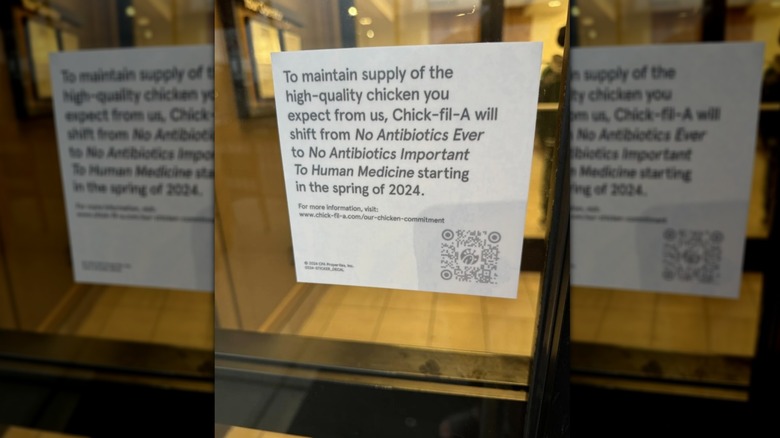
Founder S. Truett Cathy may have heeded the advice of customers to steer clear of changing Chick-fil-A's chicken sandwich, but what works for fans doesn't always work for business. Sometimes a change in process is met with support like Steak 'n Shake transitioning away from the use of seed oils to exclusively offer beef tallow fries and tots. While such moves beg the question on whether other fast food chains have beef tallow fries, it also contrasts the reception to Chick-fil-A ending its No Antibiotics Ever promise.
A decade after committing to phase out the use of poultry raised with antibiotics within five years, Chick-fil-A announced in 2024 that the policy needed an adjustment amid supply issues. Attempting to keep the spirit of the initial promise alive, the chain introduced its No Antibiotics Important to Human Medicine (NAIHM) policy. Chick-fil-A assures that the antibiotics are cleared from the chickens' systems before they are made available, but customers still feel betrayed.
Despite many in the public siding with Chick-fil-A, certain that neither quality nor taste are impacted by the policy change, some still can't get over the sourcing change. Even with the majority of the chain's existence featuring chicken potentially raised with some kind of antibiotic, some vow to take their business elsewhere until the No Antibiotics Ever promise is restored.
10. Contributions have sparked controversy
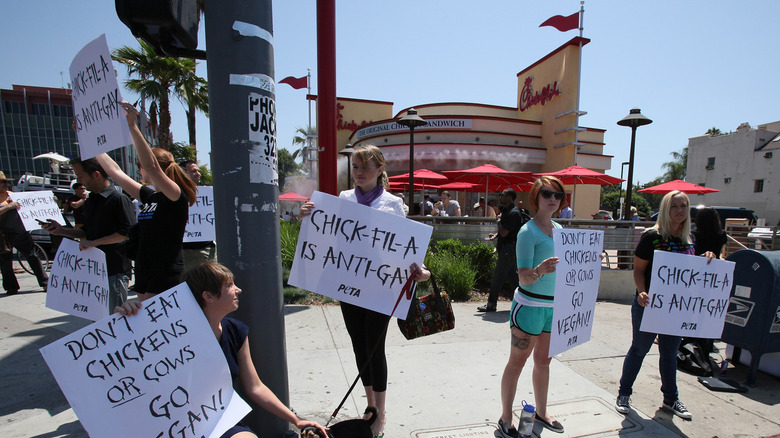
Since its inception, Chick-fil-A hasn't been shy where it concerns Christian principles. Unfortunately, its followthrough in supporting certain Christian charities resulted in arguably the biggest complaint it has ever faced: alleged bigotry. On one side of the issue, the chain was donating to organizations like the Fellowship of Christian Athletes and The Salvation Army; groups serving communities with a Christ-centered mission. The fact that those organizations ascribe to the biblical definition of a marriage between one man and one woman is widely considered an affront to LGBTQ organizations and allies.
Of course, while many uphold their disfavor for Chick-fil-A, the reality is that the considerable pushback against the chain, including protests and boycotts, led to a change of charitable donations that began in 2020. Eliminating the FCA and The Salvation Army from its donor list — along with other organizations viewed as similarly controversial — the chain placed its focus on support the fight against hunger and homelessness while fostering education.
At the same time, Chick-fil-A attained a spot on Newsweek's America's Greatest Workplaces for Inclusion & Diversity 2025 list, dispelling some of the bad reputation with which it had been branded. Along the way, it picked up pushback from the opposite end of the political spectrum as efforts by the chain at diversity, equity, and inclusion sparked their own backlash. Some viewed the direction the restaurant has headed as a betrayal for emphasizing its "culture of belonging," according to a report from The New York Times.
11. Methodology
Compilation of this list relied on a number of sources. In addition to building consensus through forums, I also referred to secondhand accounts and first hand experience visiting Chick-fil-As in multiple states.