

What Happens To Pizza Hut's Leftover Food?
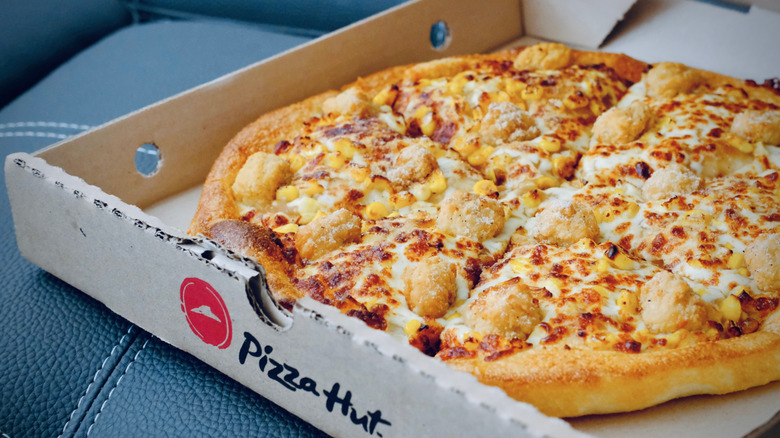
When you don't finish your meal at a restaurant, taking home whatever is left on the plate is a no-brainer. Just ask the server to box it all up, and you can turn your leftovers into a whole new meal the next day, like green bean pan bagnat. But when closing time comes and restaurant staff find that there's quite a bit of fully prepared, totally edible leftover food still in the kitchen, what do they do with it? It would be a shame to simply throw it in the trash, especially for huge chain restaurants like Pizza Hut. Thankfully, back in the 90s, Pizza Hut found a solution. The Hut donates its leftover food to people in need through its Harvest Program run by Food Donation Connection (FDC).
The Harvest Program first began internally at Pizza Hut, started by Bill Reighard, who felt that perfectly good food shouldn't go to waste. In 1992, Reighard left Pizza Hut to form FDC, with Pizza Hut as its first contributing food sponsor. These days, many other restaurants and chains have their own Harvest Programs — it's also where Chipotle's leftover food goes — to help organize, store, and facilitate the pickup of its surplus food that will ultimately be given out by FDC. It works on a local level to connect food donors with organizations helping to feed the needy, like food banks, soup kitchens, and shelters. FDC has helped distribute over 1 billion pounds of prepared food donations from all over the U.S. and abroad. In 2021 alone, it worked with more than 14,000 businesses to help deliver 65 million pounds of surplus food to 10,000 different institutions.
How Pizza Hut works with Food Donation Connection's Harvest Program
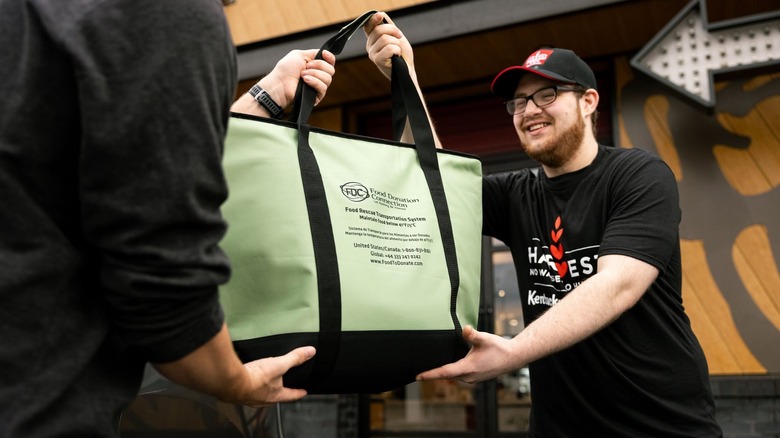
In 2017, Pizza Hut hit a major milestone — more than 100 million pounds of surplus food donated through its Harvest Program, and the program is still going strong today. To enroll in the Harvest Program, restaurants simply need to register on the FDC website. FDC will supply storage containers, arrange the collection of excess food, facilitate employee training, manage the transport of donations, and even calculate tax deductions from donations it has received. All of this is to be managed by support teams via phone or text. Restaurants and donors can even track their donations on web and mobile apps.
The program is run under strict food safety guidelines. At Pizza Hut, the donations often come from pizzas created due to ordering errors, to-go orders that were never picked up, and buffet items that weren't finished during business hours but are still perfectly safe to eat. To prepare food donations for the Harvest Program, the items are labeled and placed in food safe containers, then refrigerated or frozen until ready for pick-up by FDC. Within the Yum! Brands corporation, the largest restaurant company in the world, Pizza Hut isn't the only chain to have a Harvest Program, but its cousin brand KFC also donates leftover food to FDC. And according to Yum Brands! Chief Sustainability Officer, Jon Hixson, "[The Harvest Program] delivers a triple benefit: Food stays out of landfills to prevent environmental impact, nonprofits benefit from the donations, and our restaurants give back to local communities" (per FDC).