

14 Foods To Keep You Hydrated In A Heatwave

A heatwave isn't just an arbitrary term used to describe hot weather; it's defined by any period of time that lasts at least two days when the reading on the thermostat exceeds average temperatures for that geographic area. As such, a heatwave in Saudi Arabia might look different from one in Greenland. Wherever you are, though, these weather anomalies can be devastating to the environment and to your wellbeing, especially if you don't keep hydrated.
Drinking fluids, especially water, is extra important during a heatwave to prevent serious conditions, like heat exhaustion or heatstroke, and the Centers for Disease Control (CDC) recommend drinking up to 32 ounces of water every hour to prevent such issues. But you still need to eat when the weather gets too hot, and these 14 foods are packed with fluids. They include everything from common fruits and vegetables to some international specialties that have helped people around the world keep cool and hydrated during the hottest parts of the year.
Watermelon is a fresh-from-the vine sweet treat containing a lot of water
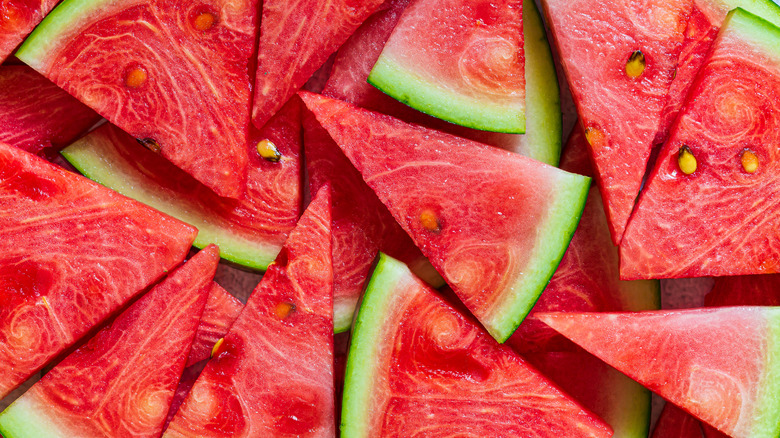
Watermelon is a quintessential summer fruit, and its hydrating properties are right in its name. If you've ever squeezed a piece of watermelon flesh and ended up with just a tiny sliver of pulp, then it shouldn't come as any surprise that 92% of the fruit is composed of water. Besides enjoying it as a dessert, you can also use it in salads and even cold soups, or freeze wedges of it to cool you off on the hottest days.
Juicy strawberries are in season when the weather gets hot
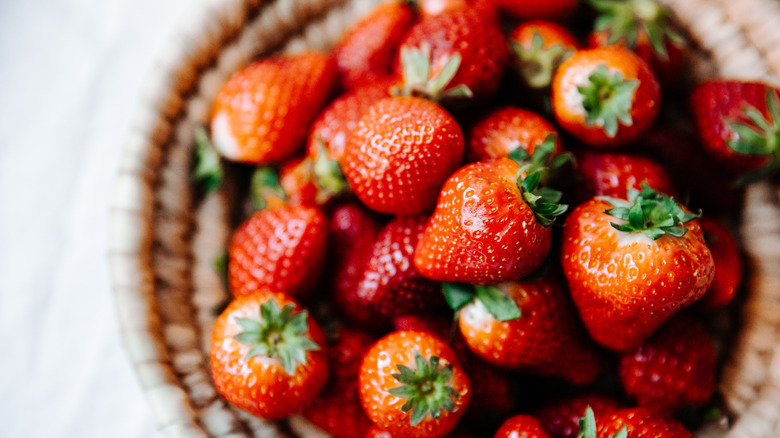
Like watermelon, strawberries also contain 92% water, but they're easier to enjoy — no peeling or cutting required. You can eat them as is, add them to a salad, or freeze them on skewers and dip them into chocolate for a decadent, refreshing treat that will also help you stay hydrated.
A bite into an Asian pear lets out a cascade of mild, refreshing juice
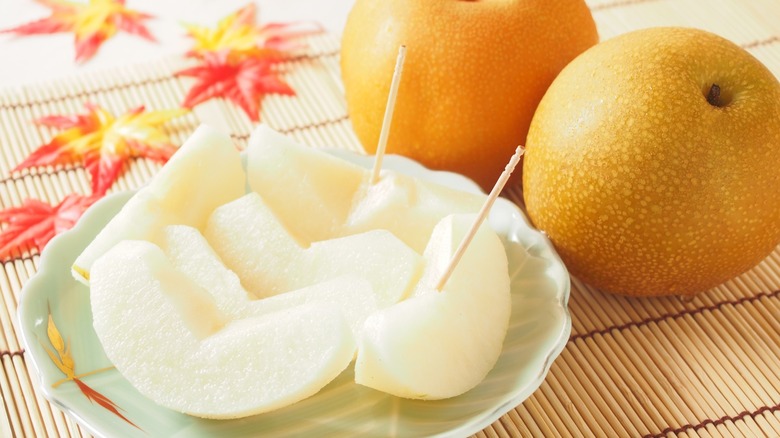
You may associate pears with the fall and warm spices, but Asian pears are a completely different story. These are round and plump, have a crisp texture, are mildly sweet, and contain 88% water compared to 84% in standard pears. They sometimes go by the name Korean pears, depending on where you purchase them, and can be a little pricey — up to $4 a piece! Yali pears are a more affordable alternative that you can find in many Asian groceries. Because they're not too sugary, you can add these to a savory dish without turning it into a dessert.
Celery is an easy on-the-go snack that packs a lot of hydration
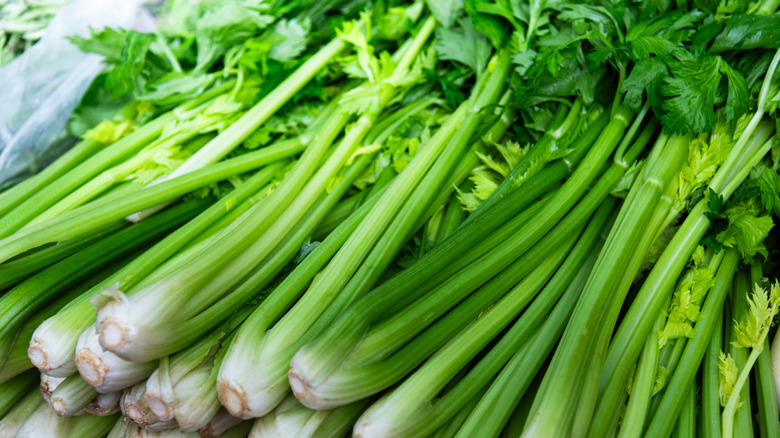
Don't just look at these pale green stalks as a flavoring for soup or an addition to chicken salad. They actually contain 95% water, more than watermelon. You may not get a lot of hydration from celery when it's just a garnish or seasoning, but snacking on this vegetable may help you replenish what you sweat out during a heatwave, and you can always make your snack a little heartier with a smear of peanut butter.
Cabbage is a versatile, water-packed veggie that can keep for a long time
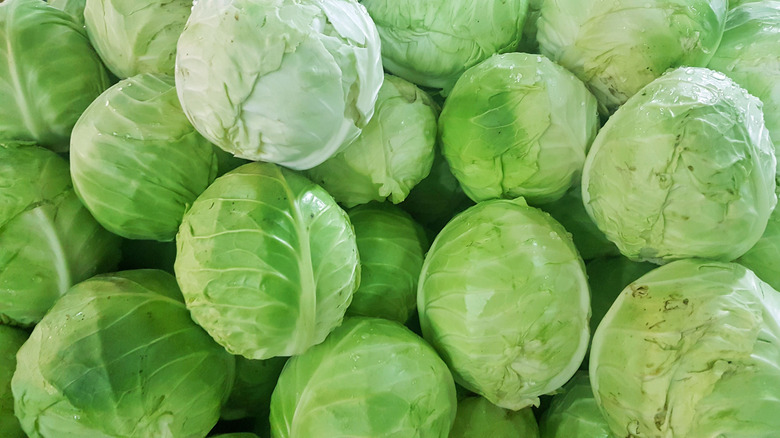
Cabbage contains over 90% water, which can vary slightly depending on the variety. The great thing about this vegetable is that it's widely available, it tends to be affordably priced, and you can use it in salads, stir-fries, tacos, soups, and so much more. The best part is that a head of cabbage can live in your fridge for weeks without going bad, so you'll always have an edible source of hydration on hand.
Winter melon is watermelon's jumbo relative that's perfect for savory dishes
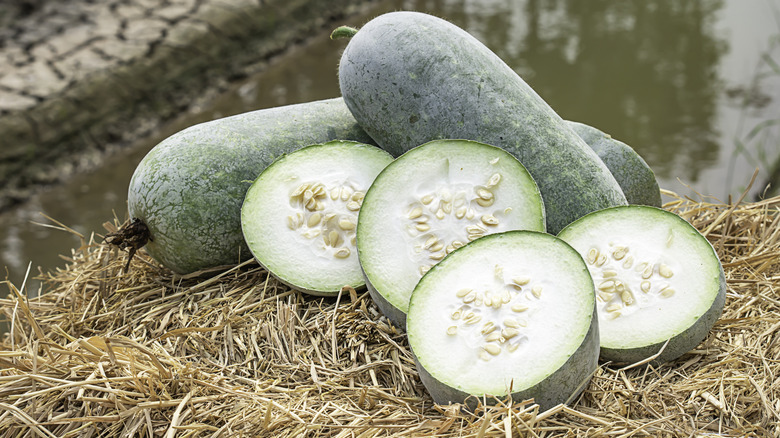
Winter melon has a misleading name, because it's actually grown in the summer. Also known as wax gourds, these relatives of cucumbers and melons are humongous and need to be cooked before being eaten, but they're highly versatile and contain over 95% water. You can purchase them pre-sliced or in wedges at many Asian markets, and they make a perfect addition to soups and stir-fries since they aren't sweet and have a neutral flavor that absorbs seasonings.
Shopska salad is the Balkan antidote to a heatwave
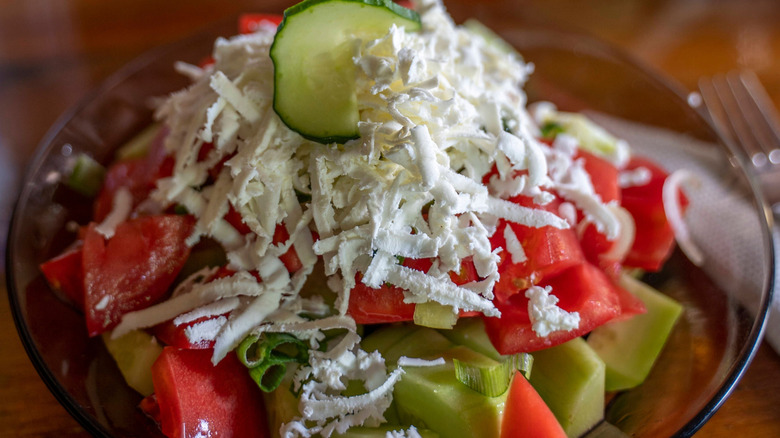
You may look at this salad's combination of cucumbers, tomatoes, and bell peppers topped with shredded feta cheese as a riff on a Greek salad, but don't tell that to someone from Bulgaria, which is where shopska salad originated. Cucumbers and tomatoes contain some of the highest concentrations of water — around 95 percent — and the bell peppers (which traditional Greek salad doesn't have) contain around the same percentage of H2O. This salad can also be a little more affordable to assemble, as it doesn't require Kalamata olives or pricey olive oil.
Jícama con chile is a refreshing Mexican snack
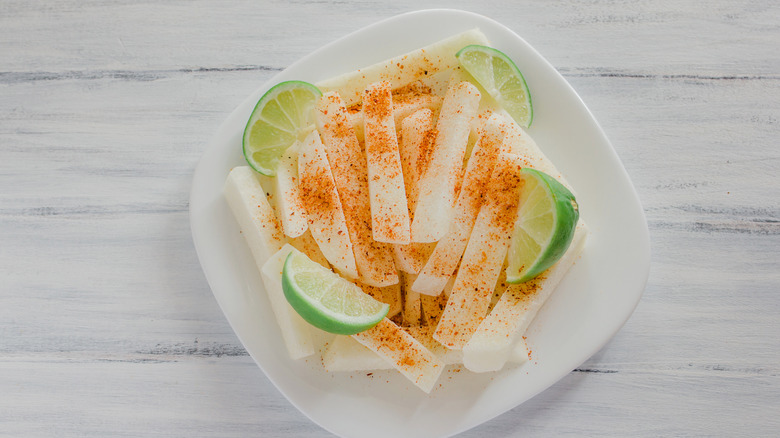
Jicama is a pretty unique vegetable that originated in Mexico. It's actually related to beans, but the only part that's eaten on the plant is its bulbous root, which looks like it would be starchy but actually has a 90% water content and can be eaten raw, which is how it's often enjoyed in Mexico along with chile powder and a squirt of lime. You can cut the root into batons and pack them into a cup like fries, which makes a nice portable snack. You can also substitute the chile with Tajín, a spicy, tangy, and salty seasoning.
Spanish gazpacho contains several hydrating fruits and vegetables
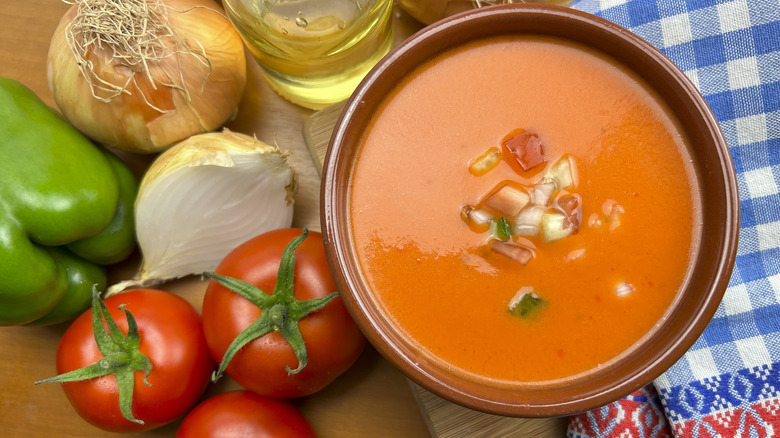
Gazpacho is a cold soup hailing from Andalucía, a region in southern Spain, and contains three water-packed ingredients — tomatoes, cucumbers, and peppers — along with onions, which are about 89% water. Most American-style gazpachos eschew stale bread and skimp on the olive oil, which both give the original recipe a velvety mouthfeel and make it a satisfying meal in and of itself. You can serve it in a bowl or sip it from a glass, and you can also vary the ingredients, like in a cucumber and dill gazpacho.
Cacık is a cooling Turkish soup packed with protein
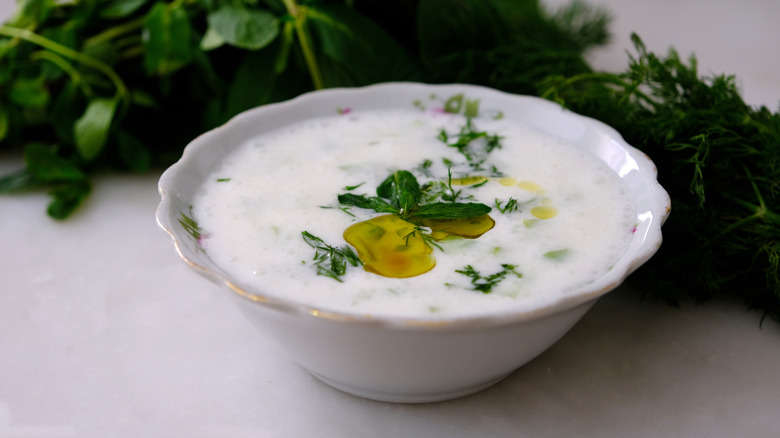
Pronounced jah-juck, this cold soup contains the hydrating superhero, cucumber, along with yogurt, which contains about 88% water. Besides this soup's hydrating properties, a 2017 study by Industry Health suggests that yogurt may actually help cool you down. A traditional cacık recipe also calls for dill or mint, two herbs that can also refresh your palate when the weather gets hot.
Mul naengmyeon is literally one the coolest noodle soups you can have
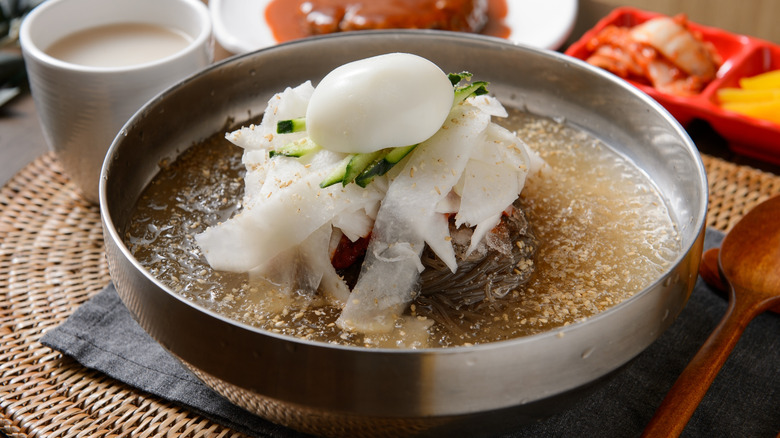
Mul naengmyeon is a Korean soup consisting of chewy buckwheat noodles in a pool of slushy broth. You read that right — the broth is actually frozen until it has the consistency of slush. Not only is it remarkably refreshing, but it can help you stay hydrated. It's usually topped with slices of cooked beef and hard-boiled eggs, which provide some protein, along with juicy slivers of cucumber and radish, which contain 95% water. You can actually find kits of this popular dish at many Korean markets, making it easy to whip up a batch when the heat's really getting to you.
Gelatin desserts are ready for you when you want some edible hydration disguised as a sweet treat
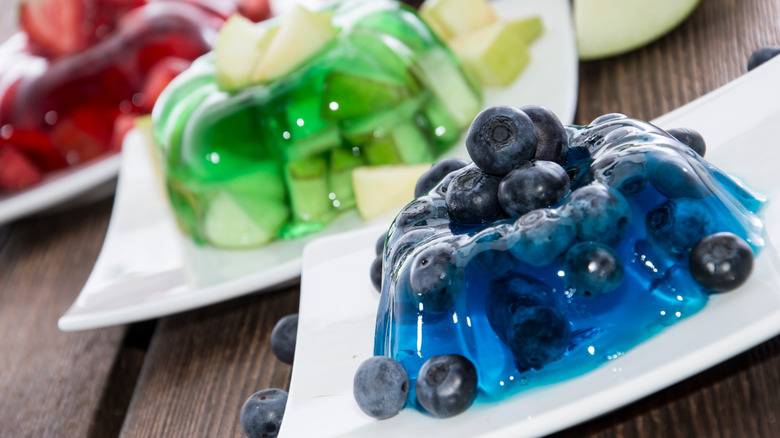
If you've ever made a batch of instant Jell-O, you know that a key ingredient in this dessert is water. Gelatin desserts are affordable, easy to make, and can keep in your fridge for a while. You can opt for individually sealed cups for easy, on-the-go snacks, or you can choose to make a more elaborate 1950s dessert. If you want to go the old-school route, you can even use plain gelatin and fruit juices to make your own creations, which also lets you control the sugar content.
Grass jelly is a soothing plant-based alternative to gelatin
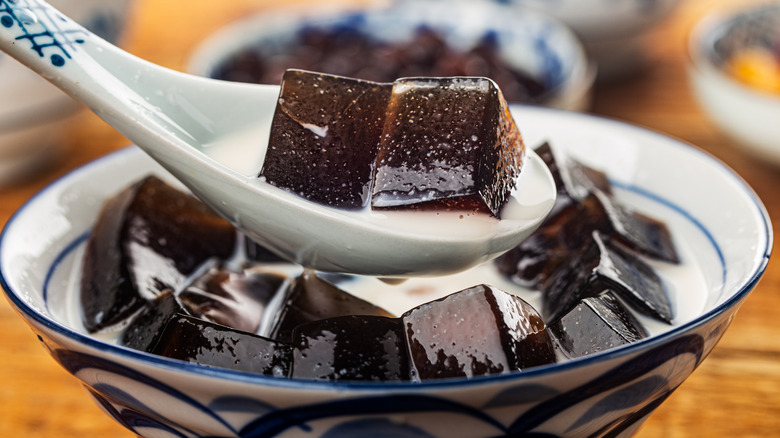
Grass jelly has a light, herbal flavor and is a popular delicacy in China, where it has been used in traditional medicine to cool down the body and aid in digestion, making it perfect for a heatwave. It's traditionally made by boiling the Chinese mesona plant in water and straining the liquid, but you can now find instant powders at many Asian markets along with ready-made packages, and it's a popular summertime topping at bubble tea shops. Unlike gelatin, it doesn't dissolve at room temperature, meaning you can free up space in your fridge.
Shaved ice is a versatile hot-weather treat that's really H2O in disguise

This may seem obvious, but when your body is overheated and dehydrated, you may not immediately think of shaved ice as an H2O delivery system. Ice is water, after all, and shaving it makes it much more enjoyable to consume than just chomping on cubes, at least for some people. The beautiful thing about this dessert is that there are so many variations throughout the globe that you can probably have a different type of shaved ice every day until the heatwave subsides, from Louisiana sno-balls to Japanese kakigori and Filipino halo-halo.