
What's The Best-Selling American Whiskey At The World's Top Bars In 2026?
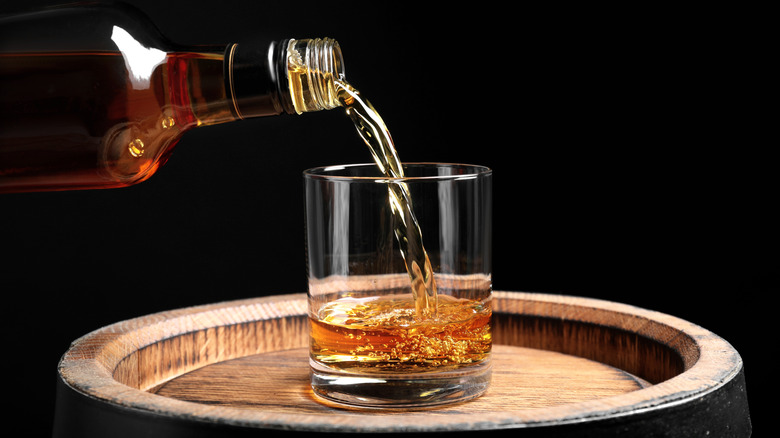
Few countries do whiskey better than the United States — we literally can't get enough of the stuff! American whiskey generates a staggering $5 billion in domestic revenue every year (per Distilled Spirits Council of the United States). That appetite for the homegrown stuff got us wondering: What's the best-selling American whiskey at the world's top bars as of 2026? The obvious guesses are big-name brands like Jack Daniel's or Johnnie Walker, but according to Drinks International, it's Michter's that currently holds the No. 1 spot. To determine this, Drinks International surveyed sales records of bars from The World's 50 Best List, North America's 50 Best, Asia's 50 Best, and a few "editor's picks" from lesser known areas.
While you'd perhaps expect the best-selling brand to be affordable, Michter's is considered a premium label, with standard bottles typically ranging from $55 to $150. It also produces luxury whiskeys, and its ultra-aged, limited-release Michter's Celebration Sour Mash can set buyers back upward of $6,000. But thanks to its strict production methods and popularity among bartenders, many believe its products are worth every penny.
What sets the brand apart are its unique methods, and the secret is in the barrel. Much of whiskey's color and flavor comes from the wood. Michter's, however, takes barrel-making a step further than most. Its oak barrels are air-dried outdoors for up to five years, mellowing the harsh, bitter compounds and setting up a smoother pour. Then comes the signature move: toasting the inside of each barrel before it's charred. This caramelizes the wood's natural sugars into a "red line" that the whiskey soaks into as it ages, extracting extra flavor and color that a charred-only barrel simply couldn't match. The result is a whiskey that expresses a complex blend of bold, smoky flavors alongside milder, sweeter notes.
It's not just the barrels that put Michter's in a league of its own
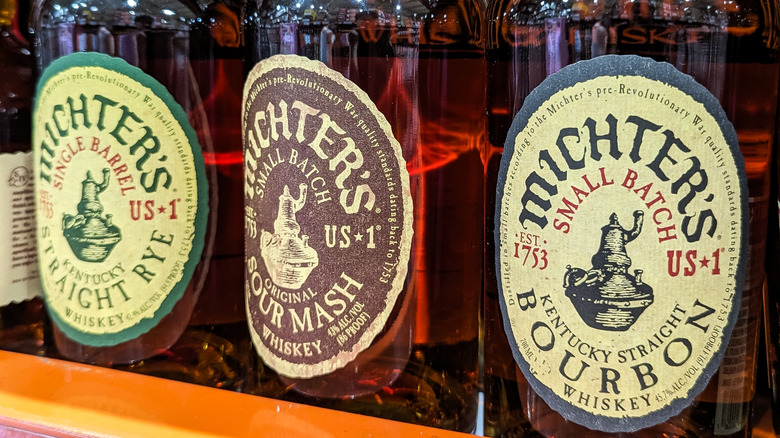
Michter's roots lie at a Schaefferstown, Pennsylvania distillery founded in 1753 by Swiss Mennonite farmer John Shenk. The brand has since moved its operations to Kentucky, where the state's climate plays its own role in shaping the whiskey's famously complex flavor.
Kentucky's hot summers and dry winters put constant pressure on the barrels, pulling whiskey deep into the wood as it expands in the heat, then pulling it back out as the wood contracts in the cold. Michter's leans into this even further with heat cycling, deliberately warming and cooling its warehouses each winter to force extra rounds of this push-and-pull. While this is certainly a costly process, every cycle means the whiskey has more contact with the wood, and with more contact comes more flavor.
While the maximum entry proof for bourbon is 125, Michter's whiskey also enters the barrel at a significantly lower proof than most other brands, meaning there's more water and less alcohol relative to the spirit. Here's how the science works: Overly harsh oak flavors are caused by phenol compounds, natural byproducts of the wood. Water breaks down these compounds, resulting in a sweeter and smoother final flavor. Higher-entry-proof whiskeys, by contrast, dissolve fewer phenols and extract more intense compounds, leaving them more prone to astringency. Entering the barrel at a lower proof also means less water needs to be added to bring the whiskey down to its final bottling strength. To the whiskey connoisseur, the result is a less diluted pour that lets the barrel's original aged character shine.