

This Cowboy Dessert Was The Old West's Version Of A Modern-Day Favorite
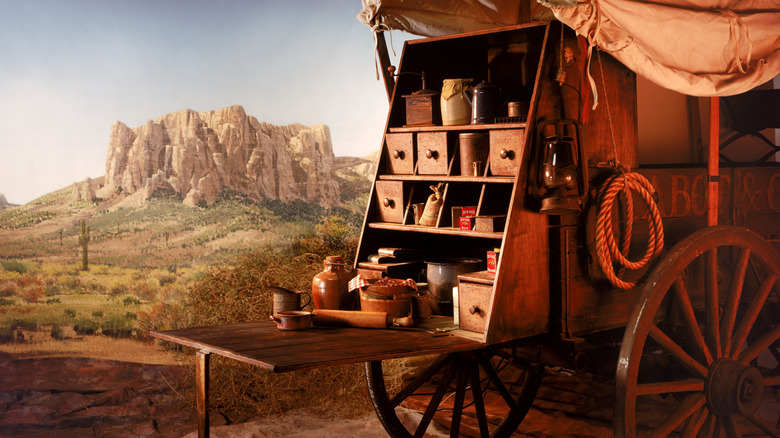
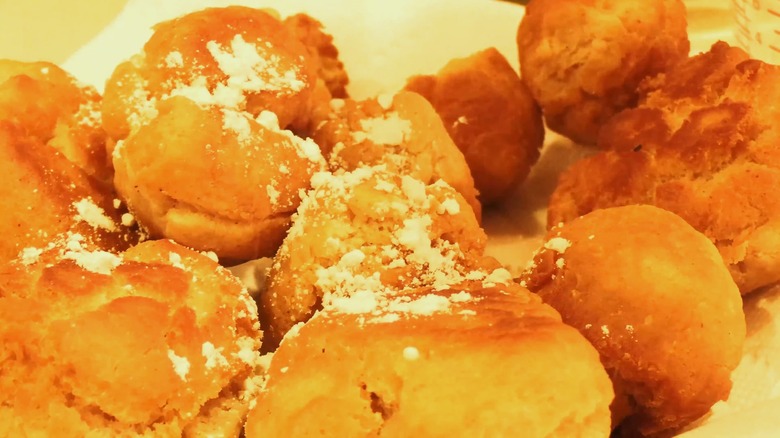
Once ranchers brought on dedicated cooks to drive cattle with cowboys, sweets and baked goods became far more common. Thanks to the "cookie," cowboys had meals out on the trail, including a bit of sugar in some form, and there were few more popular than the old-school "bear sign" donut.
"Animal sign" usually meant any sort of indication the critter had passed through. For bears, you might see claw marks or a carcass from the hunt, but more often than not the "sign" was poop. Since cookies had to focus on quantity over quality and didn't have access to specialty donut tools, it's likely that the earliest iterations of bear sign donuts resembled a lumpy pile of fried dough. While this may not sound particularly appealing, a bit of sweetness with some cowboy coffee was a much-treasured treat for the working men driving cattle, regardless of what it looked like.
Bear signs were likely similar to the original donut from America's first shop, in that they were largely flat, more dense, and lacked any sort of glaze most people associate with the modern version. Since cookies relied on shelf-stable ingredients, they wouldn't have had ready access to milk, which often makes confections more tender. Using water instead, bear signs were probably a bit more dense and chewy from the additional gluten development and flavored only with sugar and whatever spices the chuck wagon may have had on hand.
Other cowboy sweets from the Old West
The type of sugary treat a cowboy had access to largely boiled down to how generous their employer was. Those without a chuck wagon largely had to make do with nothing but canned fruit, but those with a well-supplied, full-time cook had a surprising number of options both for breakfast and dessert.
While biscuits, hardtack, and trail bread were the most common cowboy carbs, some lucky few had access to "hound's ears" or sourdough batter fried in grease. These inevitably came with whirlup sauce, a sweet syrup made primarily with sugar and water. Just about anything could be used to flavor the sauce, though the dried fruit common to cattle drives were likely the most available add-in. Like bear sign, they lacked much fluffiness, but they were still quite recognizable as the early progenitors to the modern American pancake.
Before Jell-O was on every store shelf, hooves were the most common way to make gelatin, and cowboys made no exception. Since unexpected calves slowed down the herd, and you couldn't waste any part of the animal on a cattle drive, they were harvested and every part got put to use. Calf hooves were boiled down and used as a base for many desserts, like adding eggs for an impromptu custard or simply sweetened with sugar and made into jelly.