

How Your Grandma Probably Made Chicken
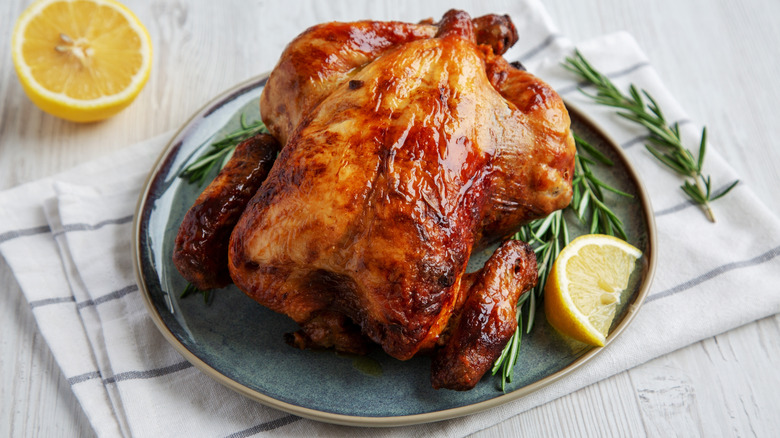
Meals that we consider classics are ones that have stood the test of time, just like beloved family recipes that have been passed down through generations. But other dishes can be common in one era, only to eventually fade away. For instance, there are some 1950s cooking trends that haven't held up, like using mayo in anything and everything and Jell-O mold desserts. Another cooking method that was popular in the same decade, but is no longer common, is roasting chicken inside a grocery store brown paper bag. However, the concept has survived in a different form, and the original method will still work just as well.
This method creates a moist, tender bird because the bag holds in the steam produced as it cooks. At the same time, enough steam escapes through the paper that the skin gets browned. The opening (which should be to the side) has to be folded or rolled up tightly, tied closed with kitchen twine, or even stapled shut so the steam can do its magic. The sealed package is then placed inside a roasting pan and put in the oven.
This homespun method got a big-business remake in 1970 when Reynolds introduced its Brown-In-Bag plastic version. Sold today as Oven Bags, the heat-resistant nylon pouches are also available in a larger size for turkey. One downside is that the skin lightly browns but doesn't crisp, since steam can't escape through the nylon. That's true even though small slits have to be cut into the bag to let some steam out so it doesn't burst. To remedy that, the chicken can be broiled briefly outside the bag once it's done to crisp the skin.
How to prep and safely roast chicken in bags
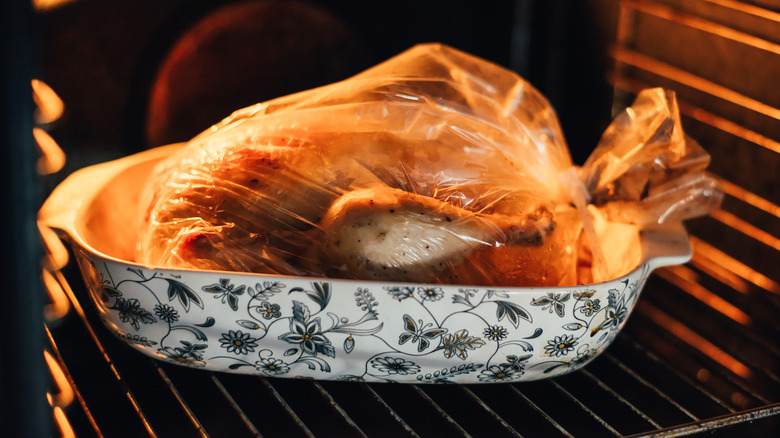
Whether you're using paper or nylon bags, take the chicken out of the fridge 15 to 30 minutes ahead of time to let it warm slightly, and pat it dry. Season the outside and cavity, and use spices in addition to salt and pepper for more flavor if you prefer. To make things easier, Alton Brown shakes the chicken in a paper bag with the seasonings, and it's simple to then use the same bag to roast the bird. You can also brush the skin with oil or butter, and stuff the cavity with fresh herbs, onion, garlic, or lemon wedges.
For the paper bag method, you can create a form of self-basting by rubbing butter on the inside top of the bag, which will melt and drip onto the chicken during cooking. When using the nylon version, always add a small amount of flour or cornstarch and shake the bag. It reduces the amount of steam, helping keep the pouch from bursting open, by blending with the chicken's juices and fat. As a bonus, it also thickens the pooled juices that can be used for gravy.
Be careful when you put the chicken in the oven that it has good clearance on all sides so the bag won't touch the top, sides, or racks as it expands. Once it's done, let the chicken rest for about 10 minutes before carving.