

The Italian Sauce That Gives Chicken Salad Instant Flair
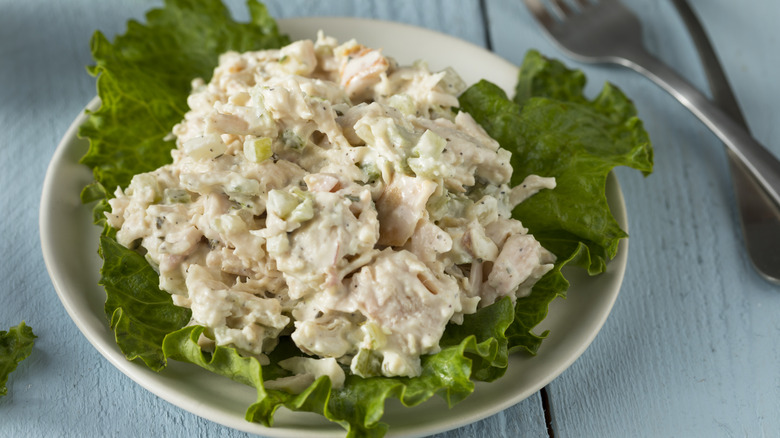
Chicken is all the rage nowadays: It's a lean source of protein — which we're all trying to max out on, it seems — as well as being incredibly versatile owing to its rather neutral savory profile, and generally inoffensive in texture and taste. But its malleability can also be its curse, especially as chicken salad can easily turn into a lifeless, flavorless bowl of sadness. That's why seasoning is of the essence here — and that's why pesto can be a chicken salad's best friend. While chicken salads are most commonly associated with dressing like mayonnaise, pesto provides multiple flavor boosters all in one go.
While pesto is typically associated with pasta, chicken salad is one of the many other recipes that can be wedded deliciously to the sauce. Classic pesto is made with a combination of basil, pine nuts, Parmigiano Reggiano, garlic, and olive oil, making it a herbaceous, aromatic delight. You get brightness, sweetness, umami depth, and a well-rounded creamy nuttiness that gives it so much more color and variety than a plain old dollop of mayo. And pesto has plenty of your macronutrients, all in one combo. You'll get vitamin K from the basil, healthy fats from the nuts and EVO, and a decent dose of protein from the Parmigiano Reggiano to further complement the chicken. The key to making it the perfect addition to a chicken salad is to measure it properly — too much will overpower your palate, while too little will be lost in the mix.
Pesto sauce brings flavors from the Italian seaside
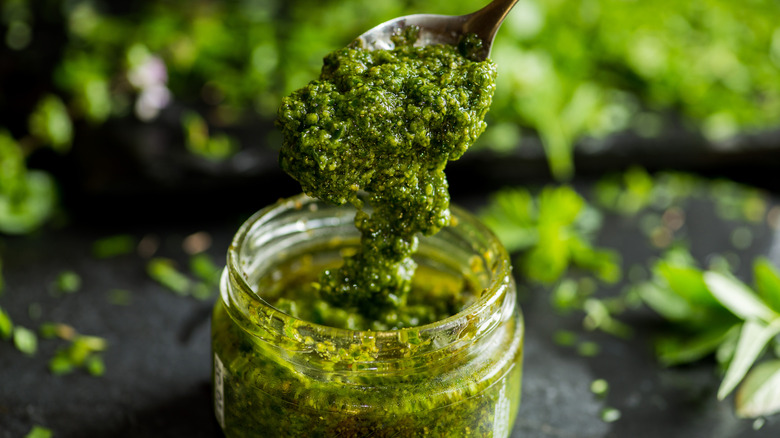
Pesto doesn't just add amazing flavor, but also some history to your chicken salad. The sauce has longstanding roots in the Italian coastal region of Liguria, where you can find the iconic pastel-hued cliffside villages of the Cinque Terre. The word's meaning itself comes from the Italian "pestare," meaning to "pound" or "crush," a reference to the traditional mortar-and-pestle method used to make the sauce for over a hundred years. Go to any village on the Ligurian coast or to the region's main city, Genoa, and you can smell a hit of basil wafting from shutter-lined windows as it's being prepped for a dish of trofie (twisted fresh pasta) with pesto.
While pesto can be easily bought in just about any major supermarket or grocery store worth its salt, it's also incredibly easy to make — and will likely taste fresher than anything straight from the jar, helping elevate a chicken salad instantly. All you need is to pound basil leaves with crushed garlic and pine nuts until fragrant and paste-like, add the olive oil for smoothness, and work in some grated Parmiggiano Reggiano (Pecorino is less traditional, but can work too) — no salt needed, as the cheese does the heavy lifting here. The sauce doesn't have to be perfectly smooth, as a few chunks can give it texture — although you can adjust how much oil you add based on how glossy you want it, especially to complement your chicken salad. While a mortar and pestle might be traditional here, a regular food processor also works just fine — although be careful not to blend it too fast if you don't want a flat sauce.
How to use pesto in your chicken salad
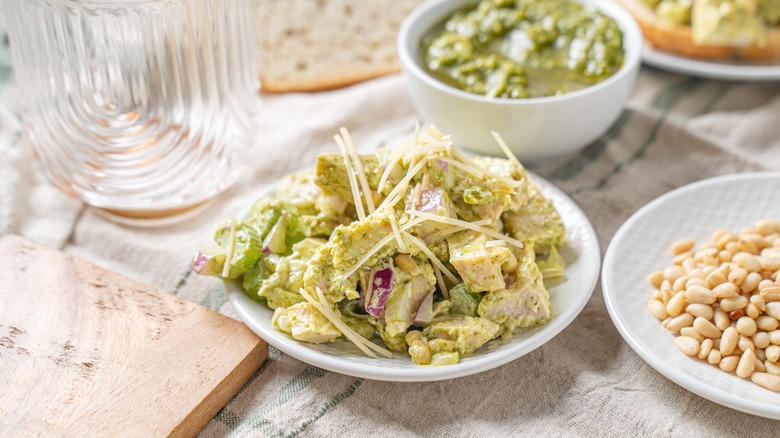
You can incorporate your pesto in your chicken salad in a wide variety of ways. A few single dollops of it works just fine. But if you want something that bridges classic chicken salad dressing with the Ligurian sauce, combine some mayonnaise with a tablespoon or two of pesto, a squeeze of lemon to bring out all the aromatic headiness of the sauce, and some black pepper for a slight kick. Avoid going too hard on the seasonings — the pesto does most of the job here, and you don't want to oversalt your chicken, or have a cacophony of clashing flavors. Likewise, too much mayo, extra dressing, or olive oil will add a cloying richness to an already decadent, albeit delicate, sauce.
You can also choose to lean into pesto's Italian palate with some compatible add-ons. Some fresh cherry or sun-dried tomatoes bring extra color and sweetness flavor that pairs excellently with the pesto. Adding some freshly grated parmesan, toasted pine nuts, or fresh mozzarella can further bring out the textures and tastes already present within the sauce. Some Greek yogurt and lemon zest can be a lighter, Mediterranean-leaning substitute to mayo that can also pair excellently with pesto chicken. The important thing is to be moderate with your doses — and you can instantly turn a dull salad into something bright and instantly evocative of the Italian summer.