

Salmon Vs Cod: Which Fish Is Easier For A Beginner To Cook?
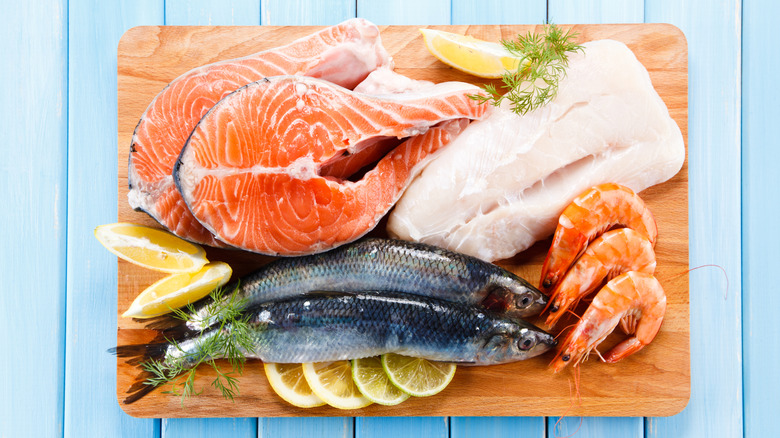
For newcomers, fish can feel intimidating to prepare. The protein can seem perilously easy to ruin, prone to either off-putting dry bites or a mushy mess. Don't season it enough, and it's bland; buy a low-quality variety, and it's too fishy. Throw in the steep expense, and the unease settles in quickly. It doesn't have to be this way. Consider two fish often spotted at the grocery store: salmon and cod. Both can be prepared successfully at home, with one variety proving even a touch more accessible than the other.
The two fish have some notable differences. Cod is white and delicately textured, breaking into large flakes when cooked and often sold in neat rectangular fillets. Meanwhile, salmon is recognizable by its vibrant reddish hue, although the fish can occasionally be naturally white, depending on its genetics and diet. While also firm and flaky, salmon contains significantly more fat, often 10 times the amount found in cod.
Such distinct characteristics lend the two fish vastly different culinary personalities. Especially when sourced from a farm — which makes the fish even fattier — salmon is versatile and approachable. Cod requires a more measured approach, with added care to preserve moisture. As a result, salmon is typically the easier introductory fish. Rest assured, though, both can shine in a home kitchen, meaning fish preparation shouldn't be avoided.
Salmon's moist texture makes for fuss-free cooking
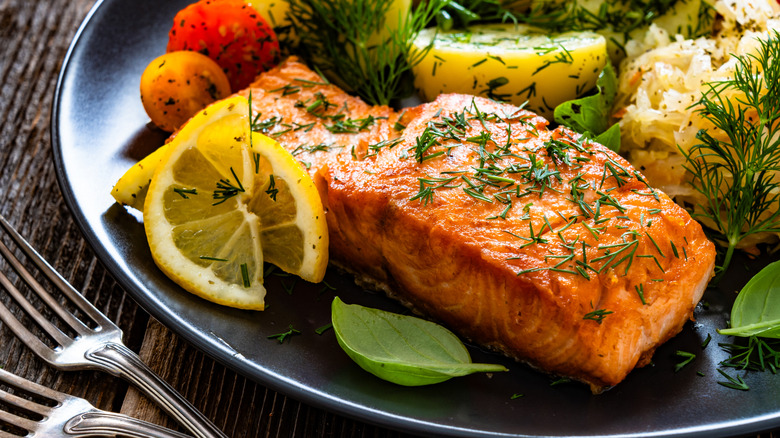
Thanks to its fattier composition, salmon is well suited to several hands-off cooking methods. Especially with a richer farmed fillet on hand, potential techniques run the gamut. You could bake the salmon, or give it a pan-fry to achieve crispy skin. And don't sleep on grilling, which is a trickier method with lean fish like cod.
Truth be told, several of these methods work well with cod, too. Pan-frying is a dependable way to produce beautifully flaky fish, and baking makes for an equally tasty version. Employing such techniques with cod isn't outright difficult. Instead, the fish simply takes less time to cook, meaning salmon is generally more forgiving.
Not to mention, there are a handful of preparation methods specific to salmon. Because farming eliminates the risk of specific parasites, the fish can be sliced and enjoyed raw as sashimi — a mode of consumption that is highly unsafe for cod. You've likely spotted smoked salmon at the store, making for a delicious ready-to-eat option. The fish also pops up in other premade formats, poised for easy applications like a fennel salmon salad. Especially for novice cooks, such versatility gives salmon the edge, making it a tried-and-true starter fish.
Preparing lean cod is straightforward with the right methods
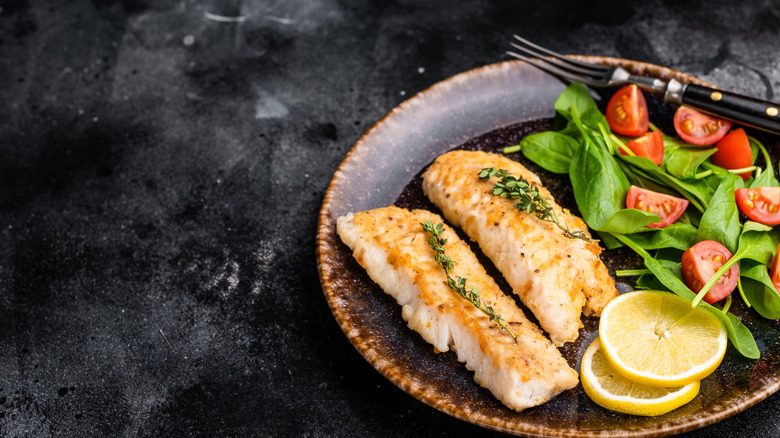
Cod may be more predisposed to drying out, but that doesn't mean preparing the protein is complicated. As one of the world's most widely consumed white fish, abundant recipes exist for it. Reliable methods include baking it in parchment paper or foil, thereby trapping in moisture and essentially steaming the fish. Similarly, there are numerous broth-based cod preparations, whether Portuguese fish stew with tomatoes and potatoes or a Japanese miso-based soup.
Unlike salmon, which can easily turn greasy, cod is excellent for frying. The thick fillets hold their structure well under breading, and the fish's flavor doesn't overwhelm. Such a technique involves more prep than, say, pan-frying. However, a cod fillet's thickness makes it easy to check internal doneness with a thermometer, thereby decreasing guesswork. Instead, you'll need to focus your efforts on making your fried fish crispy, not greasy, through careful oil temperature control.
Furthermore, consider the state in which you buy your fish. Both cod and salmon are often sold frozen, a format that's especially common for the former. If you're looking to cut down on thawing time, cod actually turns out quite tasty when cooked straight from the freezer. Its leaner composition is an advantage here; less fat means less resultant mushiness. So sure, cod requires a little more know-how. However, that doesn't mean it's not worth attempting at home.