

How To Make Sure Your Fried Fish Is Crispy, Not Greasy
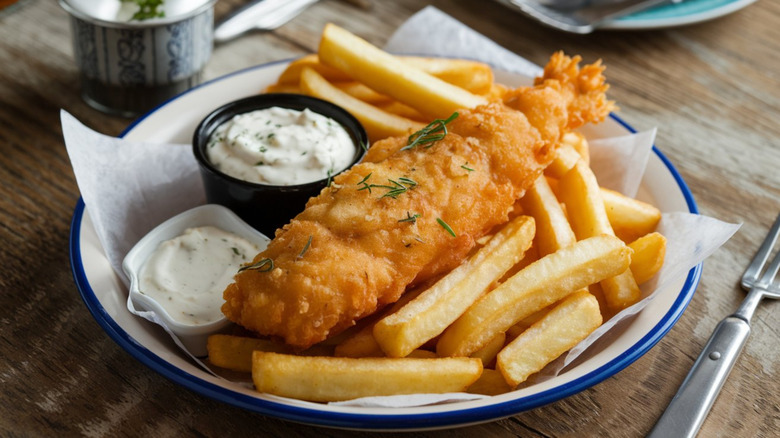
Even if you've picked the best fish for frying, there are still plenty of opportunities for things to go wrong. Frying something to crispy perfection may seem easy, but balancing oil temperatures, choosing the right pan, and controlling the amount of moisture in your breading are all vital steps before your fish ever comes near the stovetop.
Frying is a dry heat method that's all about replacing evaporating moisture with oil to create a crispy, satisfying texture. While you want your meat to be juicy, the simplest way to ensure your fried fish comes out crispy is to pat it dry first. On top of removing excess juice that can make your batter less crispy, this also helps your breading adhere directly to the surface of the meat, rather than flaking off in the oil. Follow this up with a flour that doesn't absorb much moisture and has an ultra-fine texture, like rice flour, for the crispiest fried fish of your life.
Oil temperature is a balancing act. Too hot, and your breading fully develops while the interior of your meat is raw. Too cold, and not enough moisture evaporates from the breading, so it'll grow soggy rather than crisp. However, one of the things that makes fish such a great protein to fry is that it cooks incredibly quickly, so you can heat the oil to the highest range of the frying spectrum, typically between 350 and 375 degrees Fahrenheit, giving you a perfect, quick crust.
How to keep fried fish crispy after cooking
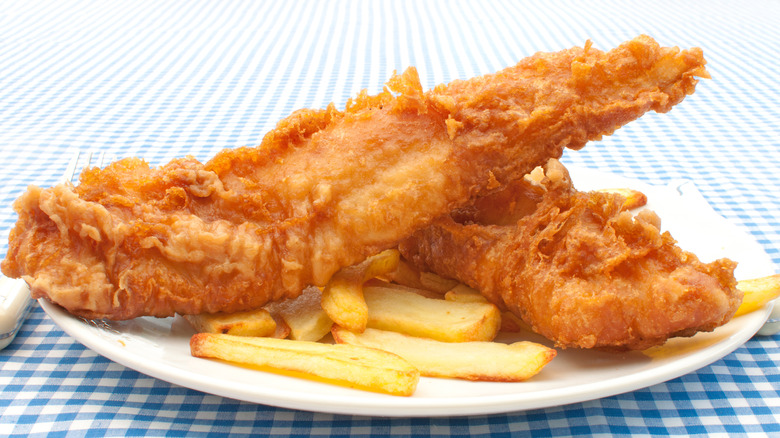
Whether you're letting it cool before eating or heating it as leftovers, maintaining the crispiness of your fried fish once it's out of the oil takes a few tricks. Still, it's hard to go wrong with a dry environment and good air circulation, and these two factors will get you most of the way there every time.
Once your fish is out of the oil, it'll still drip a bit of fat and juice while it cools. Leaving it in direct contact with any surface allows it to pool up and soak into the breading. Even something as simple as a wire rack over a plate provides the air circulation necessary to cool your food, dry out the breading, and prevent sogginess. Pro tip: Give your fish a quick sprinkle of salt while it's still wet from the fryer. Not only does this make your breading taste better, but it also helps absorb some of the sweat while it cools.
When it's time to heat your fried leftovers, nothing beats an air fryer. 320 degrees Fahrenheit for at least three minutes per side preserves its crust without drying out the meat too much. If you need to reheat fried fish in the oven, keeping it at least 350 degrees Fahrenheit for 15 minutes should do the trick. Be sure to leave it on a wire rack to not only promote better air flow, but also prevent direct contact with a hot pan that may scorch one side of your food.