

The Fried Fish Chain That's Still Around But Customers Really Loved In The '80s
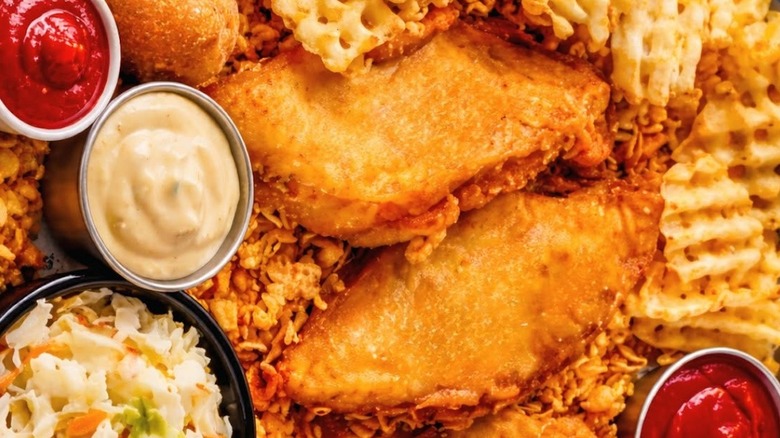
These days, the fast-food zeitgeist tends to revolve around fried chicken and burgers, but back in the 1980s, one chain carved out a strong identity serving fried fish. Known for its nautical-themed restaurants, Long John Silver's once held an unprecedented share of the seafood fast-food market. While the chain is still alive and kicking, its golden age is now decades in the past.
Founded by Jim Patterson and Warren Rosenthal, Long John Silver's opened in 1969 in Lexington, Kentucky. Named after the iconic pirate villain from Robert Louis Stevenson's classic 1883 novel "Treasure Island," the chain was designed to bring a classic New England-style, battered fish-and-chips shop to landlocked, rural America at fast-food prices. The niche concept was a hit, and at the height of its success in the '80s, the chain had nearly 1,400 locations in operation. With its vast reach, it's no surprise that the chain holds massive retro appeal for those raised during that era.
While many people do have fond memories of the brand, most recollections tend to center on childhood outings rather than the food itself. As one Redditor put it, "I have a weird form of nostalgia for this place. Once every decade I get a craving for it, then I go there for a meal (there is only one left in our city), but the food is so bad I swear never to go again." Others have shared similar sentiments about the quality of the food, which is a major reason the chain was unable to carry its success into the '90s or 2000s.
Lawsuits and heavy debt nearly destroyed Long John Silver's
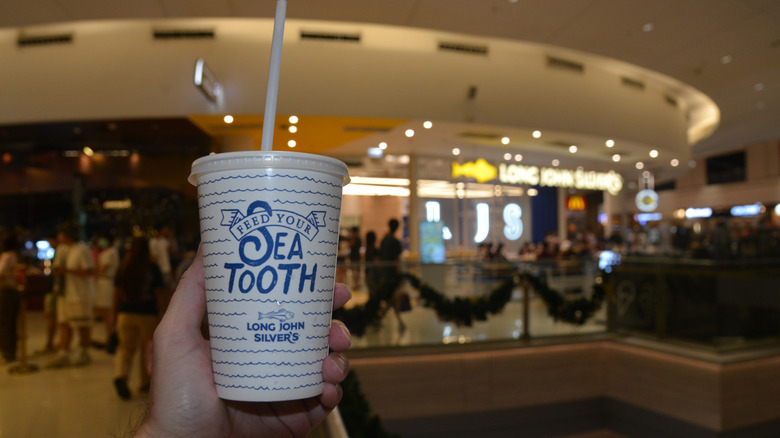
While the early 1980s were a period of huge success for Long John Silver's, the 1990s told a very different story. The decade marked a stretch of serious financial instability for the brand, nearly sinking the ship entirely. In 1989, its parent company, Jerrico Inc., was taken private in a $620 million leveraged buyout. To pay off the debt from that deal, the company was forced into aggressive cost-cutting and restructuring, putting major pressure on operations and the brand's long-term stability. In a case of unfortunate timing, the chain was also hit by rapidly increasing fish prices.
The chain struggled heavily under the weight of its debt, and things were made worse by a series of legal setbacks. These included a trademark infringement case and a separate breach of contract and fraud lawsuit linked to unpaid promotional costs for "Lost in Space" movie toys, reportedly worth more than $3 million. Combined with its financial pressures, these issues ultimately contributed to the company filing for Chapter 11 bankruptcy in 1998.
Following this, the chain entered a prolonged period of decline. From the late 1990s into the 2020s, it steadily closed more than 1,000 restaurants. Ownership also shifted multiple times as the brand struggled to regain stability. At one point, it became part of Yum! Brands, the parent company behind hugely successful chains like Taco Bell and KFC. However, it was later sold after failing to meet the company's performance expectations. As of 2026, the brand is owned by Four Oaks Partners, cementing its place among the legacy seafood chains currently staging a major resurgence.