

Here's The Average Shelf Life Of A Bottle Of Gin
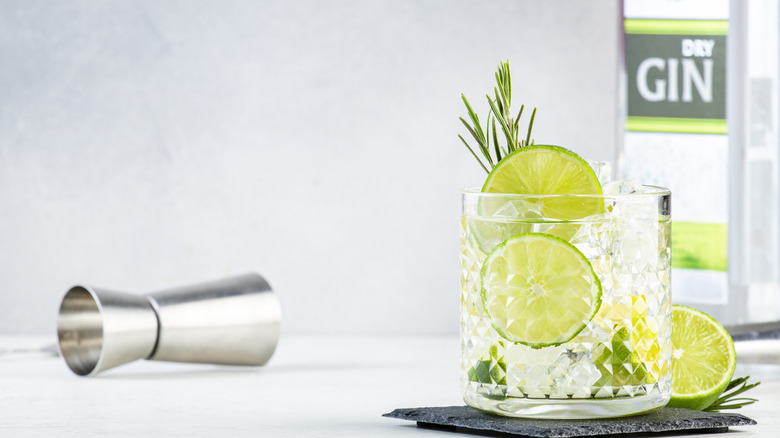
There are few drinks more quintessentially British than gin, and in recent years, it's enjoyed a serious rise in popularity Stateside, particularly among millennials. This juniper-forward spirit is a staple in everything from a classic soda or tonic cocktail on a sunny afternoon to the ever-trendy martini, so having a bottle on-hand is always a good idea — there are so many two-ingredient drinks that start with gin. This, however, naturally raises an important question: How long will a bottle actually last? Well, like most distilled spirits, gin — technically — doesn't have a use-by date.
Gin starts with a high-proof neutral spirit, usually distilled from fermented grain, which is then redistilled or infused with juniper berries and other atomatics. These can include everything from rosemary and citrus peel to herbs and spices. The only non-negotiable is that to be legally classified as gin, juniper must remain the dominant flavor. In the United States, the USDA Tobacco Tax and Trade Bureau (TTB) requires gin to be bottled at a minimum of 40% alcohol by volume, while over in the U.K. and EU, the minimum threshold is 37.5% ABV. This high proof plays an essential role in the drink's longevity, as the alcohol (or ethanol, to be more precise) creates a stable environment where bacteria cannot survive, making unopened gin incredibly shelf-stable. Opened, it can last for two or three years (though the flavor may start to fade after a year) — but only if you store it well.
Unlike wine or beer, gin also contains no ingredients that can easily spoil. It's essentially just a distilled spirit with botanical oils, so there's nothing can can actually rot. That said, while unopened gin can last for years, storage conditions still matter, and there's several factors which can gradually affect the spirit's flavor and aroma over time.
The best ways to store a bottle of gin
If you want your gin to taste as fresh as the day you brought it, the biggest factor to watch out for is light exposure. Direct sunlight, namely UV rays, can gradually break down the delicate botanical compounds that give gin its signature flavor and aroma. Since these oils are what make each bottle unique, it's always a good idea to store gin in a cool, dark place. While heat is less of a concern — just keep it away from extremes — its generally advised the best temperature for storing gin is between 55 to 65 degrees Fahrenheit.
Certain, often more premium, bottles also come with corks. If this applies to you, ensure that your bottle is left standing upright. Unlike wine, where the cork needs to be kept moist, high-proof spirits like gin can slowly break down the cork if left in constant contact with it. Over time, that can damage the seal and introduce unwanted flavors into the mix.
Once opened, gin doesn't suddenly go bad, but its quality can slowly decline. Every time you open the bottle, oxidation begins. This irreversible chemical reaction gradually dulls the crisp, botanical notes. So no, gin won't spoil in the traditional sense when exposed to oxygen. To help offset the effects of oxidation, always seal the bottle tightly after use and continue storing it away from heat or light.