

Everyone Should Follow Anthony Bourdain's Advice On Engaging With Your Server

We may receive a commission on purchases made from links.
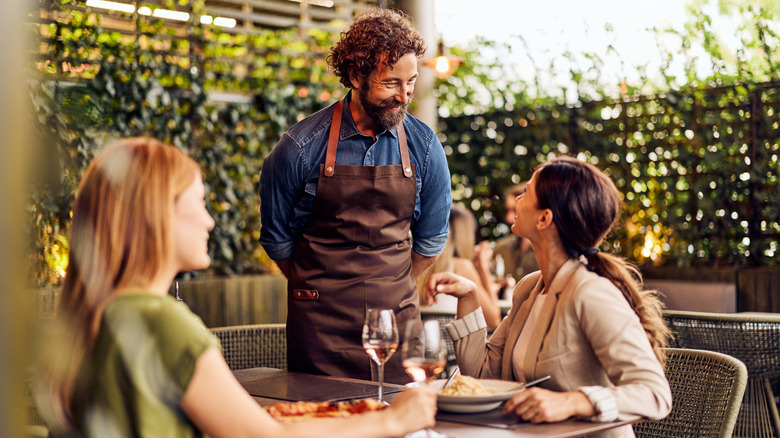
When Anthony Bourdain published "Kitchen Confidential," he provided a lot of insight into what goes on behind the scenes at restaurants and changed how Americans perceive the hospitality industry. Perhaps one of the most valuable pieces of advice he gave pertained to the interactions customers have with waitstaff. In my experience speaking to chefs, almost every restaurant has a few dishes they may not be proud of but keeps on the menu to satisfy a particular type of diner, and Bourdain confessed that many restaurant menus also include items that aren't the best quality but sound impressive. To avoid ordering the wrong thing, Bourdain advised diners to be polite to their waiters. As he wrote in the book, "If [your server] likes you, maybe he'll stop you from ordering a piece of fish he knows is going to hurt you."
A good waiter can steer courteous diners away from a dish that will spoil their entire meal. It may sometimes be a subtle gesture in more formal environments, or your diner waitress may flat-out tell you, "You don't want that, honey." It is their job, after all, and their tips rely on it. I've waited tables at restaurants before, and I agree with Anthony. I've informed jovial vegetarian diners about rennet in parmesan cheese, and I've dissuaded a very considerate table that had just returned from Paris from ordering a bad crème brûlée. But a rude table was treated like an alligator in your pool — a very Florida reference that implies you don't want to harm it, you may need a little support from wildlife control (or your manager), but you want it off your property as soon as possible.
Getting on an employee's good side isn't just helpful at restaurants
When I worked at Whole Foods Market, we would gladly look in the back for an item if a customer asked nicely. But if they were rude, we might just tell them it was out of stock. And if they insisted on us checking our back-of-house storage, we'd simply pretend to do so or spend several minutes talking to a coworker until the customer got impatient and left. Friendly customers, however, would get five-star service. We'd help them find suitable replacements for out-of-stock items, check to see when a missing item would be replenished, and could even set something aside for our friendliest regulars when it was back in stock.
In the cheese department where I worked, staff would sometimes even walk with polite customers to the produce department to select cheese and fruit pairings. Courteous customers who engaged with employees as equals would also get valuable tips that the company didn't advertise too heavily, like requesting smaller pieces of cheese or getting a refund for something they didn't really enjoy. We'd even let our favorite customers know about upcoming sales and promotions and, just like Anthony Bourdain revealed, advise them of things to avoid, like the olive bar. We also recommended items in other departments, like Whole Foods' air-chilled chicken.
But employees actively avoided rude customers and warned their coworkers about poorly mannered shoppers, especially repeat offenders. In my experience, hospitality workers do the same. So, if you're one of the worst types of people to dine with at a restaurant, you may have made enemies of an entire business's workforce, and they may not really care if you order a lobster bisque that's mostly just the bottom of the pot.