

11 Ways Panera Bread Has Completely Fallen Off For Customers
For those who remember the early days of Panera Bread, the fast-casual chain built on affordable, quality food and freshly-baked bread, you might be disappointed in what the brand has become. You wouldn't be alone, either.
For the last few years, the internet has been flooded with complaints from customers noting a drastic decline in Panera's business practices. Reviewers have complained about everything from food prep and quality to climbing prices. But during its heyday in the early 2000s, Panera Bread was on top of its game. Opened in 1987 as the St. Louis Bread Company (the new name, Spanish for "bread basket," came in 1997) the business was built on providing, as its name suggested, fresh breads, along with pastries, bagels, soups, sandwiches, and salads. Panera's affordable, high-quality foods and comfortable cafés — many complete with fireplaces and cozy booths — quickly made the company popular.
Now, though, that luster has faded. A host of issues, from ownership changes to menu overhauls, legal problems, as well as quality and staffing cuts have caused Panera to fall out of favor with customers.
Beloved menu items were changed
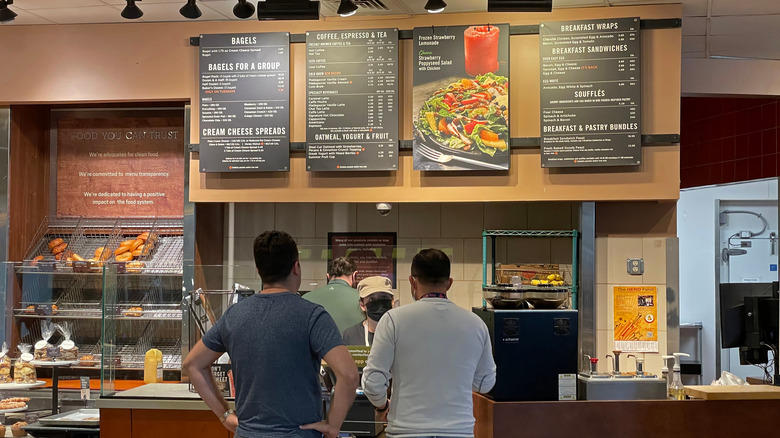
In early 2024, a series of changes were made to the Panera Bread menu, which it called its "new era" menu. While nine new dishes were added and 12 classics were updated, the menu cut almost 50 items people had grown to love, including its flatbread pizzas, broccoli mac and cheese, and mango smoothie. Hot entrees that demonstrated the restaurant's foray into dinner service were largely cut, including souffles and a teriyaki chicken & broccoli bowl. The company announced the changes would streamline operations for bakery-cafe items, so that they could deliver food more efficiently.
Almost immediately, customers affected by the menu changes expressed outrage online. A more recent Reddit thread features reviewers reminiscing about lost favorites, from the Chicken Tortellini Alfredo to the Chipotle Chicken Panini, BBQ Chicken Flatbread, and Sierra Turkey.
Cafés no longer bake bread in house
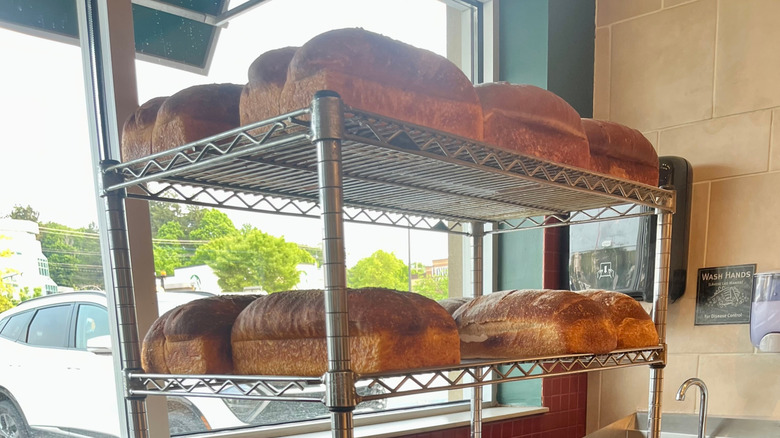
Starting in 2023, Panera began shifting away from its original model of baking bread in-house. Previously, the dough for its bread would be delivered every morning to each café, and loaves would be proofed and baked each morning. Customers could smell the bread baking, which added to the restaurant's appeal. The bread was so popular, some cafés would even run out before the day was over. However, that all changed starting in 2023, when Panera began the two-year process of converting all its locations to the on-demand business model, in a move to cut costs and ensure bread was always available.
Panera's bakeries would close in favor of third-party bakeries, who would use the brand's recipes, partially bake (or par-bake) them, then freeze them for shipping. The cafés would then finish the breads on the premises as needed. Even the pastries and the mac and cheese went to the heat-and-eat model.
You can probably guess how it went over with customers. Even CEO Paul Carbone told FranchiseTimes that the change "is one of the worst communications that we have had," acknowledging that customers fell away after it was announced. Even though the bread was the same recipe, was now more reliably in stock, and was warm just as often, the perception for many customers was that a bakery with "bread" in its name shouldn't stop baking it in-house.
The prices went up
A quick glance at social media shows that customers have noticed an uptick in Panera Bread's prices over the last couple of years. One YouTube reviewer revealed that a paltry half sandwich and half salad plus a drink cost her $22, asking how the restaurant stays in business at such prices. And one Reddit comment from an actual Panera employee shares that "The prices are outrageous for what you get."
These hikes are hardly imagined — in 2024, Newsweek reported that Panera's menu prices have increased by 68% in the nine-year period dating back to 2015. Among other items, the chain's beloved mac and cheese increased by a massive 112% during the same time period. Customers are often willing to swallow such increases if they feel the quality is still high enough to make the expense worth it; in Panera's case, many are saying they're getting less for their money, not more.
Meanwhile, some of the menu items, new and old, popped eyes with their prices. A reviewer from NBC's Today show gave the restaurant's special new lobster roll a decent review, but pointed out that it was a high $23, a price he was unlikely to pay again. And another reviewer pointed to simple grilled cheese that costs a surprising $5.69 for just half, noting the cheese hardened quickly, to boot.
Portions got smaller and skimpier
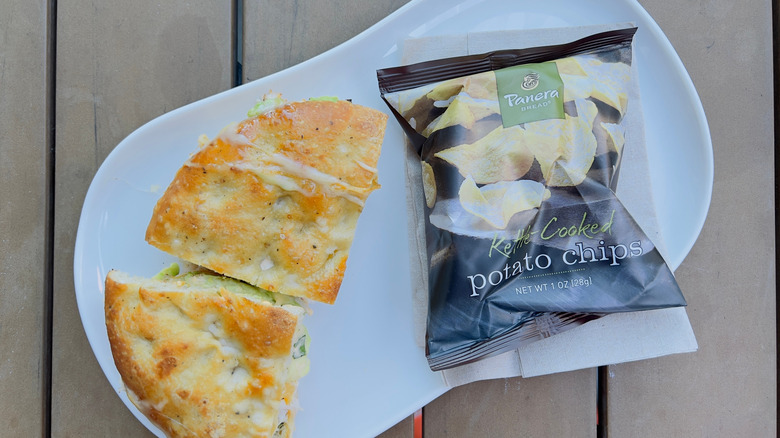
Like many other businesses in the post-COVID era, Panera Bread succumbed to "shrinkflation" — a tendency to make cuts to portion sizes, service, and ingredients in an attempt to address the costs of inflation. Speaking to CNBC in 2025, CEO Paul Carbone called it "death by a thousand paper cuts." He admitted that portions shrunk, with some sandwiches getting smaller while costing more and featuring lower-quality ingredients. Though there are hacks for getting more, such as using a bagel instead of bread on the sandwich, fans familiar with the brand from previous years weren't happy with getting smaller versions.
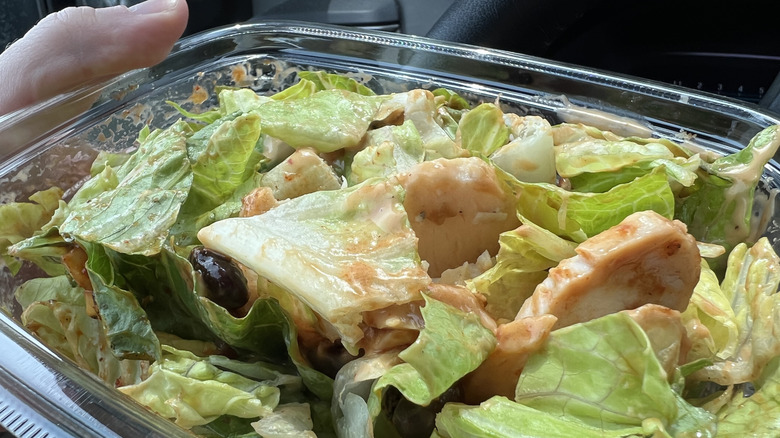
The restaurant's salad mix, which had previously been made of romaine lettuce, was changed for a half-romaine, half-iceberg lettuce mix intended to save money — leading many customers to complain about the "white lettuce." Even relatively small changes, such as the choice to stop cutting the cherry tomatoes on the salads in half (forcing customers to, as Carbone said, "chase the cherry tomato around the bowl"), made a big statement about the effort Panera Bread was willing to make for its customers — and they noticed.
Once-high standards for ingredients were lowered
In early 2024, Panera Bread officially loosened the ingredient standards that had become a hallmark of the brand and one of customers' favorite aspects of the business. Its famous "No No List" was a list of ingredients that Panera leaders assured customers it would not use in its menu items, including lard, high fructose corn syrup, nitrates, and artificial flavors. But in January 2024, phosphates, sorbic acid, and maltodextrin — three ingredients previously found on the list — were taken off it, enabling their use.
In tandem, the signs and artwork in each restaurant that made such claims as "No Antibiotics Ever," "Grass Fed Pasture Raised," and "Animal Welfare" were taken down. Though the company insists it retains high standards for ingredients, the change allows the use of some antibiotics, chicken and cattle that are not entirely grass-fed, and removal of assurances about animal welfare. Many customers are not happy about it either, with entire Reddit threads dedicated to the decline in ingredient quality.
Ingredients are increasingly processed
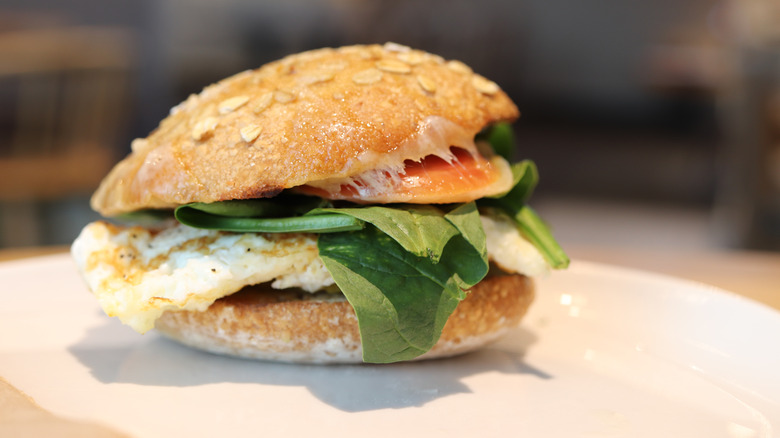
Panera's commitment to ingredient quality also once extended to real, not processed, foods. In 2018, the restaurant went so far as to petition the United States Food and Drug Administration (FDA) to define the term "egg," considering many restaurants, such as Starbucks and Dunkin', were using liquid egg mixtures containing water, xanthan gum, citric acid, and more in addition to eggs. At the time, the FDA didn't have a definition for eggs, enabling companies to include additives.
However, Panera has now joined several fast food restaurants that don't use real eggs. Take, for example, its Farmhouse Duo Asiago Bagel Stack. The dish's list of ingredients includes scrambled egg described as "liquid whole eggs (whole eggs, citric acid [to preserve color], canola oil)" as well as dried egg yolks.
Meanwhile, the Center for Science in the Public Interest says Panera's Asiago Sausage & Egg Sandwich rivals a double quarter pounder with cheese at McDonald's for its excessively high calorie count, unhealthy fat, and sodium contents.
Service leaves much to be desired
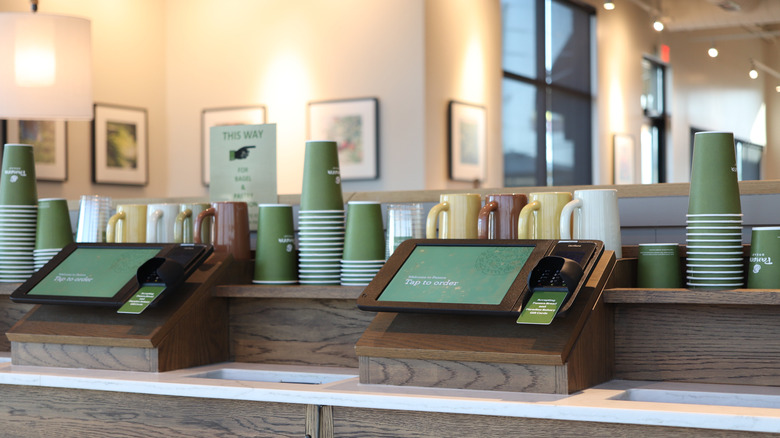
The pandemic caused many restaurants to rethink how they were structured, from order through delivery and dining. Panera Bread was no different. Its restaurants started incorporating digital menu boards, self-ordering kiosks where customers use tablets to place orders themselves, and separate pickup areas for customers placing to-go orders. These shifts enabled Panera to cut staff, another money-saving maneuver.
The attempt may have initially saved the restaurant money, but over the long term, it lost Panera customers. In some cases, locations drastically scaled back on the number of workers, almost entirely relying on the self-serve kiosks, to the point where customers would walk in and fail to see an employee. Many complained about the kiosks replacing humans. On a recent trip I made to my local Panera Bread, I had a similar experience; upon walking in, I saw not a single human and needed to call to the back so someone could hand me a pastry and a cup for my drink.
While some customers, admittedly, may appreciate the option to order for themselves, a 2024 study by Temple University professors and published in the Journal of Hospitality & Tourism Research found that customers ordering from self-service kiosks tend to order less food and feel increased pressure to complete their orders, which creates anxiety and negatively affects their experiences. Plus, of course, there are those uncut cherry tomatoes Carbone referred to — a labor decision that affects the value of the food as well as the experience.
The atmosphere went from cozy to cold
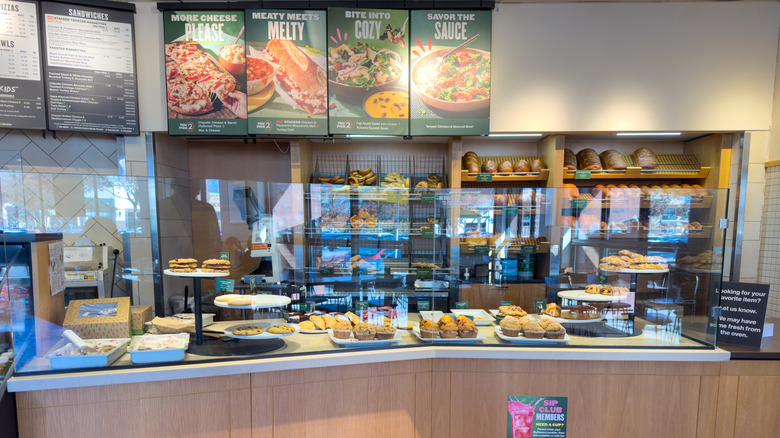
From its earliest days, Panera Bread was popular for its comfortable, inviting atmosphere, featuring fireplaces, private booths, and free WiFi. Though it has always been considered a fast-casual restaurant, the experience once was more like that of a full-service restaurant — only faster. The atmosphere was downright cozy, from its artisanal menu items to the stone ovens cranking out fresh bread, the soft lighting, and, as some of us remember, even a few dog-eared novels on hand for guests to peruse while they ate.
That all went away a few years back, after JAB Holding Company, the German investment company that bought Panera back in 2017, stepped in with its Next Gen plan. New stores are significantly smaller in scale and allow customers can see the entire restaurant from the front door. The result is a cookie-cutter design that replaces what once felt like unique restaurants that invite guests to linger. The private booths were replaced with benches lined with tables and high-top tables, not to mention a counter topped with self-serve kiosks greeting guests at the front door. Fireplaces are no longer standard in the new locations, and some customers have taken to the internet to express frustration that Panera no longer welcomes remote workers, even replacing electrical outlets with blank plates, potentially as an effort to deter long stays.
Legal issues affected Panera's reputation
Panera's revenue dropped more than 5% in 2024 alone, and and a series of legal controversies that put Panera Bread into a very uncomfortable spotlight certainly didn't help.
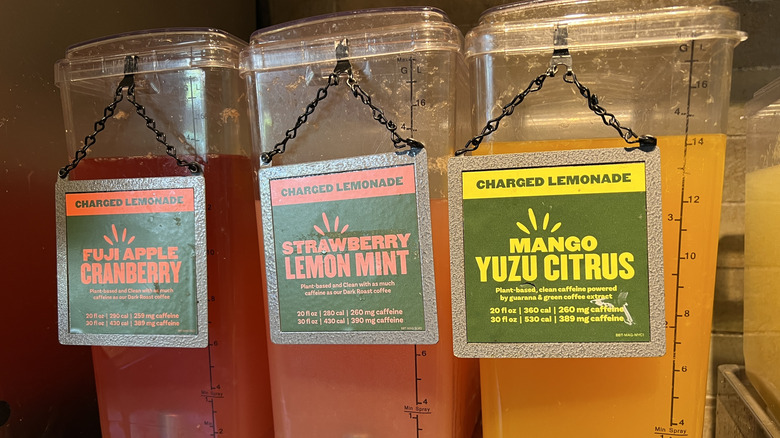
First among these was the matter of its Charged Lemonade energy drinks, which were linked to the deaths of two people. The drinks were described on the menu as "Naturally flavored, plant-based, and Clean with about as much caffeine as our Dark Roast coffee." Both a 21-year-old college student with a prior heart condition and a 46-year-old man with a chromosomal deficiency passed away after ordering Charged drinks.
How could lemonades cause such damage? A regular-sized Charged drink contained 260 milligrams of caffeine, while the large contained as much as 390 milligrams. According to the FDA, it's safe to consume up to 400 milligrams in a day. Panera proceeded to remove the drinks from its menu and eventually settled the related lawsuits.
On top of that, in June 2024, Panera Bread settled a class-action lawsuit following a significant data breach that affected more than 147,000 current and former employees. Together, these two legal run-ins spelled expensive trouble for the company and did even further harm to the reputation of an already-struggling brand.
Food waste became a problem
Although Panera's leaders opted to make some changes for the better in 2025, some of those "improvements" have not made customers happy. Case in point: the Salad Stuffer. Described by the company as "the ideal balance of fluffy, soft bread and freshly prepared dressed salad in every bite," the resulting dish is pretty indistinguishable from a sandwich. But that's not exactly the problem.
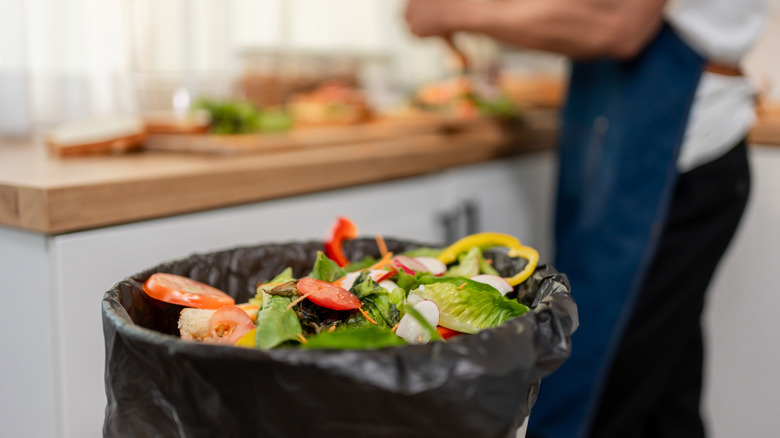
The real issue is the food waste many claim the Salad Stuffers are creating. Online comments from employees note that the insides of the rolls are cut out and end up in the trash, and whatever salad can't fit inside the roll — which is apparently quite a bit — is also tossed out. Competitor Bread Zeppelin seized the opportunity to take a shot at Panera's Salad Stuffers in an Instagram post, even offering to give customers with receipts for them free sandwiches — also hollowed-out rolls stuffed with salads — as replacements and emphasized its own efforts to eliminate food waste.
At a time when Americans are concerned about the rising costs of food, restaurant food waste is only exacerbating the problem. According to research from Georgetown University, one-third of all food is wasted, and restaurants account for more than 17% of this total; breads, garnishes, and condiments are the primary culprits. The food waste generated by Salad Stuffers may be turning people off, compounding a growing disillusionment with Panera.
Fast-casual restaurants are less appealing than ever
Panera's sales growth has slowed since its peak of $6.5 billion in 2023, but it's hardly the only fast-casual restaurant that's struggling these days. Some of its losses may have been Panera's own doing, opening so many locations that it's hard for owners to keep pace. As prices grew, options shrank, labor was cut, and freshness took a back seat to economies of scale; meanwhile, customers seemed to be pushing back and deciding that the experience wasn't worth the costs.
Rather than continuing to spend more money at the same dining establishments, customers are becoming more discerning about where they spend their money, choosing to spend it where the experience is truly worth it. Instead, many younger consumers are rediscovering casual chains such as Chili's, where the costs are similar to those at Panera but the experience is more upscale.