

American Vs Italian-Style Grilling: Here's How The Grill Types Differ
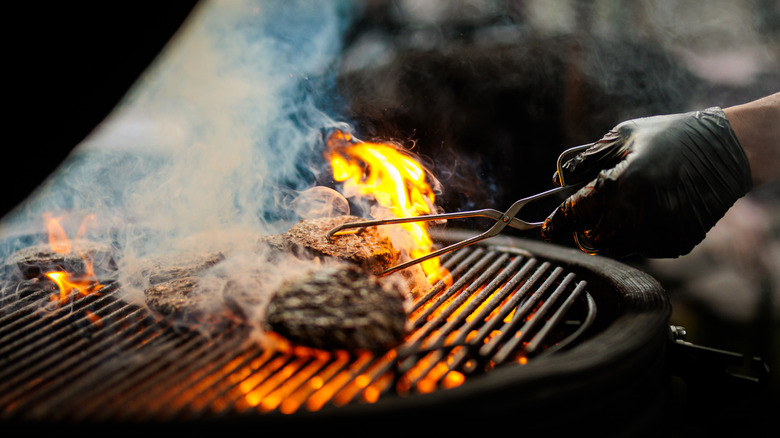
For Americans, the word 'grill' instantly brings to mind the joys of the backyard: an afternoon in the sun, smoke emanating from the cooker, slapping meat and corn rubbed with spices and all kinds of sauces onto the fire. The Italian grill experience, or "grigliata", on the other hand, is a slightly different ritual: No less important to the country's culinary identity, but usually simpler and more spontaneous.
American and Italian-style grilling are united by their shared association with festivies, albeit different ones. In the U.S., a grill cookout is almost as central to the 4th of July as the Star-Spangled Banner. In Italy, it's typically associated with Easter Monday, or "Pasquetta", where Italians often make the most of the spring balminess and head to the countryside for a grigliata picnic, as well as Ferragosto, the country's mid-August public holiday.
The main differences boil down to the prevailing flavors. With American grills, flavors and textures are built and stacked on top of each other, almost like a smoky lasagne: you first cook your meat (or fish), and then develop the flavor profile by adding smoke, marinades, rubs, and sauces. After that, you let everything cook for as long as the cut demands. Where the U.S. treats grilled foods like a meticulous construction project, built carefully with a rich intersection of taste and texture, Italy lets the food speak for itself — and the fire does most of the work.
American grilling: a time-honored tradition rich in flavor and texture
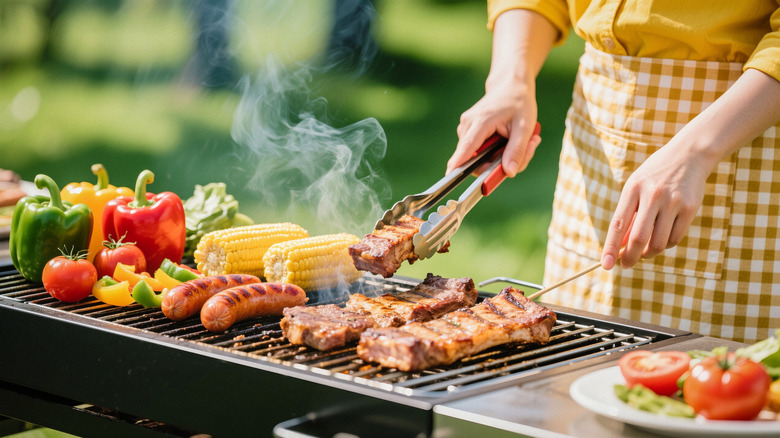
The grill a staple in almost any American backyard: Indeed, around 80% of people in the country own one. Grilling and barbecuing have a long history in the U.S., with roots in Indigenous and Native American open-fire roasting pits. After Henry Ford pushed for charcoal manufacturing in the 1920s and the well-known Weber kettle grill was launched in 1952, home barbecues exploded in popularity by the mid-twentieth century, further propelled by the rise in suburban living and the increased availability of patios and gardens.
American-style grilling is deeply tied to various regional cultures and cuisines, especially the almighty BBQ. As such, U.S. grilling tends to reward time, smoky depth, and individual personality, being less of a quick cooking tool and more of a cultural ritual. Planning, rather than spontaneity, is at the heart of American grilling. Many home cooks will eagerly spend hours seasoning the meat, cooking it over indirect heat, basting it, and resting it before finally serving it to their lucky guests. Simplicity is rarely favored: bigger is generally better, and less is not more.
As for U.S. grilled food staples, there's a vast array of BBQ specialties from different regions: juicy Carolina pulled pork, gloriously charred Texas beef brisket, Kansas City ribs with treacly tomato-molasses sauce, Memphis-style dry ribs — the list is endless. And we have lots of tips on how to make the most of your home grill with some excellent recipes, from New York restaurant chain Dinosaur Bar-B-Que's top-secret pulled pork recipe, to a South Carolina barbecue sauce recipe to go with a variety of meats.
Italian grills let the fire do the job , highlighting simple, fresh ingredients
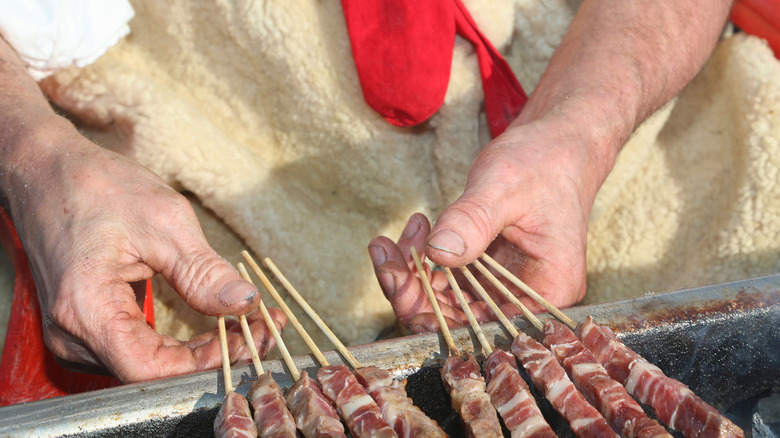
Grilling is also a big part of Italian culture, although, much like its cuisine — which generally favors simplicity, whole foods, and single ingredients — the process is generally faster, easier, and more spontaneous. The specialties you can find roasting on a grill in Italy vary region-to-region: the north, with its closer ties to Alpine and Central European traditions, favors hearty pork cuts, sausage, and mountain-style meats; in central Italy, you'll find Tuscany's "bistecca alla fiorentina" (a Renaissance-era T-bone steak), Lazio's lamb ("abbacchio a scottadito") and Abruzzo's meat skewers ("arrosticini"); further south, fresh Mediterranean veggies, like eggplant, zucchini, and bell peppers, become almost as central as the meat.
Instead of using rich sauces, Italian grilled foods tend to be topped with light seasonings: olive oil, black pepper, lemon, balsamic vinegar, maybe a few herbs at most. The result is something generally lighter and simpler than what you'd get Stateside, but no less delicious — nor important to any social gathering.