

How Ina Garten Designed Her Thriving Vegetable Garden

The key to any vegetable garden is the layout, from how much sun everything gets to how much room there is for weeds. When Ina Garten put hers together, she focused on creating several square-shaped plots with optimal dimensions that allowed her to work easily and let the plants thrive.
One of the most detrimental beginner gardening mistakes is using too much space. While this won't completely sabotage your harvest, it does make reaching your plants and weeding more difficult. Too much space means you'll have to step on and compact your soil — plus it only leaves more room for weeds to flourish and compete with your veggies for nutrients. Even the easiest vegetables to grow need some amount of attention, and giving yourself just enough space to work and for the plants to grow makes your job easier and tasks more effective.
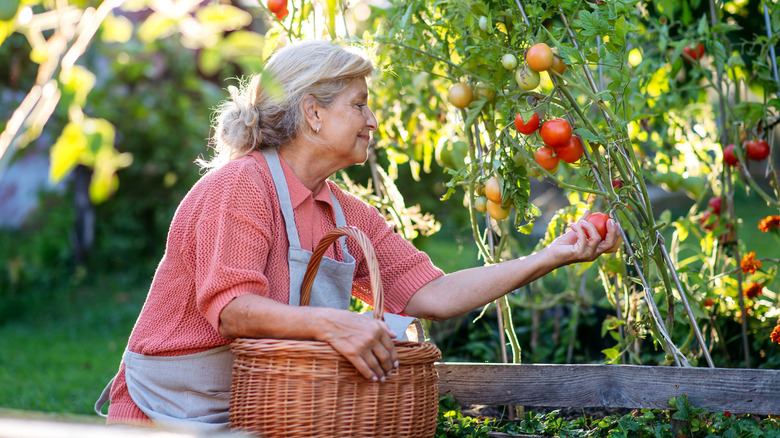
A good rule of thumb is to make sure you don't need to stretch more than three feet to reach a plant. A three-by-three box or a row no wider than six feet accomplishes this quite well, and this design is great for just about any plant. Things that like being planted densely, like lavender, go in her square plots — while she reserves her longer rows for easy garden vegetables, like kale and lettuce. This also gives her enough customization to plant whatever she wants, leaving space for huge stakes for even bigger tomatoes or just a particularly lovely flower patch (via YouTube).
Where to plant your garden for a thriving result
Much of how you lay out your garden depends on its location, whether that's a sunny hillside with great drainage or a particularly rich patch of soil in your backyard. While a good layout makes the work easier, never neglect the importance of sunlight, drainage, and soil health, which can prevent even the best-designed crop from thriving.
Many people choose the sunniest patch of their yard for a garden, believing it'll help their plants thrive, but this depends on your climate and what time of day it gets the most sun. If you live in a hot area, choosing a plot that gets more morning than afternoon sun may be the right choice. Sun rays late in the day tend to have a higher UV index, which, when coupled with higher temperatures, scorches sensitive plants. Conversely, if you live in a cooler climate, feel free to let them bask in the rays all day long to photosynthesize plenty of energy.
Never pick a plot that's lower than the surrounding area, causing it to become swampy, or that was once used for dirty purposes, like burning trash. It's easier to fix up a less-than-ideal spot that gets good sun than it is to work with permanently wet or disease-ridden soil. Little things, like mixing in peat moss and sand to help with drainage or using cardboard for weed control and nutrients, can transform an area over the course of a year, making it the most valuable plot on your whole property.