

How To Prevent Tomato Hornworms In Your Vegetable Garden
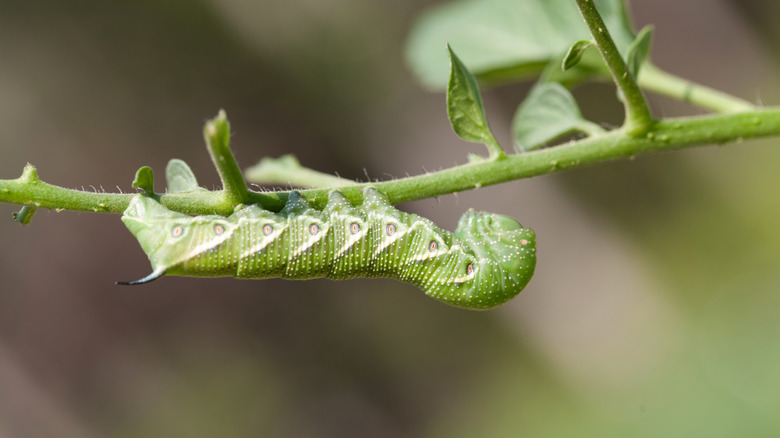
Pests are one of the biggest threats to your tomatoes, whether it's a bird pecking your ripe fruit or aphids draining life from the stem. But one of the most common problem creatures is the tomato hornworm, an evil-looking little bug that can be repelled by something equally common: basil.
The hornworm is actually the caterpillar stage of a rather large moth, one that prefers to lay its eggs on the leaves of nightshade plants. Still, like many pests, it's relatively easy to create a hostile enough environment to encourage them to set up shop elsewhere. You should always plant basil alongside your tomatoes because of its potent smell, one that drives off or disorients sensitive insects. While other great companion plants can fulfill the same role, basil thrives in the same growing conditions as tomatoes, making them a match made in heaven.
You'll want to disperse your basil throughout your tomato plants, saturating your garden with the smell rather than creating a "wall" of herbs around the perimeter. Like marigolds, another great choice, basil only becomes more effective as the growing season stretches on. Regular pruning, along with good fertilization and watering habits, helps it produce more leaves and, therefore, a stronger smell. Be sure to harvest only a bit of the plant at a time, pinching off leaves toward the top to encourage it to grow bushier rather than leggier.
Other tips for preventing tomato hornworms
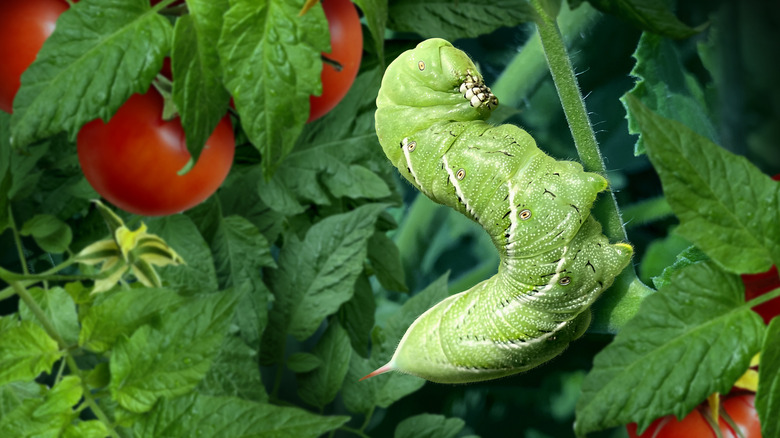
No method, or combination of methods, is 100% effective at preventing tomato hornworms, so regularly checking your nightshades for their eggs and caterpillars is the best way to contain potential damage. Fortunately, infestations are rarely so severe that you'd need to resort to pesticides, so find a combination of tricks that works best for you and keeps you from having to inspect every leaf.
If you want some help patrolling for hornworms, never forget that wasps are actually good for vegetable gardens. These vicious predators love fat, slow-moving hornworms, whether they eat them directly or parasitize them with their eggs. If you see a hornworm with small white sacs on it, leave it alone, because it'll soon produce more wasps that can help keep your tomatoes safe. To attract solitary wasps that rarely sting humans, keep a running water feature near your garden, along with some nectar-rich flowers.
Hornworms have good camouflage, but they have a unique quirk that makes them easy to spot: They glow under a black light. It's ironic that they're easier to see in the dark, but investing in a small UV flashlight and checking at night is infinitely easier than combing through your plants during the day. Don't be afraid of their harmless little stingers; just pick them up with gloved fingers and either crush them or leave them out in the open as a snack for the birds.