

Find The Best Corn On The Cob At The Grocery Store With This Simple Technique
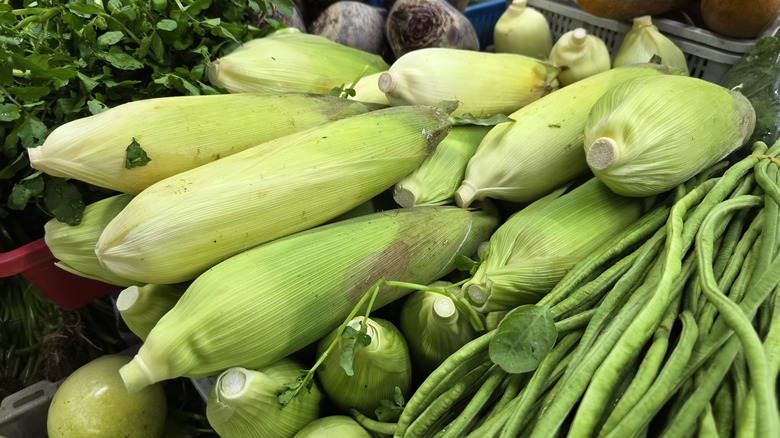
There's nothing worse than buying some corn on the cob only to find out it's halfway to becoming popcorn. That's why, before you take an ear home, you should peel back the husk just a tiny bit and puncture a single kernel with your fingernail to assess its juiciness.
Corn is technically a fruit, though the exact designation can get a little fuzzy the longer it ages and dries. That means that each individual kernel comes loaded with a sugary juice that contributes to much of its flavor, whether you boil, bake, or grill it. Fresh corn retains this juiciness quite well since it's contained in fleshy kernels wrapped in leaves, but that doesn't mean it's immune to drying out. When you puncture one, it should produce a droplet of milky-looking fluid with a sweet, vegetable taste, signaling that it's fresh enough to retain its full flavor.
While this method isn't that reliable for other forms of corn that were bred to be dried into animal feed, snacks, or flour, it's extremely accurate for sweet corn, the kind most people purchase for eating right off the ear. This also guarantees you won't have to throw away the naked cob since it'll be absolutely packed with corn milk you can use to flavor other dishes.
Other ways to determine how fresh an ear of corn is
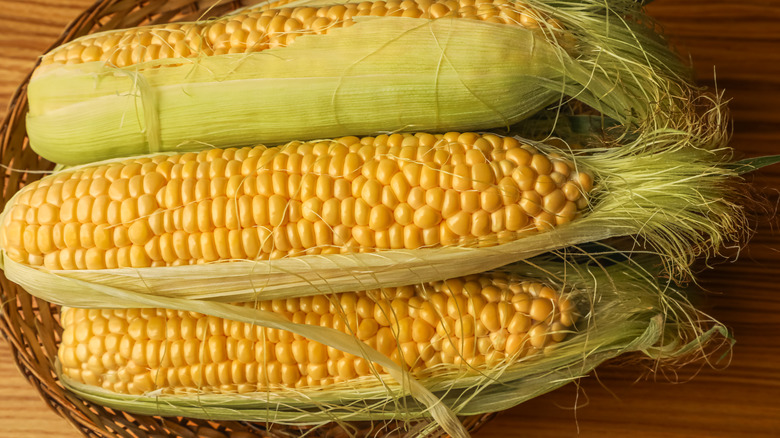
While dried corn is fantastic, moisture is key when you want to cook the vegetable itself, so never neglect the importance of checking its freshness before buying. Aside from puncturing a kernel, there should be plenty of other indicators that your produce hasn't aged too much, such as sticky silk and bright green husks.
If you want to see past the husk but don't want to poke the kernels, evaluate the silk emerging from the top. These strands are part of the plant's female reproductive system and are meant to capture pollen, which helps it reproduce. This means that they need to be sticky to guide the pollen down to the kernels, and fresh ears should have the same soft texture. If you ever find an ear with dry, dark silk, it might be best to pass it over for something else in the bunch that's fresher.
Corn husks retain moisture better when they're still tender and green. Once they age into something closer to a tamale wrap, they tend to lift from the ear and allow airflow that can dry out kernels. They should feel firm and slightly cool, thanks to the ample moisture still present in the leaves. If they start to feel brittle or take on a yellowish hue, it doesn't necessarily mean the corn inside has gone bad. This is where the first kernel test comes into play, ensuring you don't accidentally pass over anything that's still worth a purchase.