

Elevate Your Prime Rib With This Leftover Liquid Gold
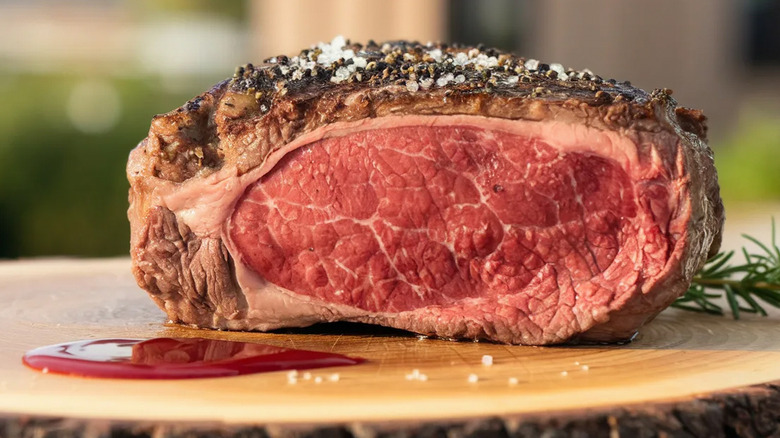
If you want to make prime rib like a pro, you need a high-quality slather all over the exterior to produce a crispy, thick crust. However, if you want to make it like a true expert, you should never neglect adding extra flavor, and that's where some leftover bacon grease can really come in handy.
Bacon grease is, essentially, concentrated bacon flavor, where all the fat, salt, and seasonings come together into a liquid form. If you've ever cooked with it, you know that a little goes a long way, and even on a massive nine-pound (or more) rib roast, you'll only need about a couple of tablespoons. Typically, the slather for a rib roast uses olive oil to provide more delicate ingredients, like fresh herbs and garlic, with a bit of heat protection and to ensure everything browns instead of burns. But with bacon grease, you up the meatiness of an already incredibly satisfying dish, creating something with intense umami. Just soften or liquify the grease and stir it in with your other ingredients, and you're done!
The key, however, is to take one extra step and filter your bacon grease before using it. The little particulates you remove tend to encourage spoilage when you stash it away for later use. However, even if you plan on using it the same day for your prime rib, they also tend to burn and grow bitter in the oven, spoiling the most flavorful part of your meal. Nix them for the best results.
Other ways to use bacon grease for a prime rib
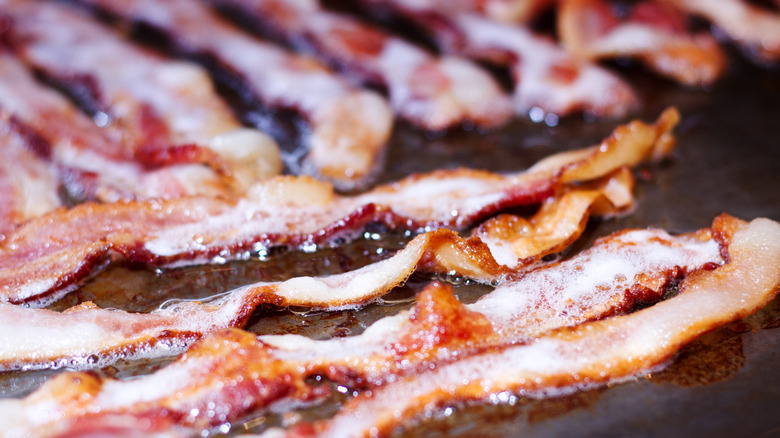
While a slather is one of the easiest ways to prepare a prime rib roast, not everyone is too keen on this method. If you prefer to bake it naked or forget the oven and smoke it, you can still incorporate bacon grease to get great flavor with minimal effort.
If you bake your prime rib without a slather, you may find it difficult to cultivate that same caramelized crust. Since they're so large, prime ribs need long exposure to low temperatures to keep the cooking even, and those same low temperatures don't always brown the exterior quite right. However, you can always sear it first in bacon grease to jumpstart the crust, allowing it to come to temperature in the oven after. Your best bet is to apply the grease directly to a cold roast, allowing it to congeal a bit to guarantee an even coating.
Smoking a prime rib produces similar difficulties, and you'll usually cook it at even lower temperatures, around 225 degrees Fahrenheit. This is well outside the window the Maillard reaction requires, and while you can use the same previously mentioned searing method, you might find better luck treating your prime rib like any other barbecue cut. Whereas something like pork shoulder uses sugar as a binder, you can use bacon grease, swapping sweetness for umami meatiness while still ensuring your dry rub ingredients cling tightly to the surface.