

The Italian Village Where Pasta Was Born
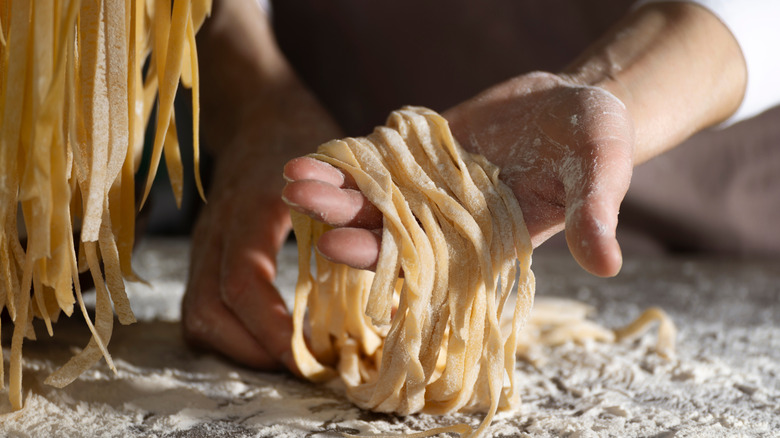
We all love a good plate of pasta, but do we really know where our pasta comes from? Well, if you're buying from an Italian brand, it's possible you're getting it from one specific place. Nestled in between the Sorrento peninsula's rolling hills and the cerulean hues of the Mediterranean is a village where, for centuries, the scent of freshly made pasta wafted from workshops onto the streets. Gragnano, a town of under 30,000 inhabitants near Naples — itself the home of pizza — can lay claim to being the "City of Pasta" and the birthplace of industrially produced dried pasta as we know it. The secret, however, was not in the dough, or the sauce — but in the air.
While pasta itself traces an older history, Gragnano is the place where it turned from a local craft into a business, and ultimately a source of identity. For centuries, its mills, wheat, water, daily wind, and humid weather helped make dried pasta sufficiently durable to travel outside of the local region.
Gragnano's pasta-making tradition started with the strands being stretched across canes on the city's streets, where the moist sea breeze and gentle sun dried them at the perfect speed — too fast, and the exterior would stiffen while the interior remained damp. But when it came to making a profit, the original process — which involved kneading the dough with hands and feet — was eventually deemed inefficient for mass production, especially as demand soared: Foreign aristocrats even popped by to have a taste of the "white gold," as macaroni was called. The 19th-century monarch of the region, King Ferdinand II, ultimately became a patron of the machinery that would lead to the mechanised pasta industry.
In Gragnano, the streets were designed to air-dry pasta
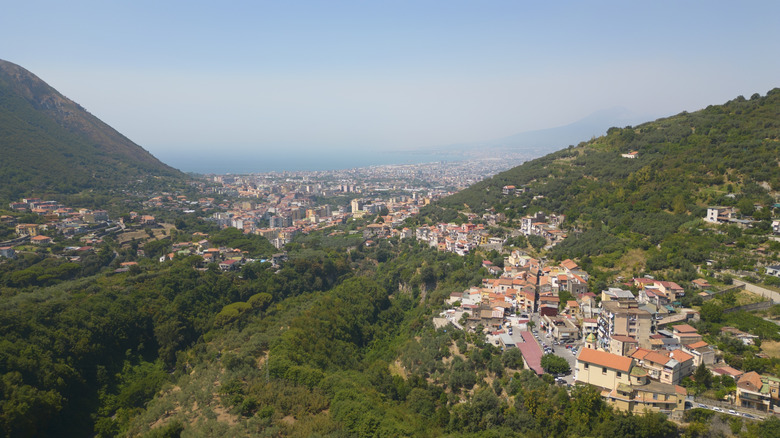
In the quaint, somewhat sleepy town, where tradition and technology intersect, and pasta binds people through shared culture and business, commitment to making the perfect dish and avoiding any rookie preparation errors when cooking it is of the utmost importance — and as any Gragnano resident will tell you, the pasta shapes also matter depending on the sauce. The local industry itself follows some pretty stringent guidelines: To be classified as "Pasta di Gragnano IGP", production must be in the town, water must come from the local aquifer, and the durum wheat semolina must contain at least 13% protein.
While pasta-making is deeply rooted in the town's cultural fabric, Gragnano remains at the forefront of innovation — and for such a small place, it still contributes to Italy's pasta-making industry. Food Republic spoke to Anita Menna, brand manager and part of the Garofalo company — a Gragnano staple since 1789 and one of the top pasta-making manufacturers in the country — about her vision for the future, and how her commitment to the perfect pasta transcends borders.
"Garofalo is a story of family," she said. "When my kids see our pasta, they call it 'granddad's pasta,' or 'pasta del nonno.'" But tradition alone is not enough to survive in the cut-throat industry, especially as consumer tastes and demand evolve. Among the new ways to meet this challenge is the production of higher protein pasta, to cater especially to a U.S. public increasingly obsessed with protein-maxxing. But perhaps the most surprising secret of all? "We use Arizona grain in our pasta, along with Italian grain," Menna remarked. "I'm really sorry to say, but the Arizona grain really is the best in the world."