

This Fast Food Chain Had 24-Hour Burger Delivery Anywhere In The US In The '80s
Before the rise of mobile apps, chains often handled food delivery in-house. Right before the advent of the internet, the practice reached a peak in the 1980s. At the time, Domino's was employing its famed 30-minute or less delivery guarantee, while Pizza Hut rolled out innovative delivery-only locations. Huge chains like Burger King and Kentucky Fried Chicken were trialing delivery. In the early 1980s, the original burger business, White Castle, entered such a food service arena, too, debuting the "Hamburgers to Fly" program.
It's a concept a touch different from the typical (and modern) food delivery service model. Starting in 1981, you could ring a toll-free number and enlist White Castle to send you a package of frozen burgers. Packed on dry ice, the food transit came with a 24-hour guarantee, thereby letting you cook up a batch of the square-shaped beef and onion sandwiches at your own convenience. The program found momentum – expanding White Castle's customer base beyond its individual stores — but it was ultimately phased out in 1987.
White Castle debuted several developments in the late 20th century.
Operating since 1921, White Castle is widely considered the first fast food restaurant in history. As evinced by programs like Hamburgers to Fly, the chain has made plenty of bold business decisions throughout the decades. Especially the 1980s and 90s proved a pivotal era, as White Castle strove to maintain relevancy amidst rapidly modernizing competition. The chain made several efforts to ease getting burgers into consumers' hands.
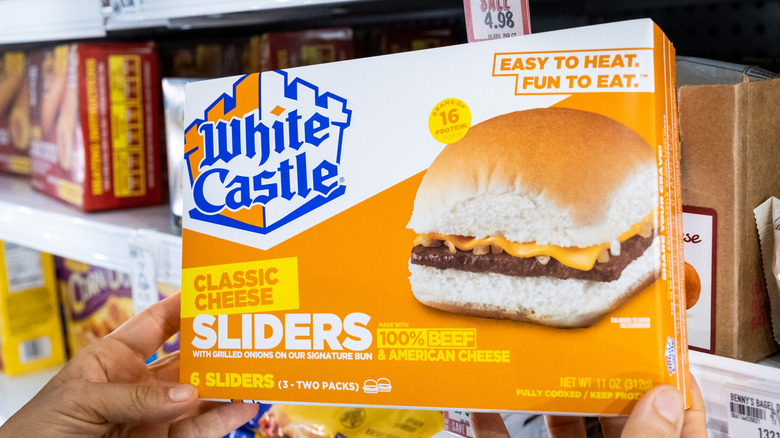
New advancements kicked off in 1980 when White Castle introduced the drive-thru window. Previously, the chain employed a carhop service at certain outlets, but such a real estate rearrangement enabled sales with greater efficiency. Then, when the Hamburgers to Fly phased out, the chain followed up with the creation of a retail division. White Castle chose to distribute frozen sandwiches to supermarkets, a commercial model still in use today, as individuals were buying them frozen and reselling them in stores anyway. The grocery store model worked — White Castle's product became among the best-selling frozen sandwiches in the U.S., even later sold in vending machines.
The chain eased accessibility even further in 1996, launching the world's first quick-service restaurant website. Rolled out in parallel to new menu items, such developments proved a success, growing profits and locations for the classic Midwestern chain.