

The Popular Smothered Mexican Dish Cowboys Loved In The Old West
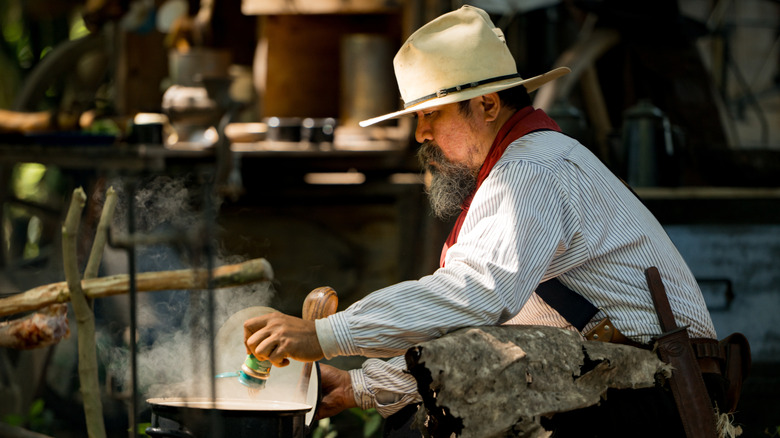
The Hollywood version of the cowboy was rugged and self-reliant, surviving on little more than black coffee, hard biscuits, and beef jerky. But the real frontier diet told a far richer story — one smothered in chile sauce and rooted in a culinary tradition that stretches back hundreds of years before the first cattle drive. Huevos rancheros or "rancher's eggs" — fried eggs served over corn tortillas (and often cooked beans) and covered in a chile-tomato sauce — was one of the most important Mexican meals enjoyed by cowboys in the Old West and have become a staple of modern Mexican cuisine.
What started as a filling breakfast for farmers and ranchers in Mexico, spread north into the U.S. to feed cowboys on the trail. While carrying fresh ingredients, like eggs, would have previously been difficult, the creation of the chuckwagon — a wagon that traveled the range with ranchers, cowboys, and vaqueros (Mexican cowboys) with the sole purpose of preparing food, made it much easier to bring along more ingredients. While cowboys and vaqueros simply traveling on horseback may have had to rely on only dried goods, the chuckwagon meant that they could expand their menus to eat fully-prepared meals. And, sure, huevos rancheros are another one of those early dishes that became Tex-Mex staples on modern menus and were a boon to those on the trail, but their history goes back way before Europeans ever set foot in the Americas.
Corn tortillas, known in Nahuatl (one of Mexico's native languages) as tlaxcalli, had been prepared in southern Mexico for several thousand years before the first Spanish ship appeared on the horizon. During the Mesoamerican preclassical period — roughly 2000 to 250 B.C.E. — Mayan communities in the Yucatán Peninsula were already using tortillas with boiled eggs and pumpkin seeds and covering them with tomato-based sauces.
The history of huevos rancheros
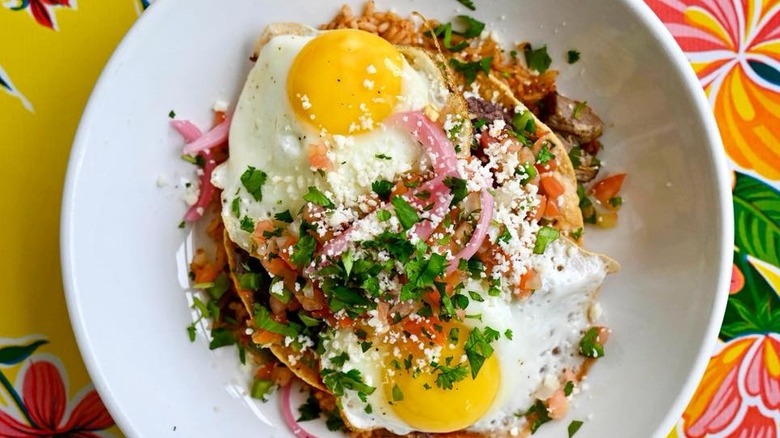
It was probably the Aztecs who refined the concept into the first recognizable ancestor of the modern huevos rancheros: tortillas dipped in a ground chili paste, then filled with beans, squash, fish, meat, or eggs. They called it chīllapīzzali (basically meaning, "chili flute") and it was eaten by market-goers and royalty alike. When Spanish conquistador Bernal Díaz del Castillo walked into the Aztec capital of Tenochtitlán in 1519, he recorded what historians now consider the earliest European description of chile sauce over tortillas, as reported by History Today: tortillas "cooked with eggs and other nourishing ingredients," served at the court of King Moctezuma II. Largely thought to be the progenitor of enchiladas, it's also a fitting description of huevos rancheros.
Using strictly fried eggs over tortillas and chile sauce, however, traces its origins to 16th-century rural Mexico, where it was traditionally prepared as a hearty second breakfast for farmhands after early morning labor. As Mexican families moved north with the railroad and cattle industries through the 19th century, so did regional Mexican cuisines. Mexican traqueros — track workers who made up nearly two-thirds of the Southwest railroad labor force between 1880 and 1930 — lived in rolling boxcar communities and cooked from these same culinary traditions along every line they laid.
These days, you can cook your simple huevos rancheros with the help of a frying pan and oven to heat the tortillas. It's probably easier than the chuckwagon preparation, and you can keep all the ingredients fresh in your fridge until you're ready to use them. Even try them with a few extra accouterments, like fresh herbs, onions, and pickled chiles.