

This Eco-Friendly Countertop Is Much Cheaper Than Granite And Quartz
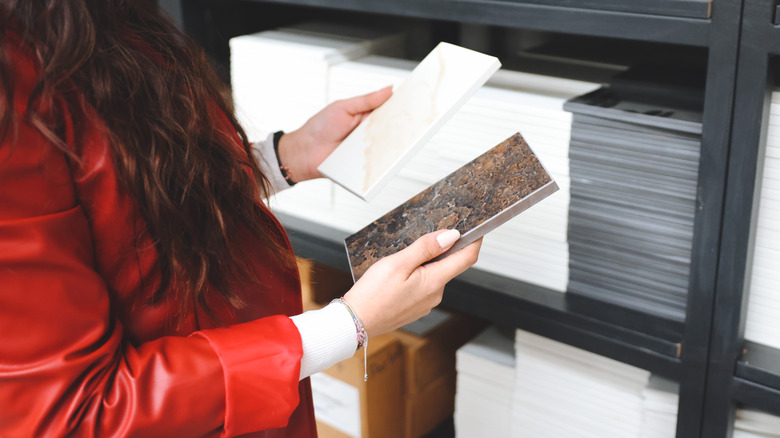
A good countertop is what brings a kitchen together, but there's a whole host of factors to consider. It needs to be durable and resistant to heat, moisture, and stains, while also seamlessly integrating into your overall aesthetic. Most people are busy debating whether quartz or granite is the superior material, but one style that often gets overlooked is recycled aluminum. Aside from being highly durable, it's also sustainable, containing up to 97% recycled materials.
Recycled aluminum countertops are made by suspending post-industrial metal waste in a recycled acrylic or polyester resin binder. The recycled material often includes aluminum shavings, but this process can also utilize glass, aggregates, and even plastic. Manufacturers may also incorporate other metals, such as steel or copper, to create a wide array of colors and patterns. The manufacturing process is somewhat similar to that of engineered quartz, which is why the two often share a speckled, mosaic-like appearance. The key difference is that recycled aluminum relies almost entirely on reclaimed materials, making it one of the most environmentally conscious countertop options on the market, especially compared to quarried natural materials like marble or granite.
Aside from being a sustainable option, it's a good investment, too. Aluminum itself is highly corrosion-resistant and doesn't rust, while the polymer binder is nonporous. This allows these countertops to hold up well, because they don't require periodic sealing to protect against moisture and stains, and their nonporous surface makes everyday spills easy to wipe away before they become a problem. This also means they're less likely to harbor bacteria or absorb odors.
How to maintain a recycled aluminium countertop
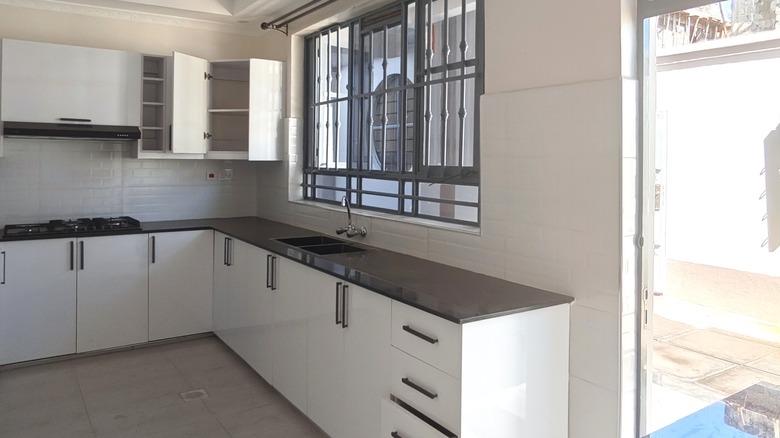
Compared to many natural countertop materials, recycled aluminum surfaces are surprisingly low-maintenance. When it comes to cleaning, you generally won't need specialized products. Most messes can be handled with a soft cloth, mild dish soap, and warm water. That said, while the material is certainly resilient, it's best to avoid harsh abrasive cleaners or metallic scrubbing pads, which can dull the metallic surface over time.
Although aluminum itself is highly heat-resistant, the same cannot always be said for the resin binder that holds the recycled countertop together. While these surfaces can withstand normal kitchen use, placing a scorching-hot pan directly on the countertop can potentially discolor or warp the resin. To play it safe, it's always a good idea to use a trivet or heat pad when setting down hot cookware. Fortunately, everyday kitchen tasks aren't usually a problem, and the resin's modest heat resistance can handle brief contact with hot dishes or a splash of boiling water. However, if high heat resistance is nonnegotiable, it might be worth investing in a concrete countertop instead.
Unlike quartz, recycled aluminum countertops are more susceptible to scratches and surface wear over time. Aluminum is a relatively soft metal, so sharp objects and heavy cookware can leave marks more easily than they would on harder surfaces. If you're concerned about scuffs, protective films are available. These ultra-thin, nearly invisible layers help shield the countertop from everyday wear by taking the brunt of minor scratches and reducing direct contact with hard objects. Of course, the simplest solution is prevention, and you should always use a sturdy cutting board for food prep and avoid dragging heavy pots and pans across the surface.