

Set Your Oven To This Temperature For Fall-Off-The-Bone Baby Back Ribs At Home
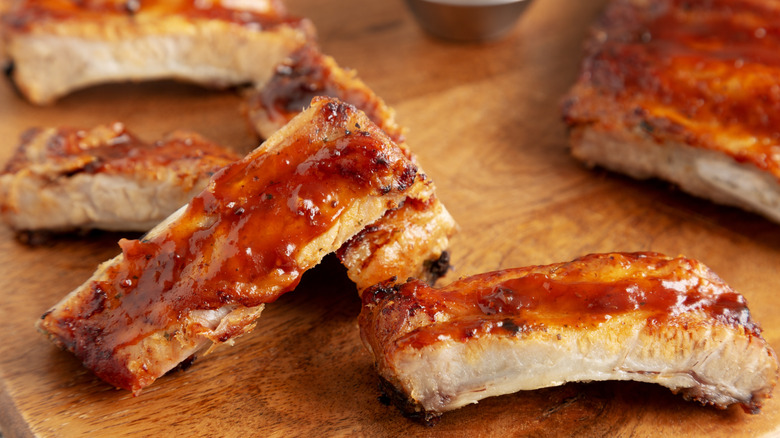
Baby back ribs are great in the oven because they need a bit more temperature and moisture control than their more marbled cousin, spare ribs. By keeping the oven at 250 degrees Fahrenheit, you strike a nice sweet spot that achieves the perfect texture and flavor while still allowing them to cook for quite a long time.
The 3-2-1 rule for fall-apart tender ribs requires you to cook them for three hours uncovered, two hours wrapped in foil, then another hour uncovered with a barbecue sauce glaze. For something as lean as baby back ribs, this can be a bit of a long cook, and temperatures higher than 250 degrees Fahrenheit may dry them out even if you use Alton Brown's foil-wrap trick. Still, any lower and you may not melt the collagen correctly, preventing that ultra-tender texture you're looking for. 250 degrees Fahrenheit prevents longer cooking times or needing fancy tricks, letting the quality of the meat speak for itself.
You'll also want to place your ribs in the middle of the oven for even heat circulation. Too close to the top or bottom heating elements, and one side may end up a bit more done than the other. This low-and-slow cooking style is all about maintaining the right temperature, so resist the urge to peek at your creation and let the oven do its work unimpeded. Remember: If you're lookin', it ain't cookin'.
More tips for fall-off-the-bone baby backs in the oven
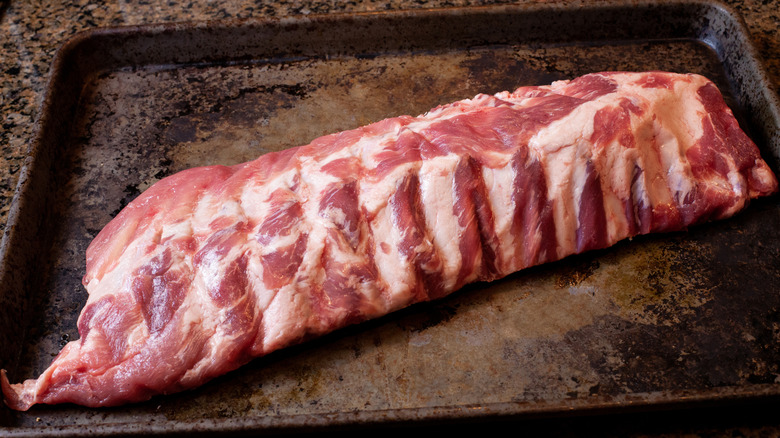
Achieving the ultimate level of tenderness is a careful balance of melting connective tissues without evaporating so much moisture that the meat contracts and sticks to the bone. Fortunately, an oven is often easier for a beginner than a smoker, and there are several ways to guarantee the right texture, from prep to cooking methods.
If you're not sure if your ribs are done, a great way to check is to pick them up from the center. They should sag on either side, a sure sign that collagen and tissues have melted into juice and the meat has softened. One of the best ways to elevate your ribs is to remove the peritoneum, that sliver of membrane clinging to the bottom of the bones. Not only does this end up chewy once cooked, but it also blocks flavor from rubs, marinades, and braising liquids from penetrating the bottom of the rack. It also interferes with the aforementioned tenderness test, so it adds no value and inhibits you across the board.
Want more tenderness and flavor? Add some moisture! During the foil-wrap phase, add a braising liquid mix heavy on white wine, apple cider vinegar, beef stock, and barbecue sauce to infuse the meat with extra juice and help it fall off the bone. This has the added bonus of making a great barbecue sauce base. Just add a cornstarch slurry and allow to simmer until thick, then glaze your ribs in their own juices and seasoning for some serious flavor.