

5 Simple Ways To Elevate Your BBQ Ribs
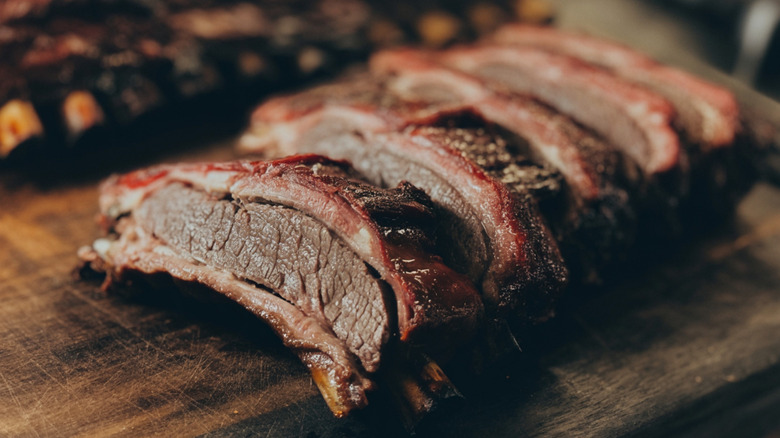
The best pitmasters in the world have their tried and true methods for barbecue ribs, from selecting the trees they'll use for smoke to sourcing the highest-quality meat possible. Still, as a home cook, you don't need to spend serious cash or time to elevate your own, provided you maintain what makes ribs so great in the first place.
Depending on the type of rib in question, you can deal with one of two major flavor profiles. Baby backs are smaller and meaty, often with a lean chew that gives them a texture somewhere between pulled pork and a tenderloin roast. Spare ribs, on the other hand, are full of collagen that breaks down into intensely delicious juice and a fall-apart texture, not to mention ample marbling that makes them far richer and heartier. When you consider how to elevate either, consider what flavor and cooking styles may best complement their respective strengths, rather than replace them entirely. Then there are beef ribs, which tend to have more connective tissue and fat, so they may need a more hands-on approach — within the beef category, you have many cuts of short ribs and back ribs — both meaty, unctuous options.
A touch of extra fat from butter, tallow, or high-quality cooking oil may provide the extra heartiness you need to upgrade your baby backs. On the other hand, added sugars melt right alongside the rich marbling of spare and beef ribs to create a protein that hardly needs sauce at all. Despite how easy these small additions may be, they can drastically overhaul your recipe while opening doors to even more flavor opportunities, like diversifying what sugar you use or infusing your fat with herbs and spices.
Honey is more complex than sugar in a rub
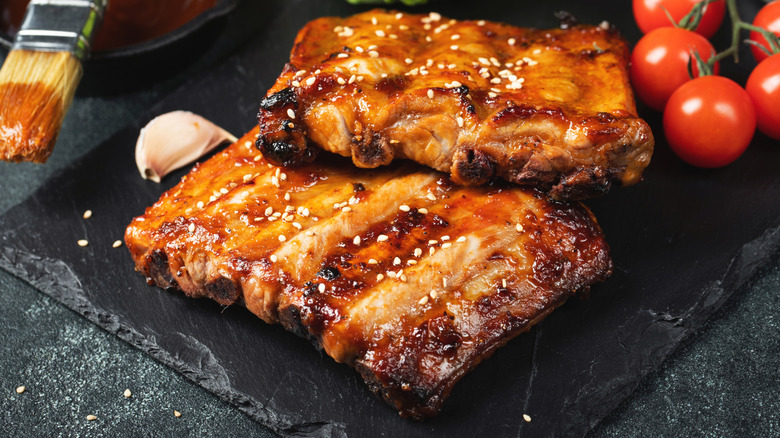
Some amount of sugar will always be indispensable in a good dry rub. Outside of its flavor, it's also a powerful binding agent that ensures all those seasonings stick to the meat rather than fall off in burn during a long cook. However, you should absolutely add barbecue ribs to the list of ways you never thought to cook with honey.
Honey is as diverse and live an ingredient as any wine or cheese, with two samples from as little as a few miles away from each other tasting radically different. Since so much great barbecue relies on a signature rub, it's also flexible enough to fit any flavor profile, whether you like a meat heavy with cumin and cayenne or something more earthy with garlic and herbs. The booming popularity of hot honeys gives you even more options, allowing you to add just a touch of nuanced heat that makes your ribs taste infinitely more complex.
This trick works just as well on all types of ribs, but how you cook your meat may decide whether you should do it or not. If you're the type that prefers grilled ribs, you may want to stay away from this ingredient, as honey can scorch and grow bitter starting as low as 300 degrees Fahrenheit. However, most smoking or slow baking recipes call for temperatures between 225 and 275 degrees Fahrenheit, the perfect range for caramelizing those natural sugars and bringing out the most of their potential.
Make your own au jus barbecue sauce
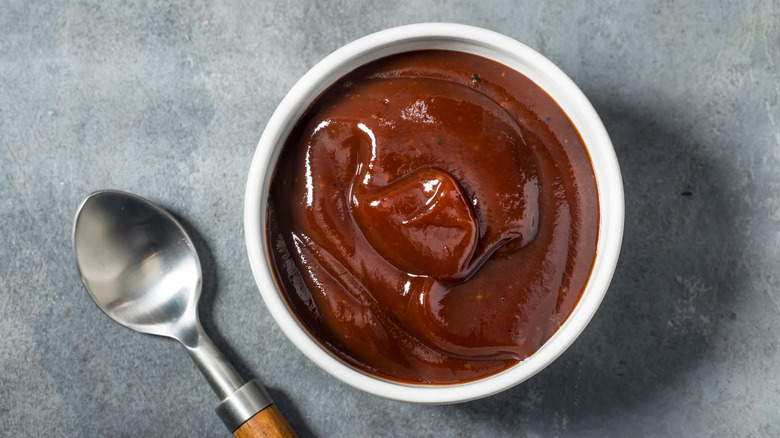
If you're the type of grillmaster who thinks barbecue is all about the sauce, then you should seriously consider making your own. Provided you follow the 3-2-1 rule for barbecue ribs, you don't even have to mix in very many ingredients.
The "2" in 3-2-1 means baking or smoking ribs for two hours while wrapped in foil with a bit of liquid to steam in extra flavor and moisture. Some of the best mixes rely heavily on stocks, fruity acids, and sugars, all of which become suffused with the fat and seasoning from your ribs. Rather than dump that stock in preparation for the third step, pour it into a saucepan, let it reduce a bit, then add a cornstarch slurry for a no-effort barbecue sauce-au jus hybrid.
If you use this trick for spare ribs, you may need to skim a bit of extra fat off the top. Too much grease and not enough liquid means your sauce won't emulsify properly, and adding extra liquid may dilute the powerful flavor. This is easier with less fatty meat (like baby backs), which have already dripped off much of their excess during the first three hours of cooking. If you absolutely must add more liquid to make enough sauce, be sure to add a bit more dry rub to it to replicate as much of your rib's flavor as possible.
Don't be afraid to smoke or bake ribs party-style
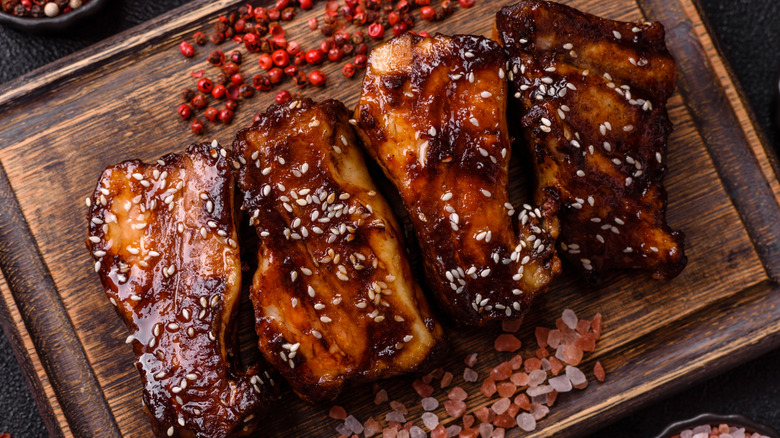
Even pitmasters who don't prefer wet ribs, those with a fresh coat of barbecue sauce, often give them a light brushing during the last hour to create a tacky, flavorful glaze. However, if you're a big fan of wet ribs, try cooking them "party-style."
Faster and easier than the three-to-six-hour traditional cooking methods, party-style ribs are great for quickly feeding a crowd. Rather than prepare the ribs as a slab, you slice each one individually, cook them for roughly 90 minutes, then finish them off in a big aluminum pan loaded with sauce and butter. If typically ribs are like brisket (dryer on the outside with intense juiciness), then party-style ones are more like burnt ends, beautifully caramelized and decadently sweet and rich.
This method works great for any type of rib, but if using spares or beef, you might want to use a little less butter. Their natural marbling seeps into the sauce mixture and provides more fat, so too much butter can quickly make the whole concoction too greasy. If you want some extra smoky flavor, try giving the ribs a brief sear over a hot grill, making the sauce more sticky than wet and giving each piece a bit of char.
Remove the membrane from the bottom of your ribs
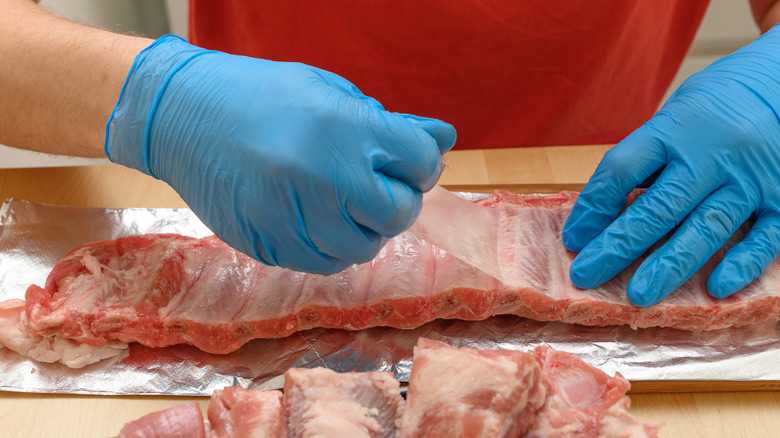
Compared to brisket or pork shoulder, ribs require very little preparation when raw. Still, as perfect a cut as they may be, they can stand a bit of doctoring and that starts with the silver membrane at the bottom of each rack — but do note this only applies to pork ribs; beef ribs should keep the membrane, as it helps prevent the meat from falling off the bone.
That skein of silver skin is called the peritoneum, a cushioning tissue between the pig's ribs and organs. While important when the animal is alive, it's nothing but a liability once it's time to cook. Pork ribs are so great because they're flexible, tender, and porous, developing incredible flavor quite quickly in comparison to most barbecue cuts. The peritoneum sabotages these qualities, creating a barrier against smoke and seasoning and ending up as a chewy, almost plastic-like mouthful once it's time to eat.
The easiest way to remove the silver skin on both baby backs and spares is with a fork and paper towels. Starting at one side of the rack, slide the tines between two tines and gently lift up one edge of the peritoneum. Once you've got enough to get a good grip with paper towels, slowly peel it all the way off. It should be sturdy enough not to tear as long as you're delicate, but feel free to use a sharp paring knife to carve off anything that remains.
Always let ribs rest for 20 minutes before slicing
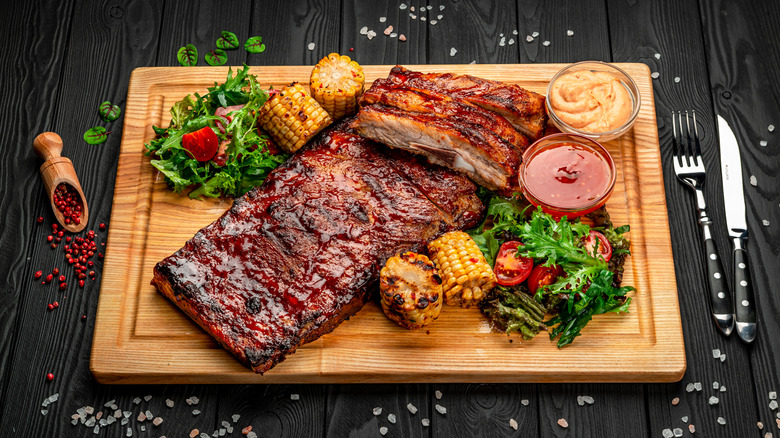
If you've ever felt like you cooked meat perfectly only for it to end up dry, you may not have let it rest long enough. In massive barbecue classics like pork shoulder and packer-cut brisket, it can take almost an hour, uncovered, to let all those juices redistribute. Fortunately, not as much patience is required with ribs, which only need about 20 minutes.
Ribs are a comparatively thin type of meat, so they tend to cool down much faster than a seven-inch thick slab of beef or pork. Additionally, they have one of the highest ratios of bone to meat of just about any cut. Bones are great insulators, keeping the portions of meat in direct contact with them a bit cooler than other parts, which, in the case of ribs, means pretty much every edible piece. While it's still vital to let them rest, so you aren't losing all your juices the second your knife starts to cut, the process should be quite quick.
A proper rest period keeps your ribs more delicious and moist, especially when you reheat them later in the microwave or oven. 20 minutes, uncovered, is a good sweet spot for most spares and baby backs. Full, untrimmed spare ribs might need an extra five or ten minutes compared to the manicured St. Louis-style cuts, and baby backs should take the least amount of time of all. Larger beef ribs should rest 30 minutes up to an hour, depending on their size.