

This Tropical Fruit Makes Lemonade Even More Of A Summer Beverage
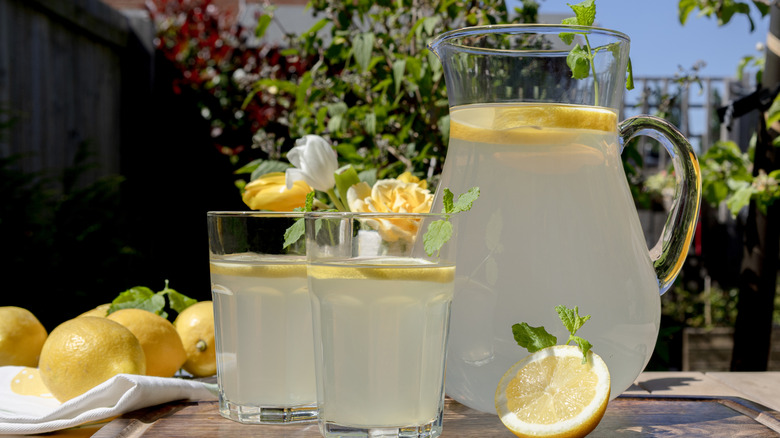
Summertime calls for cold, refreshing beverages, and few drinks signal that the warm months are here more than a classic lemonade (or limeade). The classic recipe is timeless for a reason, but by the halfway point of the season, you may get bored with it even if you add other citrus fruits to keep it zippy. Unique twists on lemonade abound, like one featuring tomato juice, but there's one simple tropical addition that may just carry you through to fall. Lychees are sweet, juicy, and have just enough floral notes to make your favorite summer beverage taste interesting with every sip.
Lychees are native to Asia; historians believe they originated in the Yunnan province of China before spreading to other southern Chinese provinces and Southeast Asia. The fruit held a place of status in ancient China, often serving as a gift to the Imperial Court. It was also referred to as the fruit of romance, and one whiff of its heady aroma makes it easy to see why (at least for us at Food Republic). China is still the largest producer of lychees in the world, but the tropical fruit was introduced to the United States in the 1800s, and you can now find lychees growing in Hawaii, Florida, Texas, and California.
They're only in season from late spring to mid-summer, but canned lychees are available year-round. They're high in vitamin C and potassium and used in traditional Chinese medicine as a digestive stimulant. And they're also perfect in lemonade. I tested two methods of making a summery lychee lemonade to see how you can make this easily at home. The results kind of surprised me.
Fresh versus canned lychees – which one is better in a lemonade?
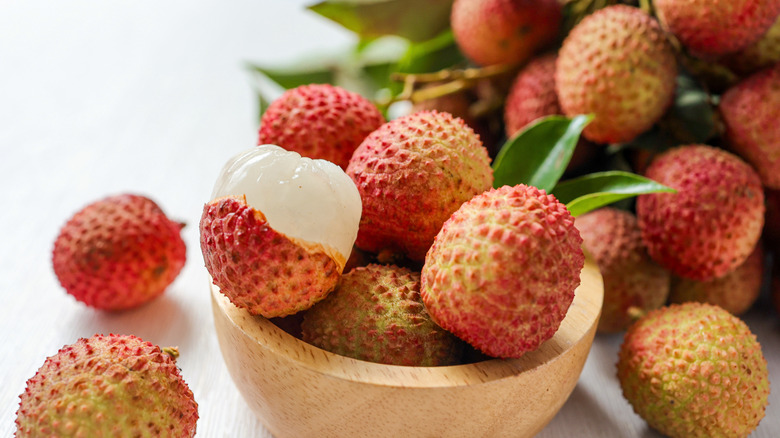
Luckily, I tried this recipe out in the middle of lychee season. While I live relatively close to many lychee farms, they're not as close as my local grocer, so I went to pick up a package of imported ones from Mexico. These weren't as big, sweet, or juicy as what I could get locally. They were also a notch below the Chinese-grown imports I've purchased from Asian groceries, but I carried on anyway.
I peeled and de-seeded ¾ of a pound of fresh lychees and added them to a blender along with a ½ cup of freshly squeezed lemon juice, a ½ cup of sugar, and four cups of water. After blitzing until smooth, I strained the mixture into a pitcher and poured myself a glass. The lemon seemed to overpower the subtle flavor of the lychees, and there was an astringent aftertaste. The pureed lychees also settled to the bottom of the pitcher and required frequent stirring.
I then tried the same recipe using a 20-ounce can of lychees in heavy syrup. I have used just the syrup to make a lychee martini before, so I tried just that in place of sugar, using the same measurements of lemon juice and water — no fruit this time. The result tasted like lemon water, so I threw in the lychees, but it still needed a quarter cup of sugar. After straining into a separate pitcher, I noticed that this batch had a milkier color, and there was no sediment settling at the bottom. It also had an intense, easily recognizable lychee aroma.
The final taste test, and tips for getting more lychee flavor
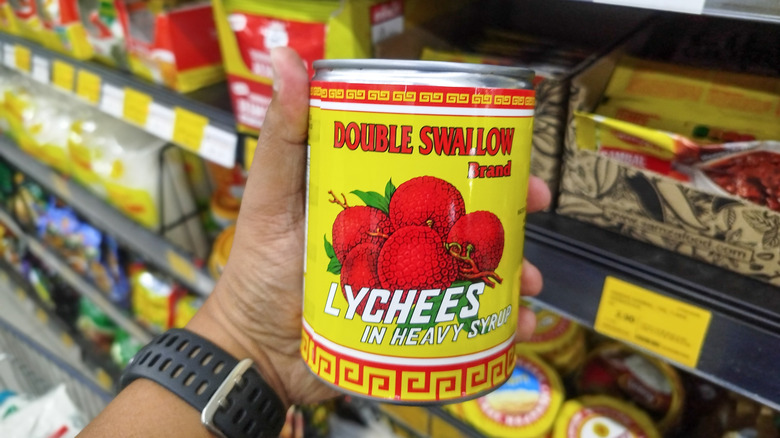
I thought the canned lychee lemonade was a clear winner, but after letting both lemonades sit for a while, I tasted them again and changed my opinion. Even with the lychee puree having settled, the clearer top portion of the version made with fresh fruit had a pleasant hint of lychee flavor that accented the lemon, almost like a lychee seasoning. The canned lychee lemonade had a muskier aroma, which is a common tasting note and probably a feature of the Vietnamese variety used in this particular canned product. It still had a strong lychee flavor, but it tasted almost artificial, like cheap boba. It also developed a bitter, almost metallic aftertaste.
Don't get me wrong. They were both delicious. My one complaint was that they both still tasted like lemonade with a subtle lychee undertone, and if you really love this tropical fruit as I do, you may want full-blown lychee flavor. You could double up on the lychees, but that might make your lemonade pricey enough for an imperial court gift. Since lychees already have a bit of acidity to them, the best route would be to play around with the proportions of sugar and lemon juice to arrive at your perfect recipe. But here's an easy shortcut: Add lemon juice to commercially-made lychee juice or nectar for an instant summer cooler.