

5 Ways To Spot A Tourist Trap Restaurant
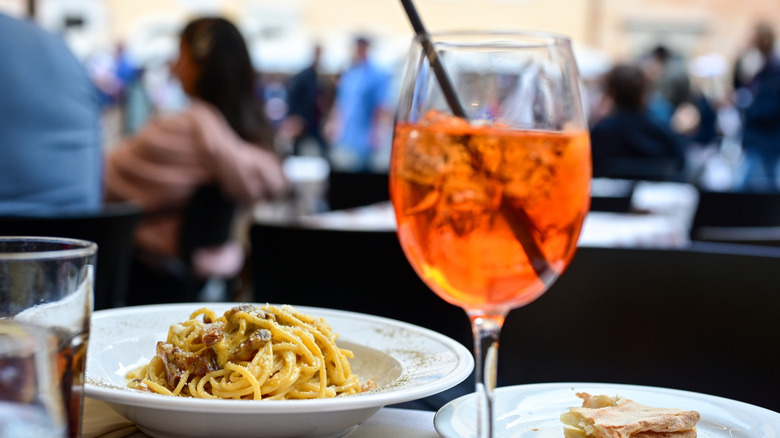
Summer is dawning upon us. As temperatures soar and those vacation days scheduled months ago are finally within arm's reach, the dream of fabled days sipping spritzes by the Mediterranean, Asian beaches, or African Skyline and enjoying carb-heavy treats in alleyway restaurants is increasingly tangible. Indeed, there are plenty of excellent choices for a vacay, but Europe is one of the most popular destinations in 2026 (per the Bank of America), and a key to making the best of it is going to the right places — and above all, avoiding the dreaded tourist trap.
Good food is a crucial part of any summer, and we're increasingly on the lookout for authentic experiences: We don't just want to vacation somewhere; we want to feel like we're locals for a week(end). Tourist traps are an easy pitfall because they often mimic an authentic dining environment to unsuspecting foreigners, but more often than not, they leave you with underwhelmed taste buds and an overwhelmed wallet. While none of these are hard-and-fast rules, we've come up with an easy identikit to spot tourist trap red flags — which you can hopefully avoid this summer — and yes, there's some overlap here with Rick Steves' rule to spot good menus abroad.
It's near a major landmark
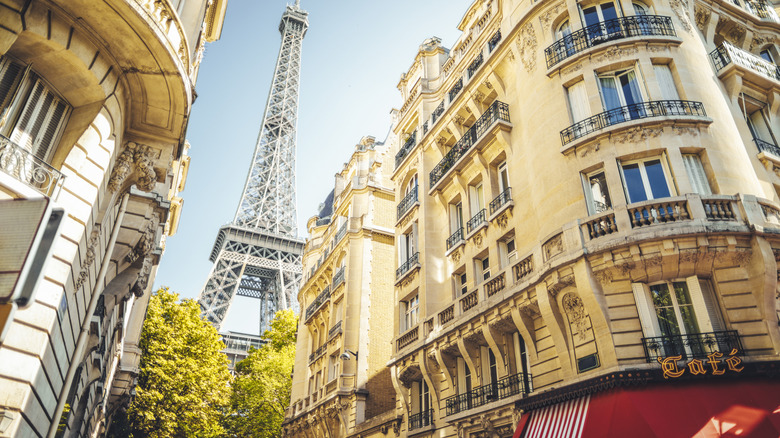
This is usually a no-brainer, but strategic positioning is one of the best ways restaurants trap tourists with subpar quality and exorbitant prices. Picture yourself beleaguered after a day under the scorching sun, wading across the winding alleyways of Rome or the grand boulevards of Paris. You suddenly hit the jackpot: the Colosseum or the Eiffel Tower is right in front of you. What better way to quite literally savor the moment than to enjoy a delicious meal, contemplating the beauty at hand? And that, ladies and gentlemen, is how you end up disappointedly munching on a soggy pasta or stale croque monsieur for double the price you'd get elsewhere.
If in doubt, it's better to steer clear of establishments within the immediate vicinity of any major landmark, especially if teeming with fellow tourists and devoid of diners conversing in the local language. Part of the reason isn't inherently malicious: Real estate in central hotspot areas is usually higher, meaning restaurants — regardless of quality — tend to be more expensive, as a default. An extra five minutes looking for a spot tucked a bit further away is usually much more rewarding — and if you still want to experience the pleasure of a meal in front of a beloved monument, it's better to get a takeaway from a well-reputed spot and enjoy the food on a bench.
The menu is translated into many languages
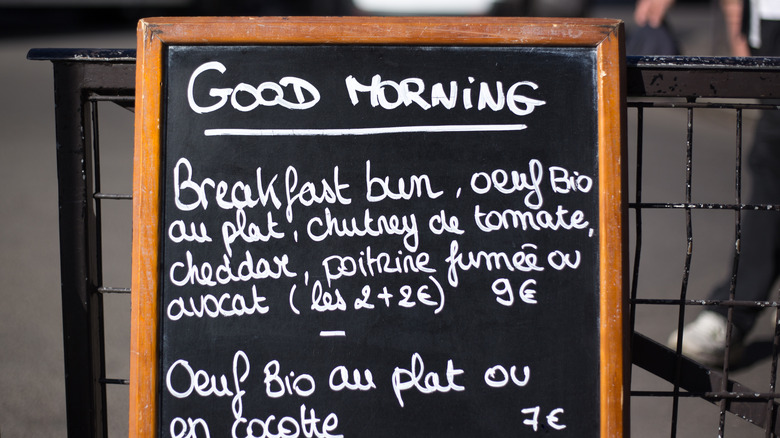
When in Rome, do as the Romans do: Eating where the locals eat is just about the most standard advice from any well-reputed food critic, from Andrew Zimmern to the late great himself — Anthony Bourdain. The key is you want to find the places where the city's own residents — usually pickier in taste and wary of scams — like to convene. While it's not a universal rule, the percentage of tourists in any given establishment is more often than not inversely proportional to the food's quality — and it likely won't be a traditional recipe.
For that reason, local restaurants typically don't need a thousand translations for a largely local clientele. In bigger, popular destinations like Rome, Rio de Janeiro, Paris, Marrakesh, Cape Town, Bali, Mexico City, or the Greek islands, English menus — often with hilarious translation errors — are common enough not to be a major alarm bell. A whole United Nations-sized translation list replete with flag icons, on the other hand, screams tourist central and is your cue to run.
There's staff outside trying to lure you in

Remember the old adage, if you need to say it, then it probably isn't true? Well, that applies to restaurants too.
The best of the best know that quality speaks for itself, and advertising is most useful when it's as tasteful as their food: be it through insider guides, critic-approved lists — the Michelin arguably the most prestigious — or simple word of mouth, they don't need to rely on tacky street gimmicks to get clients to come. So if you spot staff desperately trying to usher passers-by in like a cattle rancher, it's more often than not a tell-tale sign that the place at hand exists to cater to one-time visitors — not loyal regulars.
The menu features dishes that aren't local
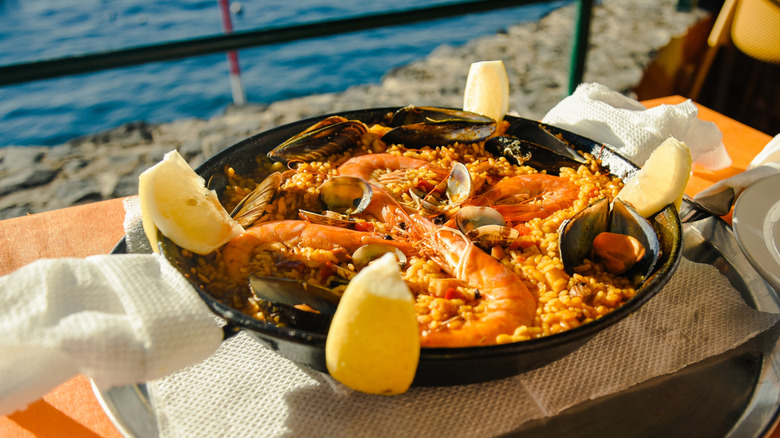
Now, this one requires a bit of research, but local restaurants should be making, well, local food. Many countries, especially Italy, Germany, France, Japan, Thailand, Spain, Peru, and Argentina, are fiercely regional, meaning culinary traditions often vary significantly from town to town. Pizza is native to Naples and the Amalfi area, not Venice or Milan; paella to Valencia, not Madrid; butter crêpes to the region of Brittany, not Paris or Saint-Tropez; pad kra pao to Bangkok, not Pattaya; the list goes on.
The obvious caveat here is if the place doesn't purport to make local food. Take Giada de Laurentiis's favorite Roman restaurant, Nino's, which is a tried-and-tested insider fave and a Tuscan spot making specialties from the neighboring region, like a T-bone Florentine steak with origins in the Renaissance era ("bistecca fiorentina"). The red flag is if the establishment sells itself as "local," but makes a suspicious number of dishes that aren't native to the city or region, especially when paired with an abundance of generic North American-catered menu items like burgers and fries, or Americanized adaptations of local foods (Hawaiian pizza, pasta alfredo, mac and cheese, and so on). Bonus points if the menu has hundreds of items: There's no way any decent local restaurant can freshly prepare so many different dishes from scratch.
There are mock dishes on display
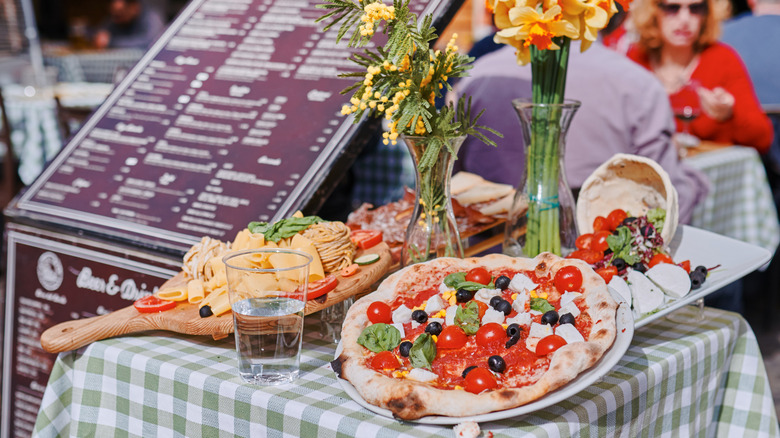
Nothing screams tourist trap kitsch quite like seeing pre-cooked or fake versions of the restaurant's dishes on display outside, behind the window, or depicted on the menus themselves (Asian spots are an exception for the latter). It's a visually effective strategy, but one that has the double effect of luring visitors while putting off locals.
Similar to this would be ice cream parlors in Italy (or "gelaterie") with heaped mounds of fluorescent gelato on display. It might be aesthetically appealing and make for a striking Instagram snap, but the reality behind it is rarely ever good: It usually means the gelato has been treated with additives and artificial colorings. As a general rule of thumb, less (on display) is more.