

The State That Grows The Most Chile Peppers
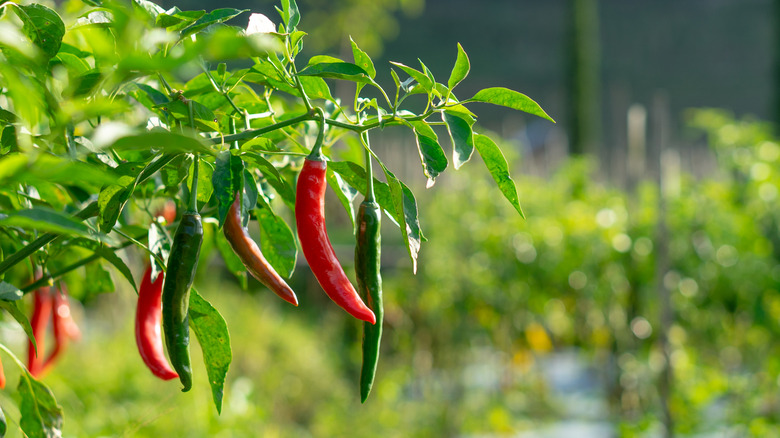
Many American dishes don't come spicy, but peppers pop up extensively in regional cuisines. You can't have a Mississippi pot roast without a jar of pepperoncini, and green bell peppers serve as a cornerstone in the Cajun and Creole Holy Trinity. Still, no part of the U.S. shares a fandom for the fruit quite like New Mexico. Chiles serve as a cornerstone in local cuisine; "Red or green?" goes the state's quintessential question. Accordingly, the state leads chile production, too, supplying some 77% of the fruit grown in the U.S., according to a 2021 issue of "Enchanted AgriCulture, Food & Cuisine."
It's a meeting of environment and culture. New Mexico's arid climate is well suited for the plant, with often high temperatures during the day, followed by cooling at night. There's ample sunlight, and the sandy, mineral-rich soil is ideal for flavorful chile harvests. The agricultural conditions are supported by a rich chile-growing tradition that stretches back centuries.
For much of history, the peppers were grown throughout the northern part of the state in small lots. In the 20th century, innovations in chile cultivars established heartier peppers, well suited for growth across New Mexico. Such innovations blossomed the state's chile industry, which now produces both fresh peppers and powders. Among all the chiles, none are more famous than those from Hatch, several regional pepper varieties known for their meaty flesh and complex flavor. Grown exclusively in the Hatch Valley along the Rio Grande, the fruit now serves as an emblem of New Mexico's prosperous chile industry.
A look into New Mexico's chile culture
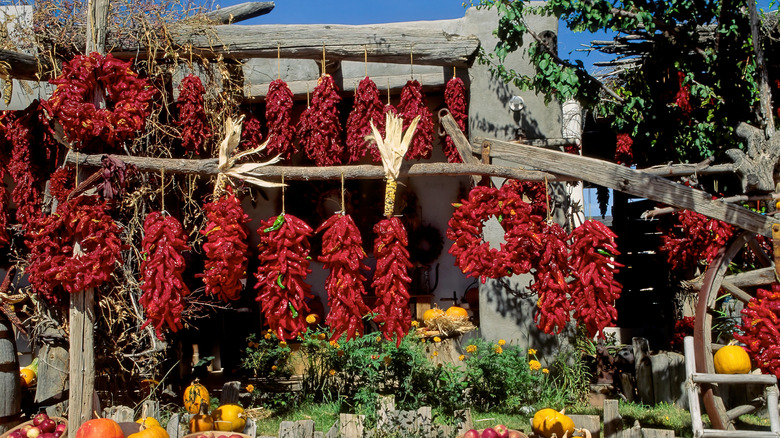
In New Mexico, chile culture runs deep. Across the state, homes hang ristras, dried peppers tied together for both decoration and cooking. Annually, tens of thousands travel to the Hatch Chile Festival. The state's beloved pepper appears on everything from burgers and burritos to even ice cream. Subsequently, it's no surprise the Land of Enchantment produces an array of captivating chiles; agricultural harvest is not concentrated in a single type.
The state is home to hundreds of varieties, which include both cultivars unique to the state, as well as common favorites like jalapeños and sweet peppers grown specifically for paprika. Green chiles — which are essentially red peppers picked early — account for the majority of production.
While peppers sourced from the Hatch region are the most famous, such microregional green peppers appear across the state. The variety of the state's chile terroir, matched with the abundance of cultivars, establishes an astounding array of chile flavors — a driving factor that differentiates New Mexican cuisine from Mexican.