

Give Sangria A Taste Of Summer With Just One Ingredient
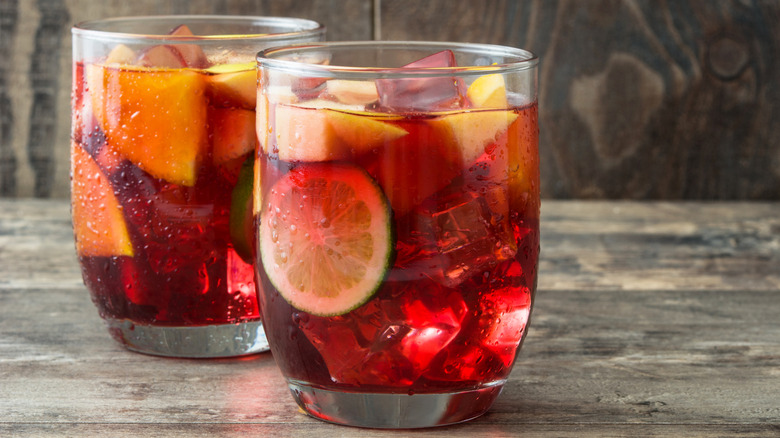
Few countries do summer cooking quite like Spain. From light tapas and cooling gazpacho to an endless variety of fresh seafood, the country's cuisine seems tailor-made to handle the heat. And let's not overlook the drinks, either. While wine purists may gawk at the idea of mixing vino with other ingredients, the Spanish have turned it into an art form. There's the locally beloved tinto de verano, the cola-spiked kalimotxo, and, of course, no list is complete without mentioning sangria.
The summertime staple is typically made with red or white wine, crisp fruits like oranges or apples, and a splash of orange liqueur to round things off. But beyond its delicious ingredients, the biggest part of its appeal is that no two recipes are the same. Everyone seems to have their own spin, and for anyone looking to give their sangria an extra-refreshing twist, a handful of mint leaves can go a long way.
We're not exaggerating when we say mint is the ultimate summer herb. Much of that comes down to menthol, the herb's signature naturally occurring compound that activates cold-sensitive receptors in the mouth and nose, literally infusing dishes and drinks with a cooling sensation. Mint leaves are also made up mostly of water, which helps reinforce their thirst-quenching character. Combined with their bright herbal flavor, they have a unique ability to make already refreshing sangria feel even lighter. What more could you want from a summer cocktail?
The many ways you can incorporate mint into sangria
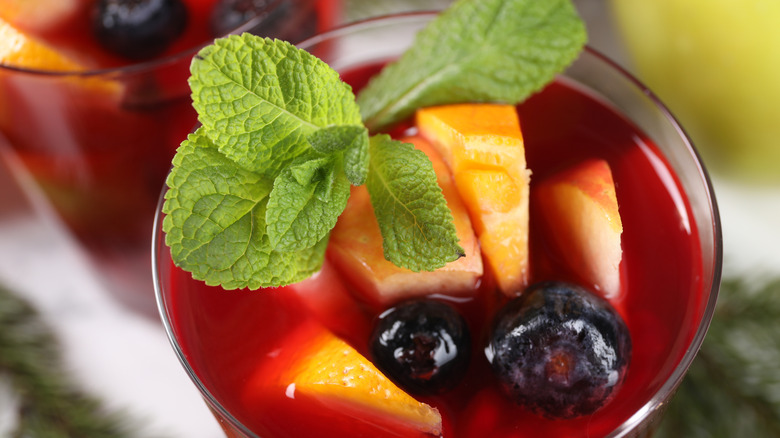
There are plenty of ways to add mint to sangria, depending on how much flavor you want and how you'd like the finished drink to look. If you're putting together a picture-worthy pitcher, whole leaves are the way to go. Go over them with a rolling pin or simply spank them between your palms to gently bruise them. This helps release some of their aromatic oils without overpowering the drink.
But if you want your sangria to be on the mintier side, it may be tempting to finely chop the herb to extract even more flavor — but be careful, as cutting or tearing the leaves too aggressively releases chlorophyll and other compounds that can quickly turn your drink bitter. That's why bartenders typically prefer gentle muddling. Simply place the leaves at the bottom of the pitcher and gently press them with a cocktail muddler — without twisting or shredding them — or get creative with other kitchen tools.
There's also no single correct mint variety to use. Since much of herb's cooling appeal comes from menthol, any type can get the job done. Peppermint and spearmint are classic choices, but if you're looking to put a more unique spin on your sangria, orange mint is worth seeking out. Its citrusy, floral characteristics pair naturally with the orange slices that are already a staple of many sangria recipes. Then there's chocolate mint, a variety known for its subtle cocoa-like aroma. It may sound unusual in a pitcher full of fruit-filled wine, but any sommelier will tell you that red wine and dark chocolate have long been considered the pinnacle of food and wine pairings.