

Why Turkey Burgers Aren't A Common Fast Food Menu Item
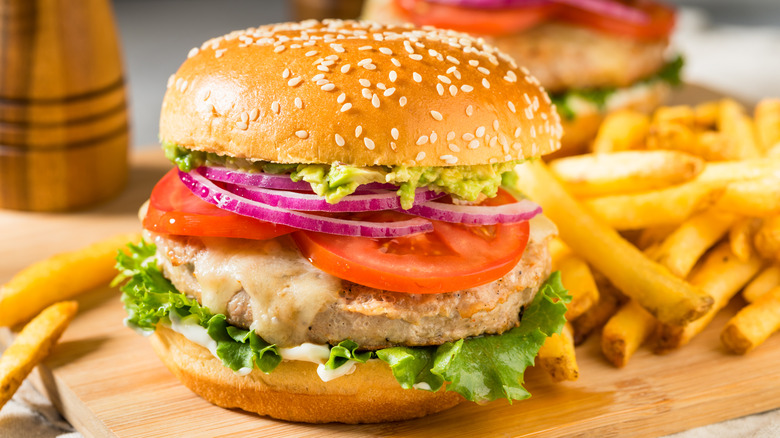
While beef serves as the reigning burger base, plenty of chains have rolled out a breadth of protein alternatives, too. The popularity of chicken burgers evinces America's love for poultry. Several spots sell veggie burgers on their menus (although the Impossible Whopper is Burger King's worst burger). Arby's has even sold limited-release burgers made with game meats like venison and elk. Surprisingly, though, turkey is markedly absent from fast food menus.
The dish appears at a few sit-down dining chains. The Cheesecake Factory and Red Robin both offer a rendition, for example. However, it's basically impossible to find the protein in an affordable, drive-thru setting. Precisely decoding the reason is complex, although a few explanations offer some context.
First, there's the culinary properties of turkey itself. On average, the meat is leaner than chicken and contains fat that is less flavorful than beef. With the right technique, you can cook juicy, flavor-packed turkey burgers, but the meat is predisposed to drying out. As a result, scaling the preparation of turkey burgers to an affordable, fast-paced setting is more difficult than it is with other meats.
Furthermore — perhaps even more critically — there's simply not a culture of turkey in the fast-food business. Limited consumer interest has prevented the turkey industry from investing heavily in fast food. Subsequently, turkey producers have been hesitant to invest in major chains, thereby preventing a widespread burger rollout.
Fast food turkey burgers hold immense, yet unfulfilled, potential
Despite the lack of turkey burger momentum, the concept isn't ill-suited for fast food. Turkey meat offers several marketable advantages. High in protein and low in fat, it's well suited to modern dining trends, especially with protein-maxxing so prevalent in the 2020s. The production of the meat is relatively sustainable and affordable. Throw in the rise of beef prices in the mid-2020s, and ground turkey, in particular, becomes enticing to many home cooks; it's a well-priced alternative with considerable culinary malleability.
In the fast food industry, turkey burgers have undergone limited product development, with only a few notable attempts. Most notably, Carl's Jr. and sister brand Hardee's released several versions of the dish starting in 2011. Paired with toasted wheat bread, Carl's Jr. even offered three flavors — Original, Jalapeño, and Teriyaki — each accompanied by matching sauces and condiments.
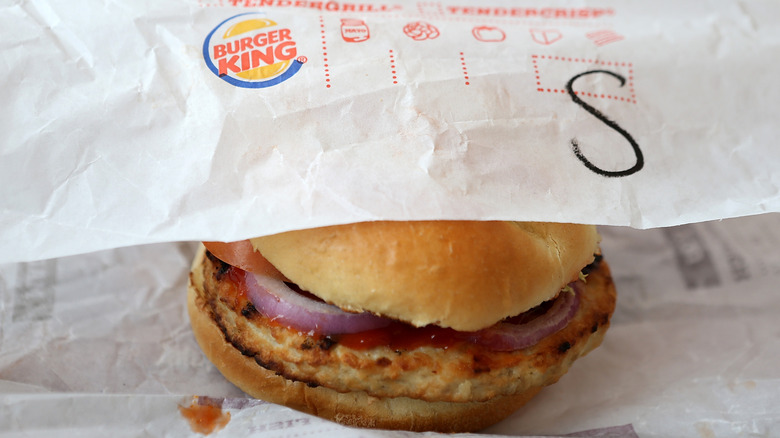
In 2013, Burger King also rolled out a flame-grilled turkey burger rendition, dressed with lettuce, tomatoes, and onions, and served on a high-quality bun. The dish garnered a generally positive reception, although its nutritional content turned away some consumers, ultimately leading to its discontinuation. The fast food turkey burger has struggled to find momentum, making it an obscure culinary concept.