

Red Vs Yellow Bananas: Which Fruit Has More Potassium?
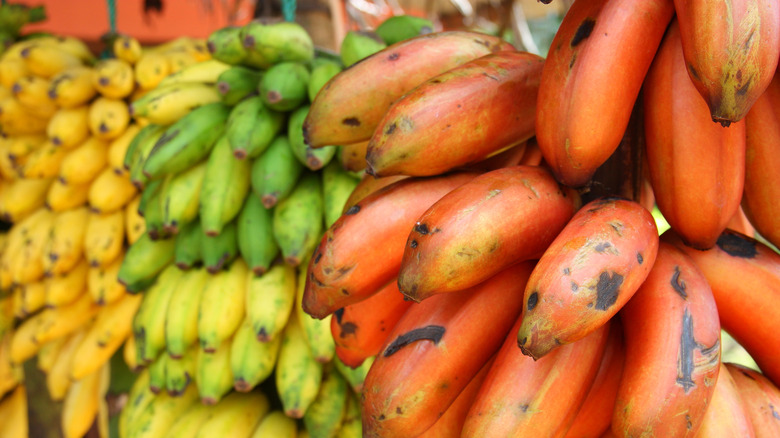
We're all bananas for bananas: Studies consistently show they are one of America's favorite fruits. A micronutrient bomb, bananas provide, among other things, a hefty dose of potassium, which is crucial for nerve and muscle function. But when picking between the many varieties, especially the ubiquitous yellow banana and its lesser-known red-hued sibling, does one have the edge when it comes to the essential nutrient?
The simple answer is no: Both yellow and red bananas have roughly the same amount of potassium, equating to 350 to 400 milligrams per 3-ounce (100-gram) serving. For most people, barring some with kidney disease, that's around 9% of the recommended daily value. But that does not mean their differences are merely in color. Red bananas offer a higher dose of certain antioxidants and vitamin C, making them a somewhat more nutrient-dense choice. Ultimately, the main difference boils down to their distinct textures and flavors.
Red bananas are sweeter and rich in antioxidants
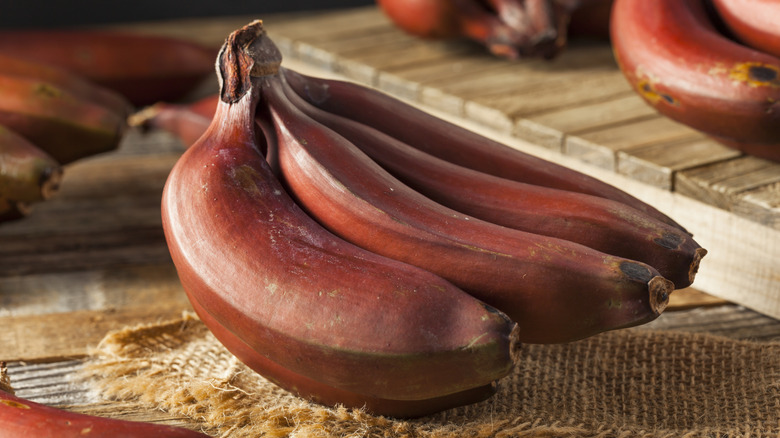
Many people in the U.S. might be less familiar with red bananas, officially known as Red Dacca bananas, with their distinctly plump shape and vibrant purplish-maroon tint. Typically imported from Southeast Asia, South-Central America, and East Africa, they remain more of a specialty item in a Western context and are often harder to find in stores across the country. North Americans might still have more of a penchant for their yellow sibling, but they're all the rage in Central America. And with their exceptional nutrient profile and taste, it's not hard to see why.
Red bananas have a distinctly creamy, sweet flavor, with a smooth texture and notes of fruits like mango, strawberry, and raspberry. Best eaten on the riper side, they have a generally similar macronutrient profile to yellow bananas: They're a great carb source, especially pre-workout, high in fiber, and packed with potassium. Their main advantage, however, is their higher antioxidant content; they have elevated levels of beta-carotene, which converts into vitamin A, as well as vitamin C, both of which are important for immune support.
Yellow bananas are a beloved classic
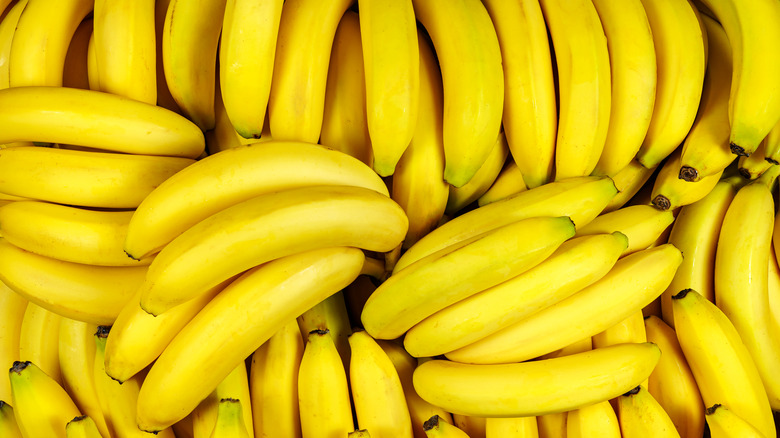
Yellow bananas, particularly the Cavendish variety, are a definitive staple of American and Western diets. Eaten alone, in both regional and international fruit salads, with morning porridge or yogurt, or used in a wide range of baked goods — banana bread, anyone? — they are versatile, mellow in flavor, and starchy in texture, which is likely what makes them so universally appealing. They can even be used in savory contexts: In Sweden especially, bananas have been eaten on pizzas (often with curry) and in casseroles since the 1970s.
While red bananas may offer a slightly richer micronutrient profile than their lighter-hued counterpart, a regular old-fashioned yellow banana is still an excellent fruit choice: Its high potassium content may help support healthy blood pressure, it's rich in vitamin B6, and it's easy to digest, especially for people who suffer from gut or stomach discomfort.