

What Type Of Bread Is Used For Hoagies?
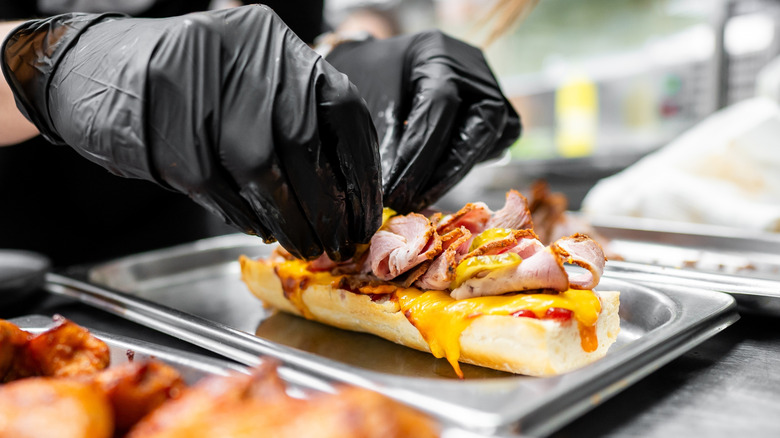
From the beloved New England lobster roll to Buffalo's beef on weck, the American Northeast is home to an abundance of regional sandwiches. Keeping track of all the varied compositions doesn't come easily — not to mention the wide array of breads employed, too. Take Philadelphia's beloved hoagie, for example. Effectively a regional spin on a sub, this long sandwich comes piled high with a generous serving of Italian-influenced charcuterie and cheese.
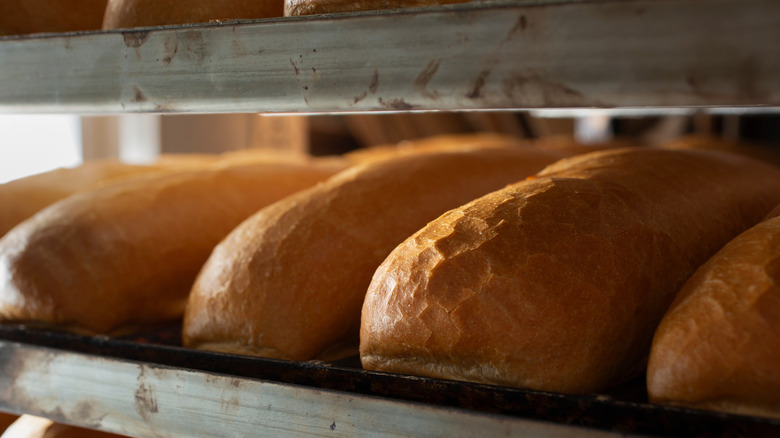
Enjoyed without toasting, the hoagie welcomes personalized customization, with the large, crusty Italian loaf serving as its foundation. The bread's texture makes the dish. The exterior should be crackly, flaky, and never soggy. Meanwhile, the interior is a fluffy, pillowy canvas that supports the sandwich ingredients. Long and narrow, a hoagie is usually about three inches across and anywhere from half a foot to some two feet long.
Hoagie rolls are a difficult bread to get right. The crumb is finer than a baguette's, but the airiness remains light instead of dense. An egg white wash can give the crust its distinct, firm snap, while a high-hydration dough keeps the interior chewy without being heavy — the loaf remains balanced. It's no surprise that the hoagie roll is nearly exclusive to cherished Philadelphia bakeries, serving as an important foundation of the city's sandwich culture.
A great hoagie relies on its iconic, sturdy bread
With the bread procured, building the hoagie is easy. The loaf is sliced lengthwise, leaving a small hinge of crust to keep the sandwich intact. Whether to gut the interior bread remains a point of contention; many argue that keeping the soft interior intact is necessary for structural rigidity. Because hoagies boast a hefty build of cured meats, cheeses, vegetables, and a drizzle of olive oil, a sturdy vessel is essential.
Not every hoagie loaf is identical, though. In the last few decades, sesame seed-encrusted rolls have taken off in Philadelphia. Others employ distinct flour blends, as well as varying levels of moisture, creating breads of different densities. These unique ingredient compositions also result in hoagie rolls with distinct flavors — some are more robust than others. Both sandwich shops and consumers alike hold strong affiliations with particular bakeries. Like Philadelphia's unique pizzaz pizza, it's food that comes backed by fierce regional pride, no doubt a quality that makes the hoagie stand out.