

Carbon Steel Vs Stainless Steel Pans: Which Is Better To Cook With?
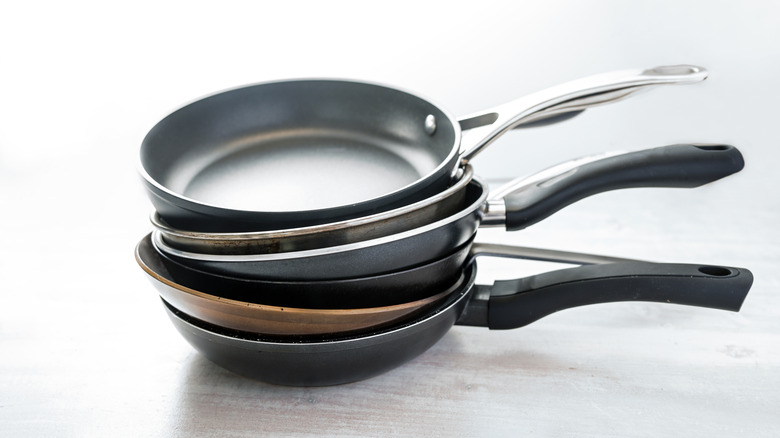
From getting the perfect crust on a ribeye steak to infusing a stir-fry with that signature wok hei aroma, it all starts with the right pan. If you're in the market for some new gear, there are plenty of options to choose from, but it all comes down to what it's made of. Ask any pro chef what you should go for, and it'll likely come down to the following two options: carbon steel or stainless steel. These two materials are powerhouses of the pan world, but which one comes out on top?
Well, the good news is you really can't go wrong with either option. Both materials are exceptionally durable, can last a lifetime, and are free from chemical nonstick coatings. You'll also have no trouble finding either used in the highest levels of professional kitchens, with chefs loving the hard-searing capabilities of carbon steel for their proteins and the resilience of stainless steel for tasks like making sauces, low-and-slow braises, or tossing pasta.
But while they're both great options for the avid home chef, the final decision comes down to what you'll ultimately be using your pan for. If you want an everyday kitchen workhorse that'll last for years, requires little maintenance, and is super easy to use, stainless steel is your best bet. But if you value a lighter pan with better heat distribution and retention, and don't mind investing time in looking after it, carbon steel ticks every box.
Stainless steel pans offer durable, low-maintenance cooking
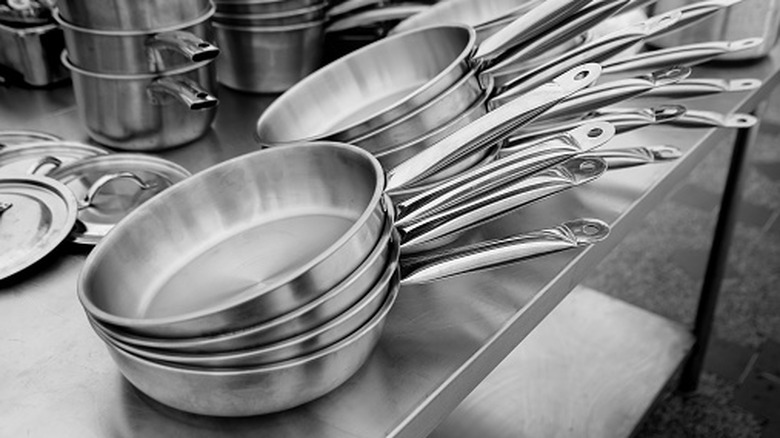
Aside from looking great, stainless steel pans are almost indestructible. High-quality versions of these ultra-durable pans tend to be made of a single layer of conductive metal, such as aluminum or copper, that is then sandwiched between layers of steel. While other materials like carbon steel or cast iron are primarily made up of iron, what chemically sets stainless steel apart is the addition of chromium, which reacts with oxygen to form a microscopic protective shield. This layer blocks moisture and air from oxidizing the iron underneath. As such, you never need to worry about drying and oiling the pan immediately after cooking
When heated properly, stainless steel pans are stick-resistant, so they don't rely on painted-on chemical coatings or a baked-in seasoning layer to retain this quality. It does what it says on the tin, and those who purchase one will never have to worry about its nonstick effectiveness degrading over time.
Because they don't rely on a seasoning layer, stainless steel pans also handle temperamental ingredients with far less fuss than carbon steel. Take a simple tomato pomodoro sauce, for example. Tomatoes are naturally acidic and often need a long, gentle simmer before their sweetness develops and their sharp tang mellows. The problem is that acids can react with the seasoned surface of a carbon steel pan, gradually stripping away that hard-earned patina and sometimes leaving behind a metallic aftertaste. Stainless steel sidesteps this issue entirely. Its surface is completely nonreactive to acids, allowing cooks to enjoy an infinite number of long simmers and braises without having to worry about damaging the pan or affecting the taste of their food.
Carbon steel pans excel at heat control and performance
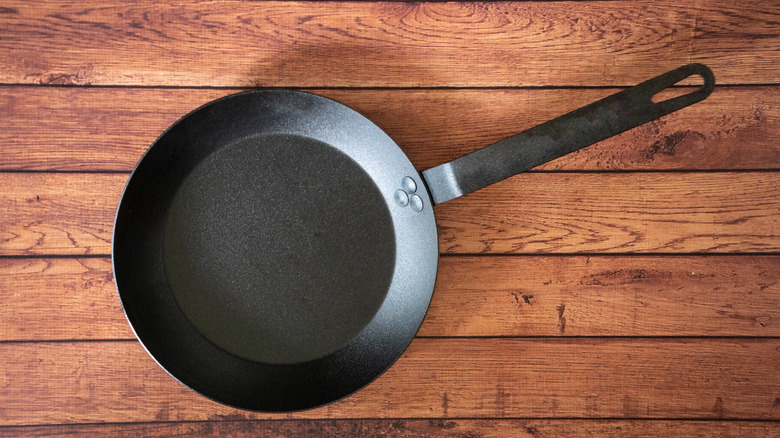
As soon as you take a carbon steel pan out of the box, you'll need to season it. It takes a little effort upfront, but many cooks consider it part of the appeal. Simply apply a thin layer of a high-smoke-point oil (like canola or refined avocado), then use a paper towel to coat every inch of the pan. From there, place it upside down in a 450-degree Fahrenheit oven and bake it for about an hour.
The result is a protective layer of polymerized oil that gives carbon steel its nonstick qualities and prevents it from rusting. While that coating isn't permanent and requires occasional maintenance, it creates a slick cooking surface that's particularly well-suited to delicate, stick-prone foods like eggs and fish. With frequent use, carbon steel becomes naturally nonstick over time as fats and oils cooking on the pan polymerize on the surface and form a hardy patina that some chefs consider superior to stainless steel.
Both stainless steel and carbon steel can deliver excellent heat retention, but carbon steel has a noticeable edge when it comes to responsiveness. Not only does it heat up quickly, but it also reacts to temperature changes much faster than most stainless steel pans. Imagine you're searing a steak and need piping-hot temperatures to develop a deep, flavorful crust. Once the steak comes out of the pan, you may want to immediately lower the heat before adding garlic and other aromatics for a pan sauce. Carbon steel adjusts to those changes quickly, giving chefs more control and reducing the risk of burning these delicate ingredients.