

The Best Time To Season Ground Beef, According To Gordon Ramsay

Gordon Ramsay might be the internet's favorite chef, but despite being so eminently memeable, it's easy to forget that he's a true master of his craft, with an impressive eight Michelin stars under his belt. So when Ramsay offers a coveted piece of advice, you'd better start taking notes — whether that's skipping the affordable soup du jour or never ordering the specials. Another culinary tidbit he shared is the best time to season ground beef, which, he says, is immediately before cooking (via YouTube).
Whether you're working with USDA Prime or Choice cuts, or even a standard pack of supermarket hamburger meat, seasoning is essential. A healthy dose of salt and pepper helps bring out the meat's natural flavor, while the salt also helps dry the surface, encouraging those rich, caramelized notes. That's especially useful if you're making a pan sauce and want to take advantage of all the flavorful fond left behind in the skillet.
But beyond flavor, it's the timing that makes Ramsay's advice so important. Ground beef should be salted shortly before it hits the heat, not long beforehand. Because mince has such a large surface area, the salt comes into contact with far more meat than it would in a whole steak. Once added, the salt begins drawing moisture out of the meat and dissolving some of its proteins. Given enough time, these proteins start to bind together, creating a denser, springier texture that's closer to a sausage than a loose crumble.
Timing is everything when seasoning ground beef
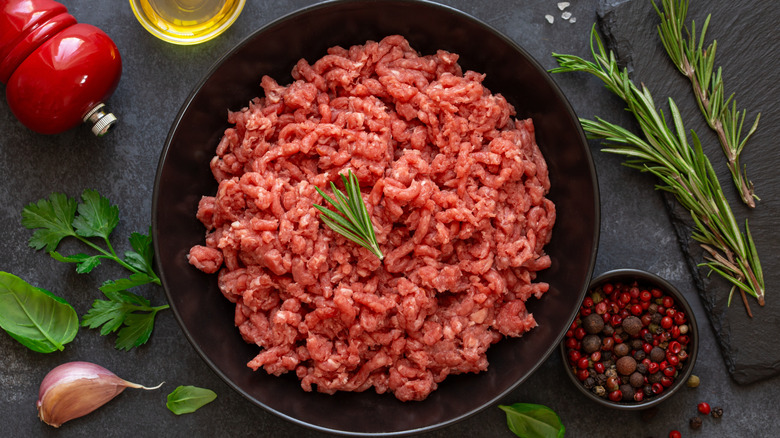
There are plenty of reasons to avoid salting ground beef too far in advance. Mince already has a tendency to dry out during cooking, and if left sitting after being salted, you'll often notice liquid pooling in the bowl. That's a sign the salt has started drawing too much moisture out of the meat, which would otherwise help keep it tender and flavorful during cooking. The result is often ground beef that's drier and lacking much of its natural beefy flavor.
But if you'd rather not season your beef until it hits the pan, that's a perfectly viable option, too — particularly if you're working with a fattier blend. Some cooks prefer to sear the meat first, drain away any excess fat if necessary, and then add salt and other seasonings once the beef is slightly (but not entirely) cooked through. This prevents flavor from being lost when you remove the fat and gives other seasonings, like cumin and paprika, the perfect window to bloom in the heat without burning and developing bitter notes.
One thing to remember, however, is that seasoning mistakes can go both ways. Salting ground beef too early is never good, but waiting until the very end of cooking is just as detrimental. Salt needs a little time and heat to be absorbed by the meat and enhance its flavor. If you only add it after the beef is fully cooked, much of the seasoning remains on the surface rather than being incorporated into the meat itself. The result is, quite literally, surface-level — the outside will taste salty, but the inside of the meat, where much of the flavor lies, will be bland.