

The Pricey Burger Chain That Doesn't Use Seasoning On Its Patties
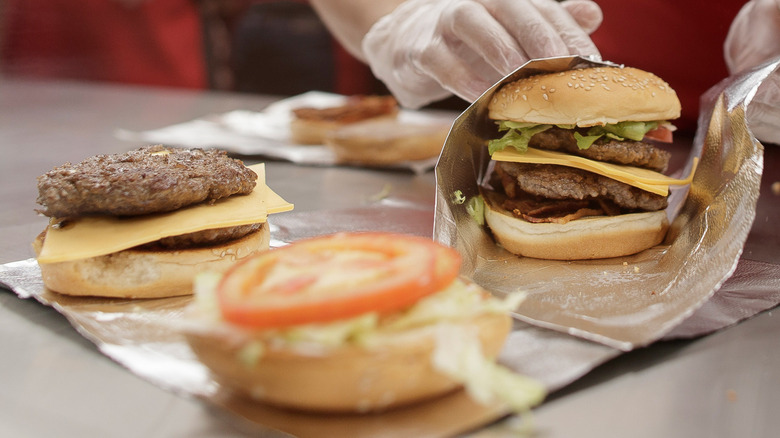
On a trip to Peru, I had a conversation about hamburgers with a local who asked me what the secret was to an American burger. The answer I gave shocked him: Keep the seasoning simple. One chain that takes this concept to the extreme is Five Guys Burgers, which states on its website that it doesn't season its patties at all, believing that its beef "is juicy and flavorful enough" on its own. You can request salt and pepper if you'd like, though only in person — when you try to order online, there is no option to specify that you'd like your burger seasoned.
Such a stance can come off as pretentious, especially considering that the company uses generic 80/20 ground chuck, a grocery store staple almost anyone can obtain affordably. What's more, all the condiments you can add to your burger are boldly flavored, and none of them are specially made to complement Five Guys' beef. It's ironic that a sprinkle of salt will ruin the flavor of cheap ground meat, but an avalanche of toppings has no effect. Nevertheless, Five Guys' decision not to season its burgers can be beneficial to diners who are watching their sodium intake, provided they don't add a bunch of salty toppings.
How economic history shaped the modern American hamburger
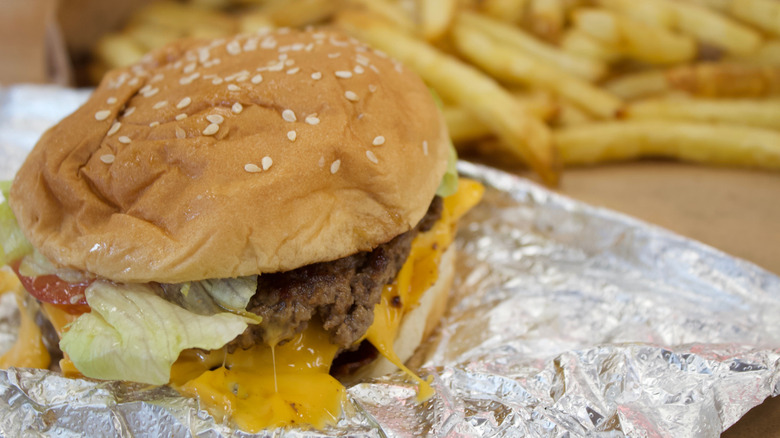
Unlike the patties at Five Guys, many of the best burgers in the U.S. are made with specific cuts of prime beef, often sourced from special breeds of cattle, and diners want to savor that flavor. This is why Bobby Flay only uses two ingredients to season his burgers. Furthermore, the way that Peruvian local, along with many international cooks, prepare their burgers includes ingredients not typically added to burger meat in the U.S. But hamburgers weren't always made so simply or with such high-quality beef in this country.
One Redditor recalls that up until the 1980s, grocery stores sold a budget blend simply labeled "ground [cut of meat]" or "ground [beef]." Because this meat was often a mix of various trimmings, home cooks typically loaded it with heavy seasonings, breadcrumbs, and eggs, always cooking it well-done for safety. While you'll rarely find modern celebrity chefs showcasing this style of burger, the internet is full of home cooks nostalgic for these "old-fashioned burgers." In fact, many vintage recipes call for thrifty fillers — like rolled oats or crushed saltine crackers — as a clever way to stretch a pound of meat into enough patties to feed a whole family.
Another Redditor explained that they "always assumed it was [a] byproduct of Depression-era [and/or World War II-rationed] cooking when meat was scarce [and] costly." The added seasonings would have also covered up the gamey taste of cheap or slightly spoiled meat. The addition of onions in many recipes actually helps tenderize the patties, and onions are commonly used in Turkish kebab recipes for the same effect. When more Americans were able to afford beef again, the recipe began to use all beef, which is actually closer to the original recipe for American-style burgers.