

Grow Healthier Cilantro By Adding One Ingredient To The Soil
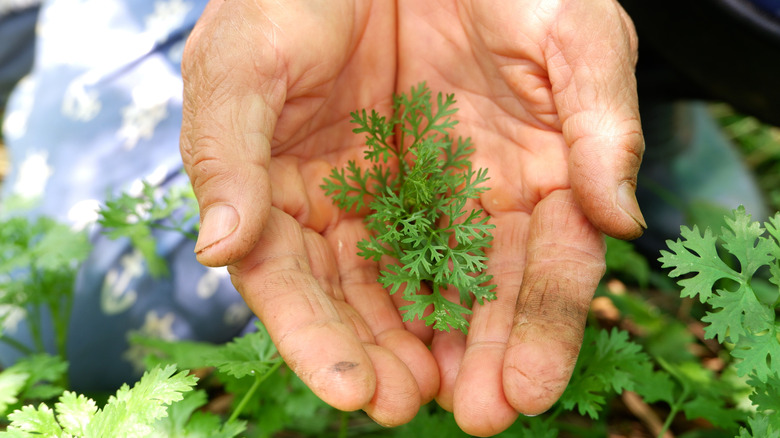
Whether you grow it right in the soil or use the water bucket hack to keep it thriving indoors, your cilantro plant needs proper amounts of nitrogen to flourish. Fortunately, this is one of the most easily, and freely, accessible nutrients to fertilize with and is readily found in everyday kitchen scraps.
Nitrogen is vital to regulating proper photosynthesis, encouraging healthy leaf growth in every plant. However, in fruiting crops like tomatoes and zucchini, too much can focus the necessary sugars into just producing more leaves rather than a good harvest. But since all you really want from cilantro is the leaves, it's all the more important, and you're far less likely to over do it. A quarter cup of nitrogen-heavy fertilizer per 25 square feet is all you need, but veggie scraps from the kitchen can easily feed your plant for free.
The aim of composting is to make your useless vegetable matter grow what you actually want, with a focus on balance and efficiency. Garden compost usually requires one part "green" material, rich in nitrogen, to at least two parts "brown" material, where you'll get your carbon. By simply layering your veggie off cuts, like onion skins, banana peels, and tomato bottoms, with dead leaves, you'll get a dynamite mixture perfect for keeping your cilantro thriving all season long. Once it no longer stinks, just mix a handful into your potting soil or till it thoroughly throughout your in-ground beds.
Other cilantro growing tips
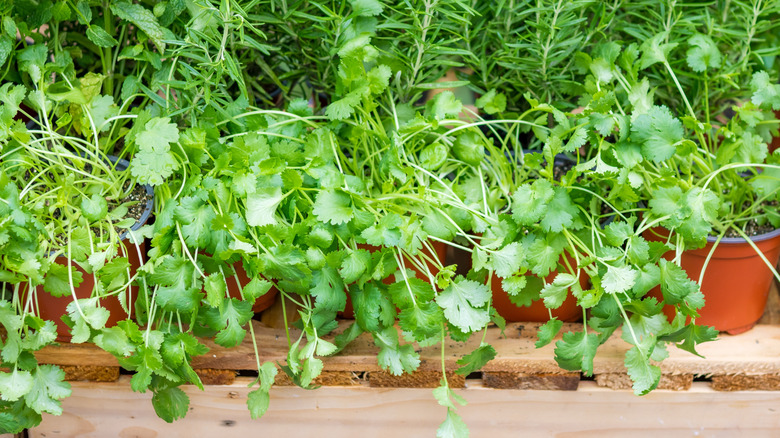
Herbs are often cheaper to grow yourself than buy and can be quite easy once you have the trick to it. Provided you keep the soil relatively moist and give it enough sunlight, it should grow like a weed and give you a continual harvest until it gets too cold.
Cilantro has a love-hate relationship with UV rays, thriving in full sun but wilting in the heat. Try planting it in an area that gets most of its sun before the afternoon, ensuring it doesn't scorch when the UV index is high and temperatures exceed 85 degrees Fahrenheit but gets enough to energize its growth. While cilantro does like to stay hydrated, it hates when its roots sit in water. Ensure your soil drains well so that your regular waterings don't turn its home into a swamp and cause root rot. If you grow it in a pot, use one with a hole in the bottom and set it on a saucer to catch any drippings.
Harvesting any leafy herb is a bit complicated because you want to take enough for your recipe but not so much that you prevent proper photosynthesis. For cilantro, never take more than a third of its leaves at a time and only take fully mature stalks. Like basil, regular prunings encourage the plant to bush out and grow more leaves rather than flowers — though you can always save the seeds from these to make coriander instead.