

Eliminate Cold Floors With This Vintage Kitchen Heating Feature

When you wake up in the morning, especially during wintertime, the last thing you probably want to feel is the freezing cold floor beneath your feet. Thanks to modern technology, many luxury homes now come with underfloor heating. But what about the everyday home, when you don't want to skyrocket your energy bill? No one wants cold toes when they're making a delish Italian wedding soup, after all.
You're in luck — there's another retro-inspired option making a comeback: plinth heaters. Common back in the day, plinth heaters were small heating units installed beneath kitchen cabinets, cupboards, staircases, wardrobe bases, or utility rooms where cold air tends to settle. They pull in cooler air near the floor by the plinths (aka baseboards), warming it over a heating element or hot-water pipes, and then pushing that warm air back into the room from the base of the cabinet.
They work similarly to radiators, but take up far less space, making them ideal for smaller homes, especially those with tile or stone flooring. Hidden from sight beneath cabinets, these vintage heaters not only save you space but are also almost invisible and can be more aesthetically pleasing alongside other decor (like a stylish gallery wall of cutting boards), particularly if you want less clutter and a minimalist look instead of a bulky radiator.
Different heating options for colder kitchens
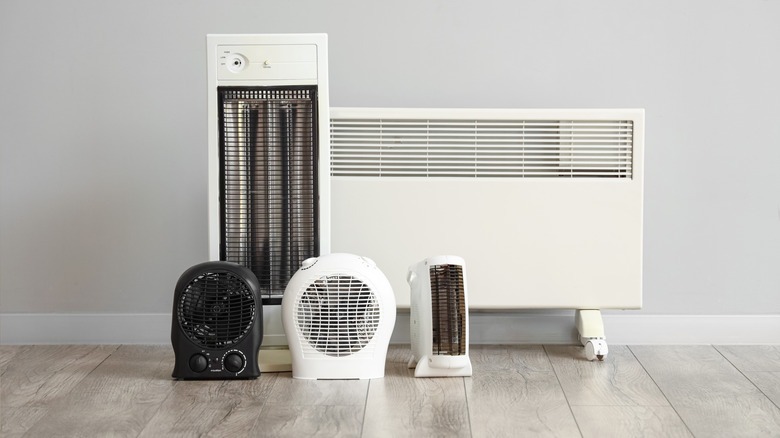
Plinth heaters and underfloor heating both warm cold kitchen floors, so it's easy to confuse them. Underfloor heating and radiant floor heating, which are the same thing, use electric cables or hot-water tubing under the floor to warm the floor itself. But you'd have to tear up the entire floor, and there are installation costs that add up by the square foot – anywhere from around $8 to $12 per foot.
A plinth heater works differently. Instead of heating the floor from underneath, it sits right in the space beneath your cabinets and pushes the newly warmed air out at floor level. So essentially, underfloor heating warms the floor, while a plinth heater warms the kitchen from the cabinet base. Compared to the $1,000 or so you'll spend on radiant heating, a plinth heater can range from about $50 to around $300 (which is still a huge savings).
Of course, there are other ways to make a kitchen floor feel warmer, too, like insulated underlayment, vinyl, or fuzzy area rugs over ceramic tile. Those options can help, but they do not heat the room like a plinth heater or underfloor heating system.
Modern versions are also far more advanced than their older counterparts. Today, you can still find models with quieter fans, energy-efficient settings, and smart controls that work alongside existing central heating systems. If you're tired of icy kitchen floors but not ready for a full renovation, this old-school heater may be worth another look.