

How Alton Brown Makes Prime Rib Crust So Perfect

Food Network star Alton Brown's favorite holiday roast is classic, but expensive, so he always wants to make sure the crust is perfect to capture the best flavor and texture. But unlike other recipes, he starts working on the crust before it goes anywhere near an oven, letting it dry in the fridge for several days before it's time to cook.
Brown is clear from the start that this isn't dry-aging, which is a highly controlled process meant to create chemical changes in a meat's exterior through the careful cultivation of microbes, humidity, and temperature. Instead, he explains this method simply "[dries] the outer surface to help create a crunchy brown exterior later" (via YouTube). When it comes to prime rib versus ribeye, you don't have to worry about this with steaks because they have direct contact with a piping-hot surface. However, since prime rib cooks at such low temperatures, getting a jump-start on a Maillard crust ensures maximum flavor.
Brown ensures his meat gets some protection from outside aromas with about six feet of cheesecloth wrapped tightly around the roast. It's enough of a buffer to ward off accidental exposure, but it's also porous enough to allow moisture to evaporate. Plus, it's affordable enough that you won't mind throwing it away, and you can easily trim it to the exact dimensions needed to fit any roast.
Alton Brown's 2-step technique guarantees the perfect prime rib
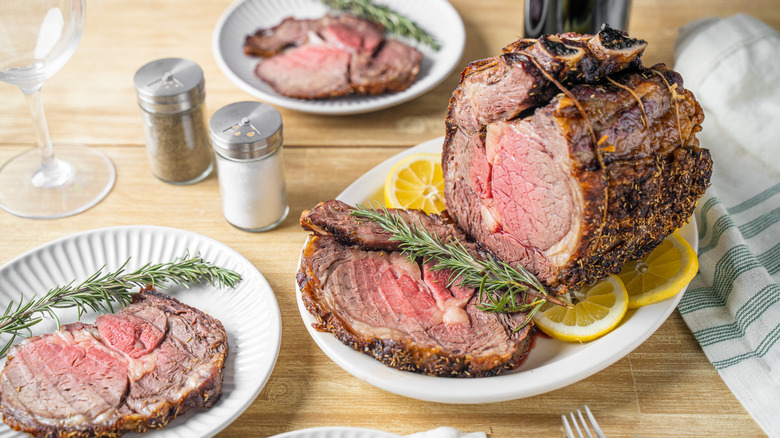
Alton Brown's prime rib recipe starts by cooking the roast at just 250 degrees Fahrenheit, a relatively low temperature that still allows the Maillard reaction to gradually develop. While this guarantees an even level of doneness no matter how thick the meat is, it's his second step in a blistering-hot oven that creates the real flavor magic.
The best steak cuts to reverse-sear are particularly thick, so they don't dry out at low temperatures, and there are few cuts quite as thick as a prime rib. While you won't be baking it in the oven and later searing it in a cast-iron pan, Brown's oven technique follows many of the same principles. After letting the meat rest — which essentially stops the internal cooking process — he cranks the oven to its highest temperature and lets the meat cook for about 10 minutes, guaranteeing that all that extra heat only reaches the exterior.
All of this allows him to achieve the oh-so-perfect crust every cook dreams of without any extra helpers. Still, if you're looking to make an easier crust, or one with a bit more flavor, you can do it like a pro with a slather of herb-laden, oil-infused mustard. Mustard turns particularly crispy at high temperatures, and the added fat helps protect it from burning too early. Combine it with Brown's suggestion of using beef tallow, and you get something supremely meaty, easy, and guaranteed to taste great.