

How To Clean A Wooden Cutting Board After Raw Chicken Was On It
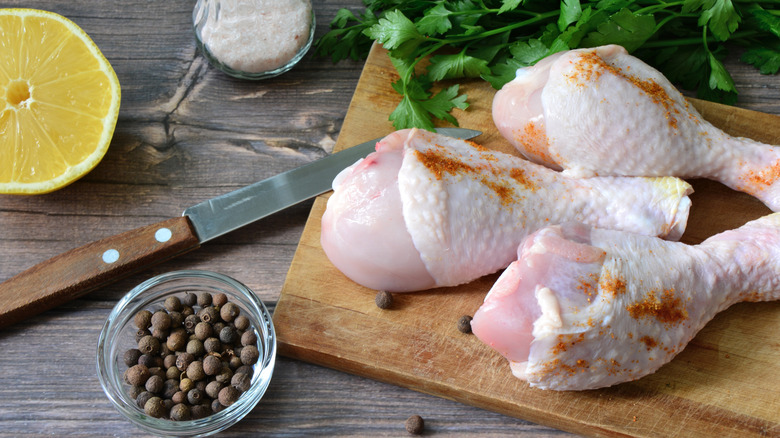
Raw chicken inspires a unique kind of kitchen paranoia. The moment that slippery cutlet hits the cutting board, you're mentally noting every surface it might have touched, making multiple back-and-forth trips to an already running faucet, and finishing with a forensic-level wipe-down. The fear isn't unfounded: Bacteria like salmonella and campylobacter are real, and nobody wants to spend 48 hours in a gastro-nightmare regretting that weeknight Burmese chicken stir-fry. So, if you want to be on the safe side, it's essential to stay on top of hygiene when using natural materials like wooden cutting boards.
Wood is widely considered the superior cutting board material, topping plastic in pretty much every category. It's sturdy, looks great, and a high-quality board can last a lifetime. When it comes to raw meat, one of wood's biggest strengths is that it's naturally porous and absorbs moisture and bacteria. Hear us out — at face value, this sounds bad, but because the bacteria isn't left sitting on the surface, it's less likely to directly contaminate food. Instead, it gets drawn into the wood's inner fibers, where it is effectively trapped and starved of the moisture it needs to survive.
So, when you're cleaning your wooden cutting board, the main priority is removing any leftover residue from the surface. For starters, immediately after using the board, wash it with hot water and soap. We strongly recommend using a nonabrasive scourer to efficiently lift any remaining residue. After washing the board, allow it to air-dry upright, which is also how it should always be stored.
Smart material choices help ensure cutting board safety
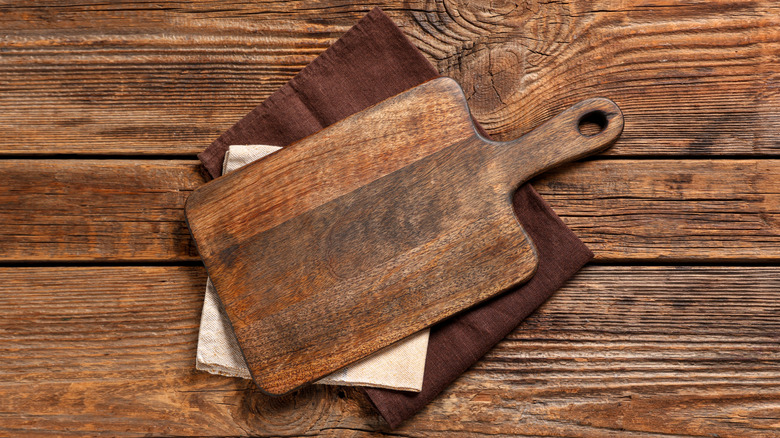
If you want to get the most out of your board, you'll have to do a little research beforehand. From wood type to grain construction, all of these factors heavily impact how the board performs in the kitchen. But before unpacking which options are superior, we recommend purchasing a dedicated board for raw meat. This simple step dramatically reduces the risk of cross-contamination.
If your goal is to find a wooden cutting board that's perfect for working with raw poultry, or any kind of uncooked meat for that matter, the material you choose makes a huge difference. Certain woods — like maple or white oak — are naturally more moisture-resistant, making them extremely hostile to bacteria. But the real game-changer is the type of grain the wood is made from. Unlike standard edge-grain boards, end-grain boards are built with the wood surface facing upward, allowing the surface to "heal" after knife cuts. This means fewer grooves for raw chicken juices and bacteria to settle into.
Naturally antimicrobial woods tend to come with premium price tags, such as Ina Garten's luxury maple cutting board. But if you're shopping on a budget, there are still plenty of ways to keep a more affordable selection sanitary at home. For instance, sealing it properly has a whole host of benefits. Treating the cutting board with food-safe mineral oil or beeswax creates a protective barrier that prevents moisture, raw meat juices, and bacteria from soaking into the wood. Aside from keeping it more sanitary, it also helps prevent moisture damage that can cause warping and staining, significantly increasing the shelf life of your board.