

Why Coleslaw Is Traditionally Served With BBQ
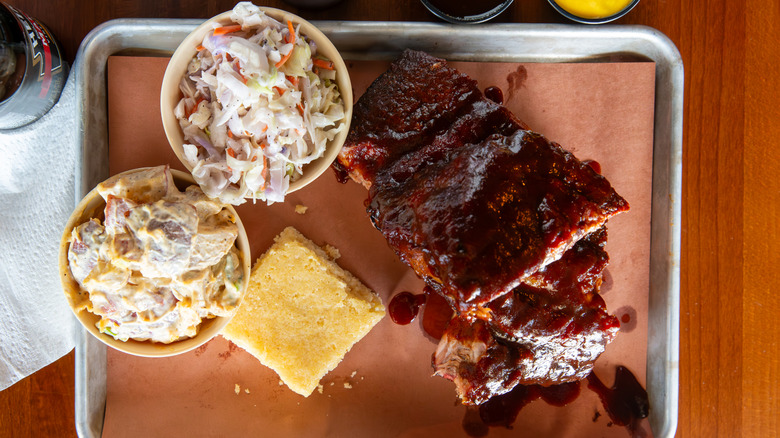
Some food pairings come so strongly intertwined, understanding their coupling might appear futile. Few question the serving of ketchup alongside french fries and it can (mistakenly) appear that chips and salsa were made for each other. For Southerners, another such tried-and-true combo is cole slaw and barbecue.
The crunchy cabbage-based salad appears across a wide array of barbecue styles. Alongside slow-cooked pork, Carolinians bite into vigorously minced slaw varieties, crafted with mustard, barbecue sauce or vinegar in lieu of mayo. Texans enjoy a creamy-acidic coleslaw rendition, perfect for the regional barbecue style's extra smoky flavors. Not to mention Memphis and Kansas City style barbecue also employs the distinct cabbage crunch to cut through meats. America's barbecue traditions throw the slaw both into sandwiches and on the side; yet more-often-than-not, the salad's there in some form.
It's a strongly intertwined history that traces back decades. Printed evidence of the cabbage being served alongside barbecue dates back to the 1880s, and the pairing became common by the early 20th century. Expectedly, there's advantageous texture and flavor at work; an easy cole slaw recipe offers a zesty crunch that contrasts tender meats. Meanwhile, the cole slaw dressing establishes a palate-cleansing flavor –a refreshing cold bite to munch on without overbearing the complex smokey flavors. Plus, the cole slaw's gentle touch of acid or heat helps cut through the fat. The duo represents a storied American culinary tradition, making it a combo that's easy to understand.
How regional coleslaws enhance the barbecue experience
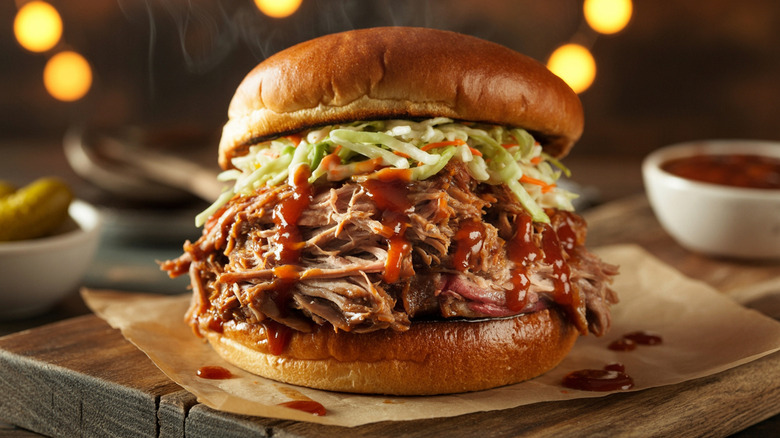
A truly terrific barbecue meal involves a thoughtful assembly of components. Regional American barbecue sauces cater to the centerpiece meats, while sides like a basic potato salad and cornbread prop up the experience. The many types of cole slaw involve the same level of consideration, evincing why they're a cornerstone of barbecue meals.
Receive a South Carolina slaw for example, and the vinegar-mustard based dressing plays a condiment role. The sliver-sliced salad often tops slow-cooked pork right inside the sandwich, lending a vegetal and crunchy dimension to the dish. Meanwhile, further west in Lexington, North Carolina, the cabbage is cut up into small uniform chunks and dressed with ketchup or barbecue sauce. Served alongside slow-cooked pork colored and flavored in the same vein, the slaw establishes a collective red appearance that catches the eye.
Across the Mississippi in Kansas City and Texas, creamy cole slaw is king. With smoke and sugar more dominant flavors in these barbecue styles, the slaw establishes a velvety mouthfeel that amplifies the richness of the experience. Cole slaw and barbecue didn't materialize as an opportune pairing; both components evolved to suit each other best.