

Is Olive Garden's Never-Ending Pasta Bowl Special Actually Profitable? Reddit Debates
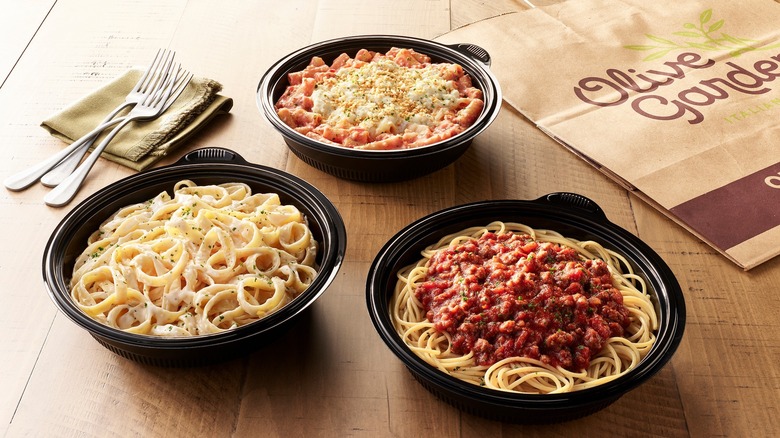
Olive Garden's Never Ending Pasta Bowl promotion has been running since 1995 and has become incredibly popular at the Italian-American chain owned and operated by Darden Restaurants. The all-you-can-eat offering typically runs from mid-September to mid-November every year and was interrupted for only two years during the COVID-19 pandemic and its aftermath. For the uninitiated, the deal entails just what the name suggests — customers pay for their choice of pasta and sauce from a list of options, then can get additional servings of pasta and change their selections each time. The deal also includes never-ending soup or salad, along with complimentary unlimited breadsticks.
Interestingly, Olive Garden has kept the national base price for this promotion steady at $13.99 since 2022 — though the base price jumps up to $15.99 or more in high-cost-of-living metropolitan areas — despite inflation and the rising costs of utilities and labor. Because the deal seems almost too good to be true, folks frequently debate whether the special is actually profitable.
Naturally, this skepticism sparks plenty of scandalous theories online. Given that many diners already question whether Olive Garden is considered traditional Italian food, a common accusation on Reddit is that the chain uses "[low-quality] ingredients, purchased in EXTREME bulk." However, while only Darden Restaurants holds the exact financial figures, other users believe the most reasonable explanations for how the deal remains viable come down to the nature of Olive Garden's cuisine itself and smart business practices.
Redditors think low costs and quick satiety power Olive Garden's deal
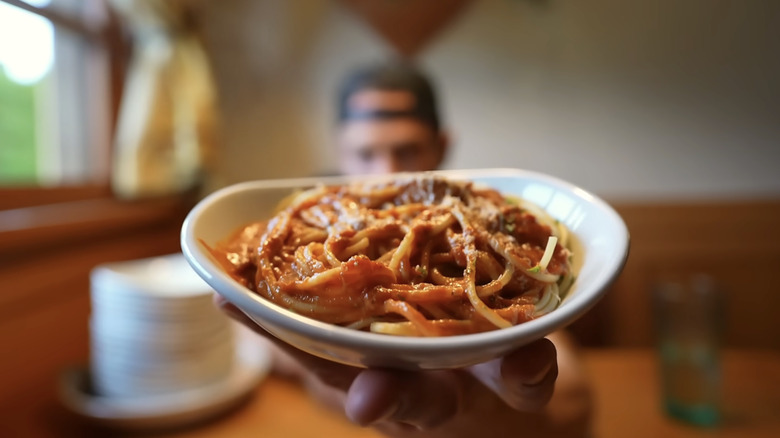
The low cost of pasta in the restaurant industry, along with its high profitability, comes up repeatedly in Reddit discussions surrounding the Never Ending Pasta Bowl. One user countered claims that the chain uses poor-quality ingredients by stating that "every ingredient at an Olive Garden is on par with what [an] average person could buy at their local grocery store." It's true — you can even find fresh pasta at Dollar Tree! Another Redditor pointed out that folks "can get a fairly good jar of sauce for [$5]" if they're buying retail. Yet another user added that "pasta is damn cheap and in a wholesale/mega [food service] application, they're getting a ... cheap rate."
What's more, pasta can leave many diners feeling satisfied after just one bowl. Despite expecting to eat several servings, multiple Redditors noted that they rarely make it past the first round — especially after enjoying Olive Garden's iconic breadsticks, not to mention the unlimited soup or salad that comes with the deal. One user claimed that they "used to work at [Olive Garden] and a shocking number of people (like most of them) do not even get a refill. And if they do it's only one refill. That means they're paying an extra couple dollars ... for nothing." Another Redditor commented that they had gone to Olive Garden with their daughter for the deal and they "only ate half a bowl each. I [ended] up paying [$8] more thinking I was going to go to town."
Smart promotional timing and add-ons also help boost profitability
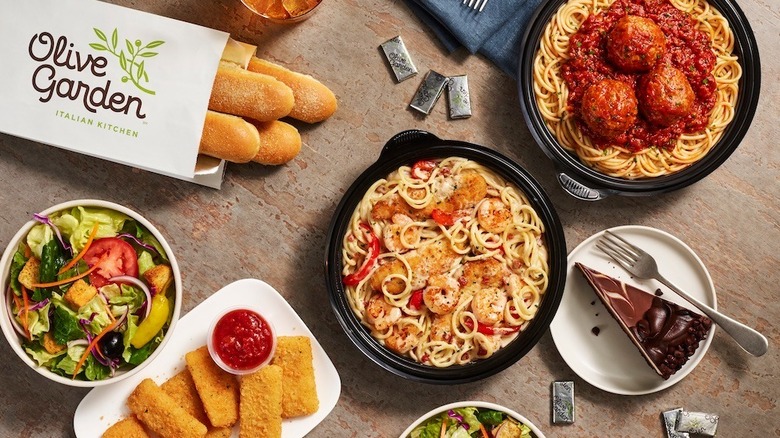
Other explanations for the profitability of Olive Garden's Never Ending Pasta Bowl have more to do with well-known business practices, like the concept of loss leaders, or items a business sells at a loss in the hopes that customers will purchase other products. One Redditor commented that "odds are if you are saving money on pasta you are more likely to spend on add ons." A TikTok user echoed the same sentiment, adding that "the deal attracts people who would have never visited Olive Garden in the past, potentially hooking them onto the food and creating repeat customers."
Timing also likely plays a critical role in the special's success. One Redditor explained that "for [Olive Garden] it's the slowest time of the year and this is about generating more traffic into the restaurant." It's a similar reason many establishments participate in restaurant weeks or months during slower seasons. Such promotions may not see immediate returns, but they have strong public relations potential, helping establish relationships with new diners while maintaining ties with existing ones.