

Jack Daniel's Untimely Death Sounds Like It Came Straight From A Movie
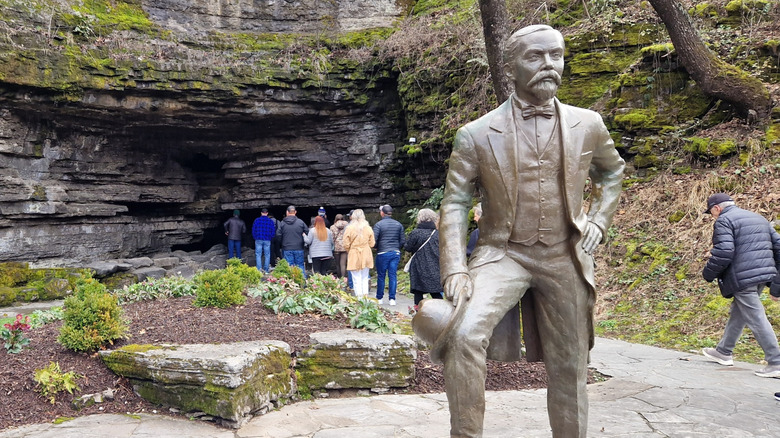
We may receive a commission on purchases made from links.
Jack Daniel's is one of the most iconic whiskey labels out there, but few people know the story behind the name. Established by Jasper "Jack" Newton Daniel in 1866, who pioneered the unique Lincoln County Process that helped turn the distillery into a household name. But unfortunately for Daniel, a series of tragic events would eventually lead to his untimely death at the age of 61.
Daniel's troubles began on what seemed like an ordinary morning in 1906. After arriving at his office, he reportedly couldn't remember the combination to his safe, and in a moment of frustration, he kicked it. It's a relatable reaction, but for Daniel, this moment of anger came with serious repercussions. The impact badly injured his toe, and bear in mind these were the days before antibiotics, so even the smallest of wounds could turn deadly. The cut became severely infected, eventually developing into sepsis, aka blood poisoning. As the infection spread, doctors were forced to amputate his leg, but gangrene had already taken hold, and his days were numbered.
Daniel died in 1910, marking a tragic end to the man behind the legendary whiskey brand. The strange timeline of events surrounding his death has since become immortalized by the brand, who've jokingly said, "never get to work early" is the moral of the story (via Jack Daniel's). It seems Jack Daniel's frequently looks back on its founder's death with a sense of humor. At the original distillery in Lynchburg, Tennessee, visitors can still see the infamous safe, and tour guides have even been purported to joke that Daniel might have avoided the worst outcome if he had simply treated the injury by soaking it in a glass of his famous whiskey.
What happened to the whiskey label after Jack Daniel died?
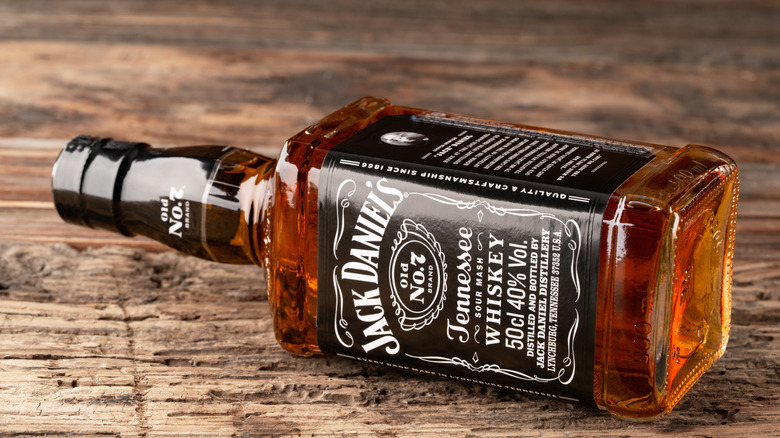
While popular lore claims kicking the safe led to Jack Daniel's untimely death, some historians have questioned whether the story is entirely true. In his 2004 biography "Blood & Whiskey: The Life and Times of Jack Daniel," author Pete Krass argued that the timeline surrounding the kick and sepsis simply doesn't add up. Instead, Krass suggested that complications from diabetes were likely the cause, with the condition causing the toe to become gangrenous rather than the kick itself.
Whatever the true cause may have been, the years surrounding Daniel's death were a turbulent time for the whiskey label. By 1910, Moore County — home to the original distillery — had voted to go dry and banned alcohol production and sales in the area. National Prohibition soon followed, forcing the distillery to halt operations entirely, and nearly killed the rye whiskey industry. Before his death, Daniel passed ownership of the business to his cousin Richard Daniel and nephew Lem Motlow. Ironically, his nephew was the one who was supposed to open the safe for Daniel on that ill-fated morning.
Under Motlow's leadership, the company survived Prohibition and later became part of what is now Brown-Forman, the spirits titan that still owns the brand today. But despite the whiskey's global success, Moore County — technically — remains dry to this very day. The distillery can legally produce alcohol, yet local laws still heavily restrict the sale of it within the region. Over time, however, the company found creative ways around those rules, including an exemption that allows guests to purchase one of its signature square bottles directly from the original site.