

What Kroger Does With Its Leftover Bakery Items
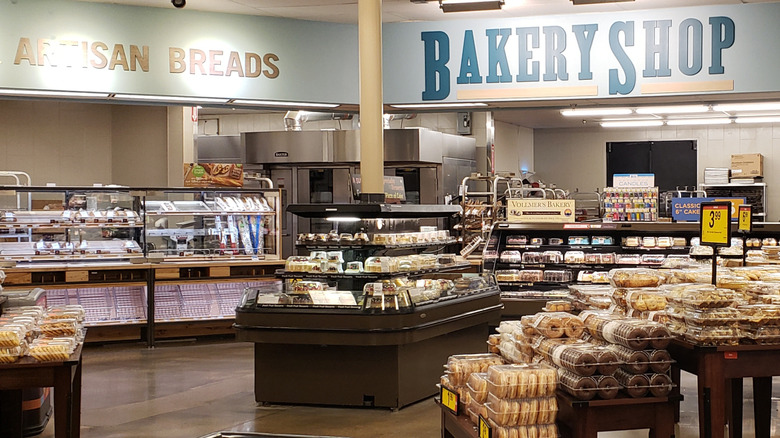
If you're a fan of Kroger's bakery, with its fresh bread made from scratch and popular confections like that yummy pineapple upside-down cake — considered one of the very best fresh-baked goods from a popular grocery store chain — you may have wondered what happens to all the goodies that don't sell before their freshness dates expire. Does Kroger throw them out?
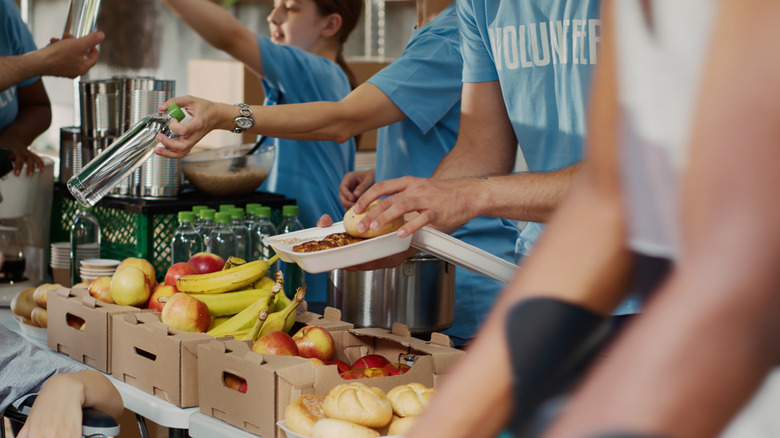
The answer is no — unsold bakery merchandise from Kroger doesn't end up in garbage cans. Kroger is among the grocery stores that donate their unsold food, including leftover baked goods. Bakery items of all types that are past their peak freshness but are still perfectly edible are given to nonprofit organizations specializing in food redistribution, ensuring the food reaches hungry people in need, not landfills.
The Kroger Company has 19 supermarket brands under its corporate umbrella, including its own namesake Kroger brand, and this food donation policy is in force across all of them. And it's not just broad-brush participation — every single Kroger affiliate store actively contributes surplus food to charitable redistribution. These efforts are part of the company's Zero Hunger-Zero Waste public charity, which was founded in 2018 and strives for the ideal of creating zero-waste communities. Through the program, Kroger and its family of stores have diverted over 800 million pounds of food to people in need. The company has also contributed more than 3 billion meals via a combination of food and monetary donations.
Kroger wanted to help solve a global problem
Food waste has become a big topic, and it's estimated that the equivalent of at least 1 billion edible meals is collectively thrown out by households every single day (per the UN Environment Programme). That figure doesn't include commercial waste from restaurants and supermarkets — an estimated 42.4% of wasted food is collectively generated by the manufacturing, foodservice, and retail sectors (per the 2026 ReFED U.S. Food Waste Report). "At the same time, more than 44 million Americans — one in seven — struggle with hunger. This just doesn't make sense," the Kroger website states. Aiming to change those numbers, Kroger's Zero Hunger-Zero Waste initiatives encompass various large-scale endeavors to fight hunger, reduce waste, promote affordable food options, and effect public change.
In addition to its food donation policies, Kroger has implemented backend measures to reduce operational waste at the retail level, such as optimizing store ordering practices and taking steps to extend food freshness. The company has also made monetary contributions to support food systems reform, including funding social entrepreneurs who are working to effect food system change. Kroger is additionally striving to promote public policy and legislative solutions that would improve food access and help establish a zero-waste infrastructure.
Kroger's other efforts to fight hunger and reduce food waste
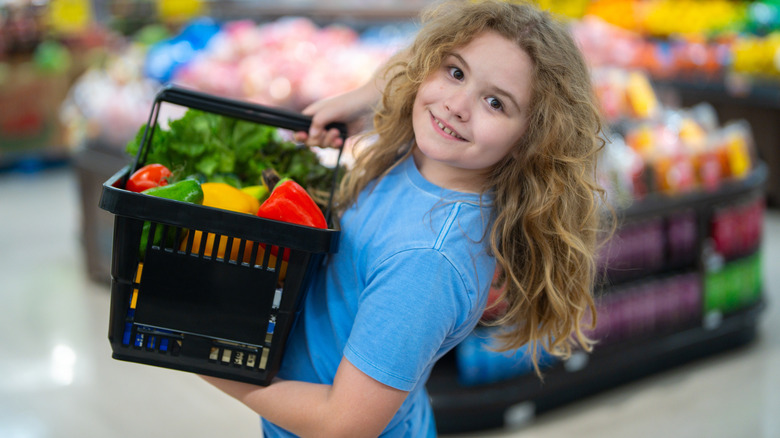
In their local communities, Kroger's stores also engage in smaller but nonetheless impactful efforts to combat hunger and reduce waste. Some of the company's supermarkets, for instance, fill boxes with "orphan" fruit and allow children to freely grab from the assortment, so they can enjoy a free, nutritious snack while shopping with their parents. The gratis items might include surplus produce and fruit deemed unsellable, like single bananas that have become separated from their bunches.
Some stores also establish special areas for displaying produce that is less likely to sell, like bruised or otherwise visually unappealing items, and still-usable fruits and vegetables with little remaining shelf life. These items are bundled into packages and deeply discounted, giving budget-conscious customers an inexpensive option for obtaining fresh goods.
Kroger has partnered with Flashfood, a surplus grocery platform, to help customers more easily identify such discounted grocery items. A pilot program was launched with Flashfood in 16 Virginia stores in 2025, and customers utilizing the service collectively saved almost $700,000 over the course of about a year; more than 290,000 pounds of food were also kept out of landfills as a result (per Flashfood). The Kroger-Flashfood partnership has additionally included free virtual nutrition classes for Kroger customers, helping them learn how to maximize fresh ingredients and to prepare easy, nutritious meals within their budgetary constraints.
Kroger's efforts have further extended to nutritionally supporting members of the U.S. military. The company has become the largest cumulative donor to the USO, operating mobile canteens that provide hot meals and more to deployed military members.