

Martha Stewart's Simple System For Keeping Her Garden Seeds At Arm's Reach

We may receive a commission on purchases made from links.
Some foods are just cheaper to grow than buy, and that only becomes doubly true when you take a page from Martha Stewart's book and grow them from seed. No matter what scale you grow at, organization pays off come springtime, and she de-clutters her seed collection with nothing more than cardboard, some paper packets, and some small file boxes.
@marthastewart I use this technique year after year to stay organized during those busy gardening seasons. #throwbackthursday #gardeningtips #seedorganization #tiktokpartner
Paper envelopes are especially good seed containers because they not only block out sunlight, but also allow excess moisture to evaporate rather than condense. If conditions get too humid, seeds may develop mold and mildew, killing them. Plus, you can write directly on the envelopes or just slap on some tape, making labeling a breeze. The cardboard inserts are how Stewart makes retrieving her seeds easier. By slipping them in between different types, like peppers, tomatoes, or squash, she easily groups them for when she's ready to start germinating.
Since just about every seed needs the same storage conditions, you can also store them all together in the same box. Stewart uses a small wooden file organizer, but you can buy plastic ones on Amazon for under $10, or even use a secondhand kitchen item, like an old decorative piece. It doesn't need to have an airtight seal or anything; it just needs to be able to hold your packets and dividers without damaging them.
Keep seeds cool, dark, and dry for longevity
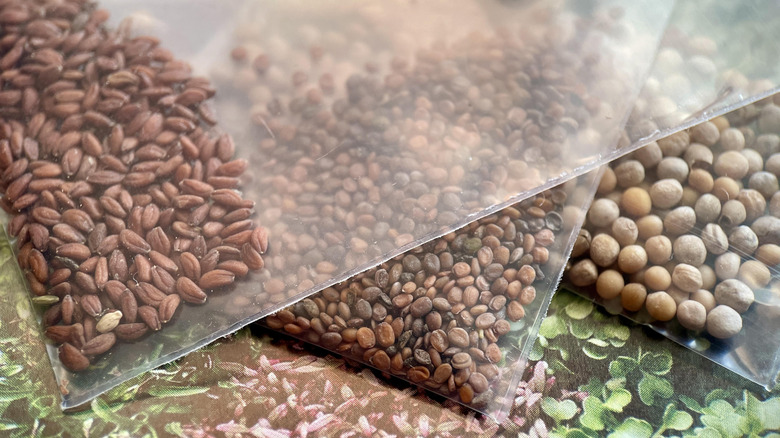
Provided you keep seeds at around 40 degrees Fahrenheit and don't let them get too much sun exposure, you'll have plenty for the next planting season. Seeds can stay good for several years, and Martha Stewart likes to be efficient, so a few tools and tricks can help extend their shelf life and ensure you have plants for quite a while.
When you need to keep something cool and in the dark, there's no place better than the fridge, so if you have one in your garage, or one that you otherwise don't use too frequently, it's a great choice. If you don't have a spare appliance or space in your kitchen, there shouldn't be any issue with storing them in a linen closet or out-of-the-way cubby. While it won't be quite as cool or dry as your fridge, you should get plenty of life out of your seeds and avoid jostling them before it's time to start planting.
Some seeds require you to wash them thoroughly first, so it's especially important to dry them thoroughly if you want to grow a tree from an avocado pit or save tomatoes seeds for next year. Still, some residual moisture may remain, but Stewart addresses this with homemade desiccant packets. Untreated cat litter wrapped in cheesecloth absorbs moisture like a magnet, and just one packet stored with your seeds can save you a lot of mold trouble down the line.