

Can You Freeze Deviled Eggs?
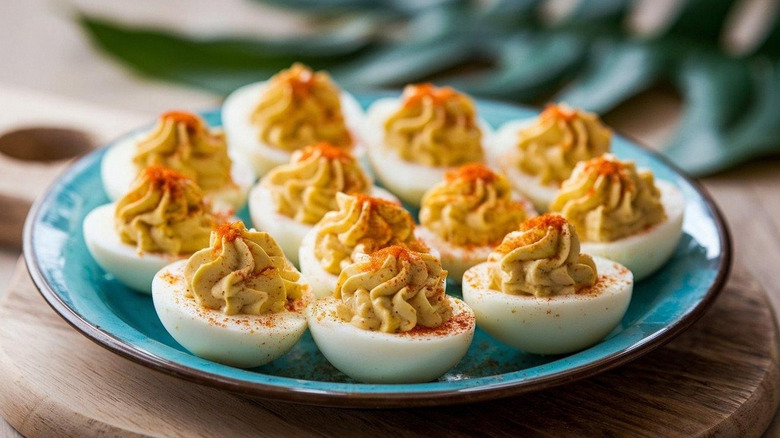
Eggs are expensive, so storing them properly to maximize their shelf life is important. This only becomes more vital once you've put effort and more ingredients into them, so attempting to freeze deviled eggs is a reasonable idea. However, it may not be the best one, as freezing tends to ruin their texture.
While you can freeze eggs effectively, it doesn't work quite the same once you've deviled them. Raw eggs and egg whites freeze perfectly fine, though their textures might change a bit. You can even freeze hard-boiled egg yolks without much problem, provided you use them within a month, but freezing their egg whites makes them tough. When this happens, the albumen proteins continue to tighten, squeezing out moisture to form ice crystals that later melt and leave you with something wet and leathery.
While the egg yolks may hold up fine, the same can't be said for the other ingredients. If you use mayonnaise, freezing breaks the emulsion, separating the liquids from the fats and turning the whole thing into a mess. If you include vegetables like minced onion or celery, the water in their cells freezes, bursting the cell walls and turning them mushy. While freezing deviled eggs and thawing them in the fridge poses no food safety risks, it completely ruins the dish and should generally be avoided.
How to preserve deviled eggs

Deviled eggs are highly perishable and should be thrown out if left unrefrigerated for more than two hours. However, they can last in the fridge for up to four days, so be sure to maximize their longevity with the right container and temperature if you want to make them ahead of time.
In the short term, the biggest threat to refrigerated deviled eggs is open air. Not only does this allow them to absorb the smells of other foods, but it also dries out the yolks, making them mealy. If you're storing them for just a day, laying some plastic wrap over a plate is perfectly fine. However, if you're making them farther in advance, you'll want to preserve their longevity with a firmly sealed container. It's also vital to let them cool completely before storing them so the container doesn't build up condensation and make them wet.
Unless you vacuum-seal them, your egg yolk mixture will inevitably dry out a bit because of the air inside the container itself. While vacuum-sealing fully assembled deviled eggs would likely smush them beyond recognition, you can always store the yolks and whites separately. Preparing the yolk mixture and storing it in a bag with all the air squeezed out preserves its moisture far better. Plus, you can simply snip off one corner of the bag to create the perfect piping bag for presentation-worthy deviled eggs.